
NIMO 15.6" FHD R5 AI Student Laptop
4.4Editor score
Upgradeable DDR4 memory
Comprehensive port selection
Portable under 1.7kg
A non gaming laptop is most useful when it handles everyday work comfortably, looks professional, stays portable, and provides the connections required by your routine. The right model can support documents, browsing, video calls, research, spreadsheets, light creative work, and entertainment without forcing a large display or demanding cooling system onto your desk.
We compared the supplied laptops by examining their processors, memory, storage, displays, graphics, connectivity, portability, warranty terms, and practical suitability for non-gaming tasks. The list includes conventional business and student computers as well as higher-powered models that may appeal to buyers who want occasional gaming, advanced graphics, or extra performance for demanding creative work.
Each review explains where a laptop stands out, identifies any meaningful compromises, and clarifies the type of user most likely to benefit. Ratings and specifications reflect the available product information, while configurations can vary by seller. Product prices and availability change frequently, so confirm the current listing before making a final purchase.
4.4Editor score

4.6Editor score

4.6Editor score
As an Amazon Associate we earn from qualifying purchases.
The table below compares all ten laptops by processor, display, memory, and their most useful role for non-gaming users. It highlights the difference between portable business designs, flexible student systems, and more powerful machines that can also serve as occasional gaming or graphics workstations.




The HP Victus 15.6-inch Full HD 144Hz combines a 12th-generation Intel Core i5-12450H processor with NVIDIA GeForce RTX 3050 graphics, making it one of the more capable conventional laptops in this guide. Its 4.4 rating reflects a generally favorable balance of performance, display quality, and practical features, although the title identifies it as a gaming laptop rather than a dedicated business machine.
We may earn a commission when you buy through this link, at no additional cost to you.
Performance is the main attraction. The Core i5 processor should provide useful headroom for document-heavy work, web applications, communication, and multitasking, while the RTX 3050 adds a substantial graphics foundation for video editing, 3D work, and occasional games. The included 16GB of DDR4-3200 memory is a sensible amount for general productivity, and the 512GB PCIe SSD supports quick file access while leaving room for a modest software library.
The 15.6-inch FHD IPS Micro-Edge anti-glare display is also appealing for office and study use because its 144Hz refresh rate makes menus, scrolling, and pointer movement look smooth. A backlit keyboard, Wi-Fi 6, and Windows 11 Pro add practical value. The trade-off is portability: the dedicated graphics hardware and gaming-oriented construction are likely to be less convenient to carry than a conventional ultraportable laptop.
This model is a good fit for buyers who need more graphics capability than an ordinary office laptop provides but still value a familiar 15.6-inch screen and Windows 11 Pro. It is particularly compelling for students, hybrid workers, and creators who may also want entertainment or gaming options. For people who need the lightest possible daily-carry computer, one of the purpose-built business or student models in the guide is a more natural choice.
The Core i5-12450H and 16GB of memory create a capable foundation for office suites, research, browser-heavy workflows, and several applications running at once. Discrete RTX 3050 graphics add headroom for visual projects without compromising the general-purpose appeal of the machine.
The 144Hz IPS panel is useful beyond gaming because its high refresh rate can make everyday interaction feel more responsive. Its anti-glare treatment also suits bright rooms, offices, and study spaces where reflections would otherwise be distracting.
We may earn a commission when you buy through this link, at no additional cost to you.
The NIMO 15.6-inch FHD R5 is designed around the needs of students, remote workers, and families seeking a capable everyday computer without moving into a bulky performance category. It carries a 4.4 rating and pairs an AMD Ryzen 5 processor with Radeon Vega 8 integrated graphics. The emphasis is on general productivity, flexible connectivity, portability, and the ability to expand the system later.
We may earn a commission when you buy through this link, at no additional cost to you.
Its four-core, eight-thread Ryzen 5 processor can support coursework, document editing, presentations, browsing, and routine office applications. The 8GB of DDR4 memory is adequate for lighter use but can be improved through the two SO-DIMM slots, which support upgrades up to 32GB. Likewise, the 256GB SSD may be upgraded to as much as 4TB through the M.2 slot, making this a sensible long-term platform for files that continue to grow.
Connectivity is unusually complete for a portable student laptop. The system includes three USB-A ports, two USB-C ports, HDMI, a MicroSD reader, and a headset jack, reducing the need for adapters. A fingerprint reader is integrated into the touchpad, the keyboard is backlit, and the approximately 175-degree hinge allows flexible screen positioning. Its under-1.7kg weight also makes it easier to carry between classes or work locations.
The main compromise is the base 8GB memory configuration, particularly for intensive multitasking. Integrated Radeon Vega 8 graphics are best for presentations, streaming, basic photo viewing, and light creative tasks rather than demanding games or advanced 3D work. Despite those limits, the NIMO is one of the strongest budget-oriented picks here for students and home offices because it combines sensible initial specifications with unusually useful upgrade paths.
The most valuable feature is not the base memory or storage capacity but the ability to replace both. Two accessible DDR4 slots and a dedicated M.2 PCIe slot make it possible to increase capacity as coursework, media collections, applications, and professional projects expand.
USB-A, USB-C, HDMI, MicroSD, and audio connections cover common student and home-office needs. The dedicated charging USB-C port and separate full-function USB-C port also make it easier to keep an external display or data device connected while the laptop is charging.
We may earn a commission when you buy through this link, at no additional cost to you.
The NIMO 17.3-inch Ryzen 9 is the most substantial general-purpose workspace in the guide. Its AMD Ryzen 9 8945HS processor has eight cores and sixteen threads, while 32GB of DDR5 RAM and a 1TB SSD provide a generous configuration for large spreadsheets, many browser tabs, professional applications, coding environments, and media-heavy workflows. The 4.2 rating is solid, though not as strong as several alternatives.
We may earn a commission when you buy through this link, at no additional cost to you.
The 17.3-inch FHD display is particularly useful for business analysis, presentations, creative layouts, and multitasking. Radeon 780M integrated graphics support visual work, streaming, and suitable games, although they do not offer the dedicated graphics capacity of an RTX-equipped laptop. The product information specifically emphasizes AI-enhanced performance, making it relevant to users exploring AI-assisted productivity tools alongside conventional office applications.
Several practical features distinguish this model from a basic large-screen notebook. User-replaceable DDR5 memory and storage support longer-term expansion, Wi-Fi 6E and Bluetooth 5.2 provide modern wireless connectivity, and USB4 offers high-speed data transfer and display options. A 100W USB-C fast charger, fingerprint reader, and physically hidden privacy camera make the system appealing for mobile offices and shared workspaces.
Its trade-offs are size and the mismatch between its gaming-oriented branding and integrated graphics. At 4.6 pounds with a 17.3-inch screen, it is better suited to a desk than frequent commuting. Buyers should also accept that the large display and powerful hardware demand more space and may need more cooling than a compact business laptop. For stationary productivity, however, it is a capable and well-equipped choice.
The Ryzen 9 8945HS, 32GB of memory, and 1TB storage provide a strong foundation for data-heavy office use, programming, and creative multitasking. The generous starting configuration reduces the need for immediate memory or storage upgrades.
A fingerprint reader offers faster sign-in, while the hidden privacy camera is useful in offices, meeting rooms, and shared environments. These details make the laptop more appropriate for professional workflows than a purely entertainment-focused system.
We may earn a commission when you buy through this link, at no additional cost to you.
The HP Victus 15.6-inch RTX 4050 stands out for its combination of a 13th-generation Intel Core i5-13420H processor, NVIDIA GeForce RTX 4050 graphics, and a 4.5-inch 144Hz IPS display. Its 5.0 rating is the highest in the group, although ratings should be considered alongside the fact that this is a gaming-focused configuration being considered for broader professional use.
We may earn a commission when you buy through this link, at no additional cost to you.
The RTX 4050 with 6GB of GDDR6 memory is the key differentiator for non-gaming users who edit video, work with graphics, render 3D content, or want a capable entertainment laptop. The Core i5 processor and 15.6-inch Full HD anti-glare screen complement that capability. A full-size backlit keyboard includes a numeric keypad, which remains useful for accounting, data entry, and productivity tasks.
Battery life and charging are additional strengths. The 70Wh battery is described as supporting up to 8.5 hours of light office work and browsing, while the included 120W adapter can reach approximately 50 percent charge in around 30 minutes. The bundle also includes a PCONLINE cooling pad intended to help maintain CPU and GPU performance during extended workloads, although that accessory is unnecessary for light productivity use.
The main caveat concerns the configuration and its coverage. The original seal was opened for upgrades, with a one-year coverage period on the upgraded RAM and SSD from PCOnline US and the remaining components retaining the original manufacturer's coverage. Buyers should understand those terms. For a buyer who values discrete graphics and a high-refresh display, however, this is a capable workstation and entertainment hybrid.
Unlike systems relying entirely on integrated graphics, the RTX 4050 provides dedicated 6GB GDDR6 memory for demanding visual tasks. That makes this model more relevant to creators, developers working with graphics, and professionals who occasionally handle GPU-accelerated applications.
The numeric keypad makes the laptop useful for spreadsheet-heavy work, while the backlit keys improve visibility at night. Fast charging through the included 120W adapter is valuable for users who need to move quickly between locations.
We may earn a commission when you buy through this link, at no additional cost to you.
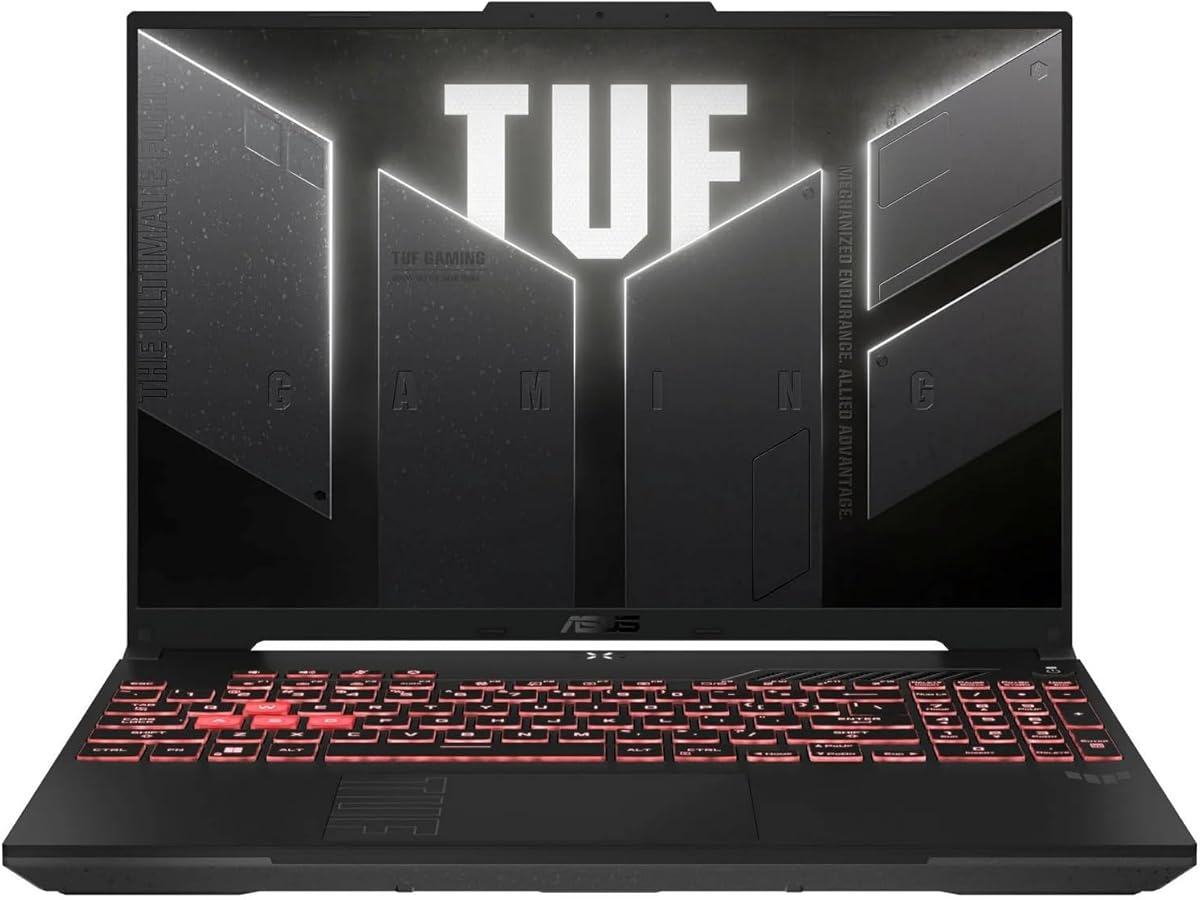
The ASUS TUF Gaming A16 combines an AMD Ryzen 7 7445HS processor, NVIDIA GeForce RTX 4050 graphics, and a 16-inch Full HD+ display with a high refresh rate. Its 4.5 rating indicates strong customer satisfaction, and the balanced hardware makes it a credible all-round laptop for creative professionals, advanced students, and users who want a larger screen without settling for a compact design.
We may earn a commission when you buy through this link, at no additional cost to you.
The Ryzen 7 processor operates at a listed 3.2GHz and supplies more general computing muscle than the lower-tier processors found in many everyday laptops. Meanwhile, the RTX 4050 brings dedicated graphics capability to the package. Together, they are well suited to demanding office multitasking, video and photo projects, and software that benefits from GPU acceleration. The 16GB of DDR5 memory provides a modern, capable foundation for general use.
The 16-inch display is the model's defining physical feature. Its Full HD+ resolution offers a larger canvas than a standard 15.6-inch panel, while the listed 145Hz refresh rate in the product title and 144Hz in the specifications supports smooth motion. The backlit keyboard and Windows 11 operating system complete a package suited to extended desktop use, presentations, and entertainment.
There are two notable limitations in the supplied information. Storage begins at 512GB, which may require an upgrade for large creative libraries, and Full HD+ does not offer the pixel density of a higher-resolution productivity display. The gaming-oriented TUF design also does not prioritize extreme portability. Still, for a buyer seeking a large, fast, graphics-capable general-purpose computer, the specification mix is attractive and balanced.
The 16-inch Full HD+ panel gives users more room to arrange documents, spreadsheets, browser windows, and editing tools. Its high refresh rate can also make routine navigation feel smoother than on a conventional 60Hz office display.
The Ryzen 7 7445HS handles CPU-intensive work, while the RTX 4050 provides dedicated graphics for visual applications. This combination gives the laptop flexibility beyond standard office tasks and makes it a strong occasional gaming or creative-work option.
We may earn a commission when you buy through this link, at no additional cost to you.
The Lenovo LOQ combines an AMD Ryzen 5 7235HS processor with GeForce RTX 4050 graphics and a 15.6-inch Full HD IPS display. Its 4.7 rating is among the strongest in the guide, making it an appealing choice for users who want a capable laptop with room for memory and storage expansion without moving immediately to the most premium configurations.
We may earn a commission when you buy through this link, at no additional cost to you.
The Ryzen 5 7235HS has four cores, eight threads, a 3.2GHz base frequency, and boost performance up to 4.2GHz. That configuration supports productivity applications, communication, browsing, and multitasking, while the RTX 4050 with 6GB GDDR6 memory expands its usefulness to graphics-intensive work. The 144Hz anti-glare IPS panel includes G-SYNC support and 300-nit brightness, making it suitable for both work and media.
Flexibility is another important benefit. The listed maximum memory is 64GB DDR5, and storage can be configured up to 8TB with PCIe M.2 SSDs. Connectivity is also strong: one USB-C, three USB-A, HDMI, Ethernet, a combined headset connection, Wi-Fi 6, and Bluetooth 5.2. These features are especially useful for a permanent desk setup, where wired networking and multiple peripherals may be preferred.
The principal compromise is presentation. This is visibly a gaming laptop, and buyers seeking a conventional business appearance may prefer the restrained Lenovo Business model. Buyers should also verify the exact memory and storage included with the selected configuration rather than assuming the maximum limits are standard. Within those caveats, the LOQ offers a compelling balance of performance, strong rating, discrete graphics, and unusually generous upgrade potential.
Supporting up to 64GB of DDR5 memory and 8TB of PCIe M.2 storage gives buyers considerable room to grow. This is particularly useful for users who initially need only a modest configuration but expect software libraries or project files to expand over time.
Ethernet, HDMI, multiple USB ports, and modern wireless connectivity make the LOQ straightforward to integrate into a fixed workspace. A 144Hz G-SYNC display also provides a smooth viewing experience for both productivity and entertainment.
We may earn a commission when you buy through this link, at no additional cost to you.
The NIMO 15.6-inch Ryzen 7 is one of the most balanced choices for users seeking a modern non-gaming laptop without a dedicated graphics card. It pairs an AMD Ryzen 7 7735HS processor with Radeon 680M graphics, 8GB of DDR5 memory, and a 512GB SSD. Its 4.6 rating and broad support for productivity, AI-assisted work, content creation, and light gaming make it particularly versatile.
We may earn a commission when you buy through this link, at no additional cost to you.
The Ryzen 7 7735HS provides eight cores, sixteen threads, and boost speeds up to 4.75GHz. That gives it more headroom than the entry-level processors in the guide, especially for coding environments, large spreadsheets, video conferencing, browser-heavy research, and running AI tools such as Microsoft Copilot or ChatGPT. Radeon 680M integrated graphics add useful capability for streaming, 1080p content editing, presentations, and light games.
The 15.6-inch 1920×1080 IPS display offers a clear workspace for data visualization, documents, and creative projects. A 512GB SSD provides useful capacity for applications, project files, and media, while DDR5 memory supports current performance expectations. The fingerprint reader adds convenient sign-in for professional or student use and reduces repeated password entry when moving between short tasks.
Eight gigabytes of memory is the principal limitation for buyers who plan to run many demanding applications simultaneously. Depending on the exact configuration, upgrading memory may be important before heavier workflows become routine. Integrated graphics also cannot match a discrete RTX solution for advanced 3D or intensive games. Even so, this NIMO balances performance, display quality, storage, and convenience better than many conventional entry-level laptops, making it our editor's choice.
Eight cores and sixteen threads make the Ryzen 7 7735HS well suited to productivity applications that benefit from additional parallel processing. It is a sensible foundation for students, analysts, developers, and professionals running several communication and office tools at once.
Radeon 680M graphics are a useful step above basic integrated solutions. They make the laptop suitable for visual presentations, media viewing, light photo work, streaming, and selected games without the weight of a dedicated gaming GPU.
We may earn a commission when you buy through this link, at no additional cost to you.
The Acer Nitro V 15 is built around an Intel Core i5-13420H processor, an NVIDIA GeForce RTX 4050 with 194 AI TOPS, and a 15.6-inch Full HD IPS display running at 165Hz. The 4.5 rating reflects a generally strong reaction to a specification set that combines fast graphics, a high-refresh screen, and modern connectivity in a recognizable gaming format.
We may earn a commission when you buy through this link, at no additional cost to you.
For non-gaming work, the Core i5 processor is capable across office applications, web research, communication, and media tasks. The RTX 4050 adds discrete graphics and DLSS 3.5 support, which can benefit visual software and selected games. The 512GB PCIe Gen 4 SSD provides fast storage, and the two DDR5 slots allow memory expansion up to 32GB, an important option because the base configuration includes only 8GB.
The 165Hz display is one of the fastest in the guide. While that feature is commonly associated with games, it also makes cursor movement, scrolling, menus, and application transitions look exceptionally smooth. Wi-Fi 6, Killer Gigabit Ethernet, and a Thunderbolt 4 port cover modern networking and peripheral needs. A backlit keyboard supports work in dim conditions, and the 16:9 panel fits familiar productivity layouts.
This model is most compelling for a user who wants a capable office and media machine with occasional gaming or creative potential. Its gaming aesthetic, high-refresh screen, and dedicated graphics are unnecessary for many office jobs, and the 8GB starting memory should be addressed for heavy multitasking. For those who want the stronger graphics without choosing the most premium model, however, the balance is strong.
A 165Hz panel can make routine computer interactions feel noticeably more fluid, particularly during scrolling and window movement. For users accustomed to standard office displays, the improvement is easy to appreciate even without playing games.
Thunderbolt 4 provides high-speed data transfer, charging, and display connectivity, while Gigabit Ethernet is useful for stable fixed-office networking. Two memory slots give buyers a straightforward path to improve the base 8GB configuration.
We may earn a commission when you buy through this link, at no additional cost to you.
The Lenovo Business 15.6-inch FHD is the clearest conventional non-gaming option in the guide. It is built for web browsing, document editing, video streaming, online classes, and communication, with an Intel N150 processor, 8GB LPDDR5 memory, and 128GB UFS storage. Its 4.6 rating, slim construction, and professional feature set make it particularly appealing to mobile workers and students.
We may earn a commission when you buy through this link, at no additional cost to you.
The N150 is a four-core processor capable of up to 3.6GHz turbo speed, which is appropriate for the everyday tasks stated in the product information. It is not intended to compete with the Ryzen 7, Ryzen 9, Core i7, or systems with dedicated RTX graphics in heavy professional workloads. For productivity suites, research, communication, and streaming, however, it offers a focused foundation without unnecessary graphics hardware.
Portability is a major strength. At 3.42 pounds and 0.70 inches thick, the laptop is easier to carry than larger gaming systems, while the 15.6-inch Full HD anti-glare display provides a comfortable workspace. Wi-Fi 6, Bluetooth 5.2, USB-C with DisplayPort, HDMI, an SD card reader, and dual-display support make it adaptable to offices, classrooms, and remote workspaces. The 65W fast charger and ENERGY STAR certification further support everyday use.
The main constraints are the Intel N150's limited performance ceiling and only 128GB of storage. Users with large media libraries or demanding applications should consider whether cloud storage or a later upgrade is possible. Within a basic productivity brief, though, the laptop offers excellent portability, a privacy shutter, military-grade testing, and a professional design, making it a strong premium business pick.
The 3.42-pound weight and 0.70-inch profile make the Lenovo far easier to carry than the 16- and 17.3-inch alternatives. The anti-glare 15.6-inch display still provides enough room for spreadsheets, documents, and video calls.
A physical webcam shutter protects the user's image when the camera is not in use. The chassis is also described as MIL-STD-810H military-grade tested across 21 items, supporting its suitability for frequently mobile use.
We may earn a commission when you buy through this link, at no additional cost to you.
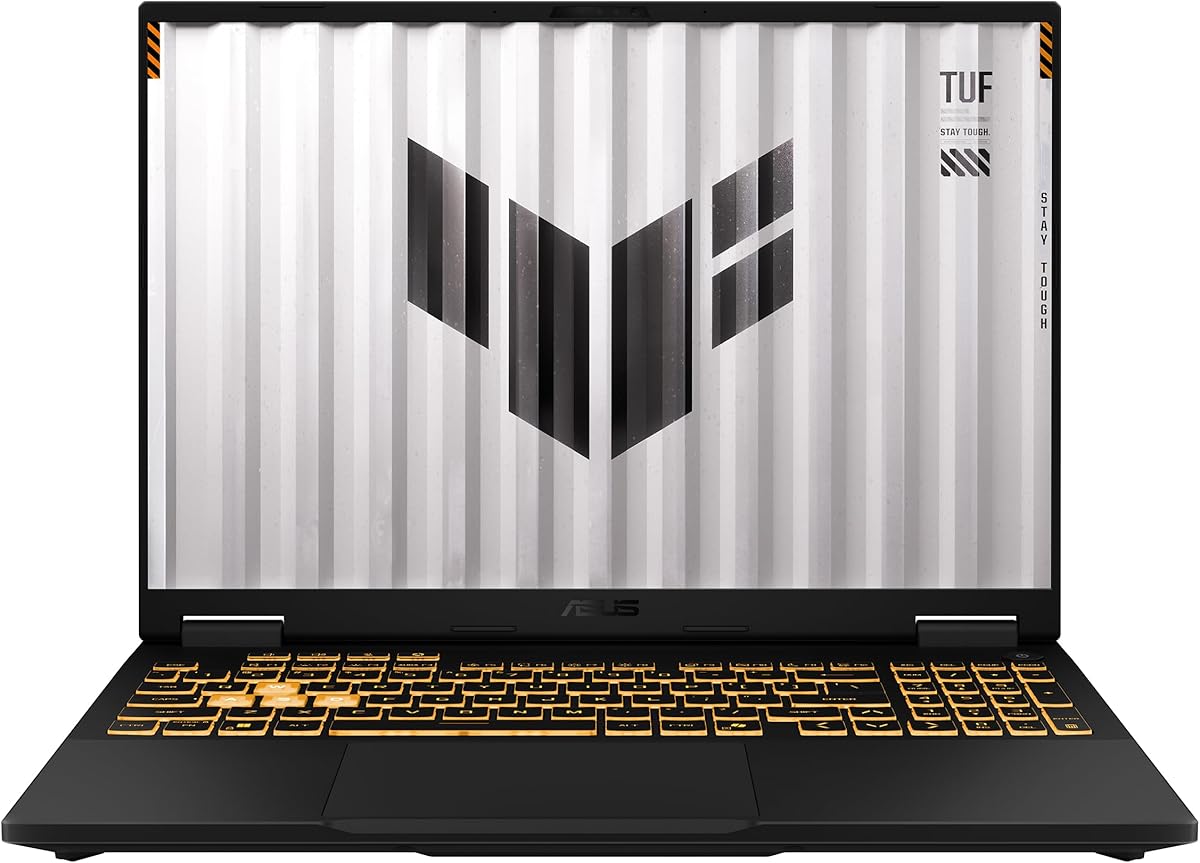
The ASUS TUF Gaming 16 is the most powerful specification in this roundup, pairing a 14th-generation Intel Core i7-14650HX processor with NVIDIA GeForce RTX 5050 graphics and a 16-inch 1920×1200 IPS display at 165Hz. Its 4.5 rating is strong, and the configuration is aimed at buyers who need considerably more graphics and processing capability than a standard office laptop provides.
We may earn a commission when you buy through this link, at no additional cost to you.
The Core i7-14650HX uses 16 cores with a listed 2.2GHz base frequency, providing substantial throughput for demanding office workflows, software development, video editing, and other CPU-intensive applications. The RTX 5050 includes 8GB of GDDR7 memory, giving it a stronger foundation for advanced graphics and high-end games than the RTX 4050 models elsewhere in the guide.
Other details support a premium workstation experience. The 16GB of DDR5 memory is appropriate for a high-performance system, while the 1TB M.2 PCIe 4.0 SSD offers both speed and useful capacity. The WUXGA display provides more resolution and workspace than a standard Full HD panel, and its 165Hz refresh rate supports smooth interaction. Thunderbolt 4 and USB 3.2 Gen 2 provide modern peripheral connectivity.
This is not the laptop for someone who only needs browsing, email, and basic word processing. Its power, 16-inch display, gaming-oriented design, and likely cooling requirements add weight and complexity, while the specification far exceeds the needs of many office users. For a buyer who frequently handles demanding graphics, video, or compute-heavy work and also wants occasional high-end gaming, it is the strongest performance option here.
The RTX 5050's 8GB of GDDR7 memory is a meaningful step up from the 6GB configurations used by several other laptops in the guide. It gives creative professionals and advanced users more graphics headroom for rendering, editing, and visually demanding software.
The 16-core Core i7 handles demanding parallel workloads, while the 16-inch 1920×1200 IPS panel provides a generous and detailed workspace. The combination suits users who want a desktop-replacement approach without moving to a larger stationary computer.
We may earn a commission when you buy through this link, at no additional cost to you.
Choosing a non-gaming laptop starts with the work you need to perform, followed by portability, display quality, memory, storage, and connectivity. Comparing those priorities against the actual configuration is more reliable than choosing by processor name or appearance alone.
The processor determines how comfortably a laptop handles demanding applications, numerous browser tabs, video calls, spreadsheets, and background tasks. Entry-level Intel N-series chips such as the Intel N150 are appropriate for web browsing, document editing, streaming, and online classes. AMD Ryzen 5 and Core i5 processors provide a stronger foundation for heavier multitasking and creative work, while Ryzen 7, Ryzen 9, Core i7, and other high-core-count chips suit advanced workloads.
Choose a processor based on your software and workload. Paying for a high-end chip that you never use adds unnecessary expense and may reduce portability through additional heat and weight. A modern midrange processor is generally the most balanced choice for mixed office, communication, and educational use.
Memory determines how many applications can remain active without slowing down, particularly when a laptop also runs a video call in the background. Eight gigabytes can work for light tasks, but 16GB or 32GB provides more comfort for browser-heavy research, spreadsheets, creative applications, and professional multitasking. Users should also check whether memory is upgradeable, since soldered memory cannot easily be expanded later.
Prioritize at least 8GB for a basic laptop and 16GB for regular multitasking. For heavy applications, 32GB is a better starting point. Two accessible memory slots are especially valuable because they allow an affordable upgrade instead of replacing the entire computer.
A solid-state drive makes everyday operations such as starting applications, opening files, and saving work noticeably more responsive than traditional hard-drive storage. Capacity matters just as much: 128GB may fill quickly with cloud synchronization, large documents, and downloaded media, while 256GB offers more breathing room and 512GB or 1TB is preferable for creative libraries and extensive software collections.
Prefer a 512GB SSD when the budget allows, particularly if you do not want to depend heavily on cloud storage. Confirm the drive type and whether it can be replaced. PCIe NVMe models are generally the most flexible choice for modern applications, while a lower-cost laptop with limited storage can still work well when managed carefully.
A 15.6-inch Full HD display is the most common compromise between workspace and portability, making it suitable for office work, study, and travel. A 16- or 17.3-inch panel provides more room for spreadsheets, presentations, side-by-side research, and editing, but it is less convenient to carry. IPS panels generally offer more useful viewing angles, while anti-glare finishes help in bright rooms. High refresh rates make routine cursor movement and scrolling feel smoother.
Choose 15.6 inches if mobility matters, or 16 inches and above for a desk-based setup. Check brightness, resolution, and panel type as well as size. A sharp display is useful for detailed documents and data, while a high refresh rate is valuable even when the laptop is not used for games.
Weight, thickness, charger size, and battery capacity determine whether a laptop works well in a bag, on a commute, or at a shared table. Business and student models around three to four pounds are generally easier to carry than larger gaming systems with discrete graphics. Battery capacity also matters, but published runtime can vary significantly with screen brightness, wireless activity, and workload.
Read dimensions and weight before choosing, and consider how often you will work away from an outlet. A system with integrated graphics will generally place fewer demands on its battery and cooling system. For frequent travel, a compact, light design with a comfortable keyboard is often more valuable than maximum performance.
A useful non-gaming laptop should include the ports required by your monitors, peripherals, storage devices, and charging setup. USB-A remains important for older accessories, while USB-C can provide data, power delivery, and display output on modern systems. HDMI is convenient for a dedicated monitor, and Ethernet can provide a stable connection in a fixed office. A card reader is useful for photographers, while a 3.5mm audio jack supports private listening.
Avoid relying on a single USB-C interface when you already own several USB-A devices. Check whether the full-function USB-C port supports display output and whether the charging port is separate. Dual-display support can also be valuable for spreadsheet work, research, and multitasking.
Integrated graphics are sufficient for office applications, web browsing, presentations, streaming, and light photo work. Radeon 680M and Vega 8 graphics add more capability for selected games and basic creative applications. Discrete RTX cards such as the RTX 3050, RTX 4050, and RTX 5050 are worthwhile for serious video editing, 3D work, GPU-accelerated software, and high-end games, but they usually add cost, weight, heat, and battery demand.
Do not pay for dedicated graphics if your work does not benefit from them. Choose integrated graphics for a quiet, portable office computer and a discrete GPU for demanding visual work. In either case, ensure the processor, memory, cooling, and display are balanced so the high-end component is not held back by the rest of the system.
Longer warranties can provide useful protection, particularly for portable computers used in dorm rooms, shared offices, or frequent travel. Some upgraded systems include different coverage for replacement components and the remaining factory hardware, so the length and provider of each warranty should be reviewed. Return windows also matter because they allow a buyer to assess the display, keyboard, noise levels, and overall comfort in real conditions.
Check the listing for the exact warranty, return window, operating system, and included accessories. Confirm whether the pictured configuration matches what is sold. Sellers can vary memory, storage, color, or other components, so relying on the title alone can lead to an unsuitable purchase.
Begin by completing the operating system setup, signing into your preferred account, and configuring display scaling, brightness, keyboard shortcuts, and power modes for your usual workspace. Install only the applications required for your work, save important files in more than one location, and enable the operating system's automatic updates so security patches and driver improvements arrive on a regular schedule.
Keep the system physically well maintained by storing it on a hard, level surface with ventilation openings unobstructed. Clean the screen with a soft microfiber cloth and avoid placing liquids directly above the keyboard. Use a surge-protected outlet when charging, keep the charger with the laptop when possible, and allow a powerful gaming or workstation model to cool before packing it into a tight bag.
For long-term reliability, check available storage and memory regularly, back up important documents, and renew the manufacturer's security and warranty services when appropriate. When traveling, use a padded sleeve or fitted bag and keep peripherals organized. If performance declines, determine whether the cause is full storage, excessive startup programs, or an underpowered configuration before assuming the laptop needs replacement.
Usually, no. A mainstream business or student laptop with an efficient processor, 8GB or 16GB of memory, and a solid-state drive can comfortably handle documents, spreadsheets, presentations, browsing, and video calls. Integrated graphics also reduce weight, heat, and power demands. A gaming laptop becomes more relevant when you need advanced graphics, intensive creative software, or frequent high-end games.
It can be enough for light browsing, document editing, online classes, and communication, particularly with a capable processor and solid-state drive. Heavy browser use, large spreadsheets, video editing, and many concurrent applications are better served by 16GB. If possible, select a model with accessible memory slots so the system can be expanded as requirements grow.
A 15.6-inch screen is easier to carry and is often sufficient for standard office work. A 16-inch display offers more workspace for spreadsheets, research windows, presentations, and creative tools, but it may be heavier. Think about where you will use the computer most often: a desk benefits from a larger screen, while frequent travel is usually better served by a smaller, lighter model.
They are useful for fast storage, docking, high-resolution displays, and efficient data transfer, but they are not essential for basic office use. If you already own compatible peripherals or plan to connect a multi-monitor workstation, the capability can be valuable. Otherwise, prioritize the processor, memory, storage, display, and overall portability that match your daily routine.
Yes. Displays at 120Hz, 144Hz, 165Hz, or higher can make cursor movement, scrolling, and window transitions appear smoother. The benefit is noticeable even without games, although a higher refresh rate usually appears in larger or more gaming-oriented laptops. It should complement, rather than replace, attention to resolution, brightness, viewing angles, and eye comfort.
The requirement depends on whether your files are mainly online or stored locally. Cloud storage can reduce immediate capacity needs, but applications, downloaded media, project files, and offline materials still consume space. A 512GB SSD is a practical middle ground for many students and professionals, while 1TB is preferable for large creative libraries, extensive software, or games.
Yes, as long as the size, weight, keyboard, display, and connectivity suit your work environment. Gaming laptops can offer strong processors, discrete graphics, fast displays, and upgradeable components, making them capable creative or development machines. Their main disadvantages for office use are often bulk, power consumption, fan noise, and an appearance that may not suit a formal workplace.
Confirm the exact processor, memory, storage, display, operating system, ports, weight, warranty, and return policy. Seller configurations can differ even when the product name looks similar. Read the current listing and reviews carefully, check whether memory and storage are upgradeable, and make sure the supplied accessories meet your charging and peripheral needs.
The best budget-oriented choice in this guide is the NIMO 15.6-inch FHD R5 because it combines a capable Ryzen 5 processor, useful connectivity, an under-1.7kg design, and valuable memory and storage upgrade paths. The NIMO 15.6-inch Ryzen 7 earns the editor's choice for its stronger eight-core processor, Full HD IPS display, 512GB SSD, and more capable integrated graphics.
For buyers who value portability and a conventional business appearance most, the Lenovo Business 15.6-inch stands out with its 3.42-pound weight, slim profile, privacy shutter, and professional connectivity. Those who regularly handle demanding visual work should look toward an RTX-equipped HP Victus, Acer Nitro V, ASUS TUF, Lenovo LOQ, or NIMO Ryzen 9 instead, depending on display size, graphics tier, and upgrade requirements.
Ultimately, prioritize the specifications you will use every day rather than the largest available processor. Match memory and storage to your workload, confirm that the display and ports suit your workspace, and review the exact seller configuration. Product prices, discounts, and availability change over time, so check the current listing and current warranty terms before completing your order.