
6 GPM Cordless Fuel Transfer Pump
4.8Editor score
Up to 6 GPM flow
Tool-battery compatibility
Automatic liquid shutoff
51-inch discharge hose
A battery powered fuel transfer pump makes refueling vehicles, generators, lawn equipment, boats, and agricultural machinery faster and easier than manually lifting and tipping heavy containers. The best models combine useful flow rates, dependable power options, flexible hoses, safe automatic shutoff, and adapters that fit the containers and receiving tanks you actually use.
This guide compares ten portable and cordless models using the specifications and features supplied by their manufacturers. It examines flow rate, battery configuration, hose length, can compatibility, liquid sensing, liquid range, control style, and included accessories, helping readers distinguish simple household pumps from more capable professional systems.
Each review reveals which product best fits a particular use case, whether that means economical battery operation, rapid transfer, flexible tool-battery compatibility, long hose reach, or racer-oriented fuel-cell access. Product features and availability can change, so readers should confirm current specifications, container openings, and liquid compatibility before purchasing.
4.8Editor score

4.4Editor score

4.1Editor score
As an Amazon Associate we earn from qualifying purchases.
The table below compares all ten pumps by their power source, flow rate, hose and intake dimensions, and standout safety or compatibility features.





The MISFANS Fuel Transfer Pump combines a 3.8 GPM rated flow rate with automatic shutoff and two power options. Its 4.4 rating reflects a balanced design for homeowners, road-trip users, and equipment owners who want a pump that is faster than common 2.4 to 3.2 GPM models without moving into the highest-flow tool-battery category.
We may earn a commission when you buy through this link, at no additional cost to you.
The built-in sensor stops flow when the receiving tank is full, reducing the chance of overflow during unattended transfers. Four adapters allow the pump to fit many North American plastic cans and racing jugs. A 51-inch discharge hose and 19-inch intake hose provide useful reach, while USB Type-C operation offers continuous service from a suitable power bank. Four AA batteries can also be used when an outlet is unavailable.
One-touch operation is straightforward: pressing the button starts the pump, and pressing it again stops the flow immediately. The high-impact ABS shell and transparent, kink-resistant PE hose are sensible choices for a portable tool. Batteries are not included, however, and a user relying on USB power must bring a compatible power bank. The red fuel can shown in product imagery is also not included.
This is the strongest all-purpose recommendation for most buyers because it combines meaningful speed, overflow protection, broad container compatibility, and flexible power. Choose it over the basic battery models if you regularly transfer fuel and value automatic shutoff more than tool-battery compatibility.
The high-sensitivity tank sensor shuts off the pump as the receiving container reaches capacity. This makes the pump especially useful when the outlet position makes it difficult to watch the tank closely.
Users can choose four AA batteries for remote operation or USB Type-C power for extended work near a suitable power source. This flexibility makes the pump useful at campsites, garages, farms, and roadside locations.
We may earn a commission when you buy through this link, at no additional cost to you.
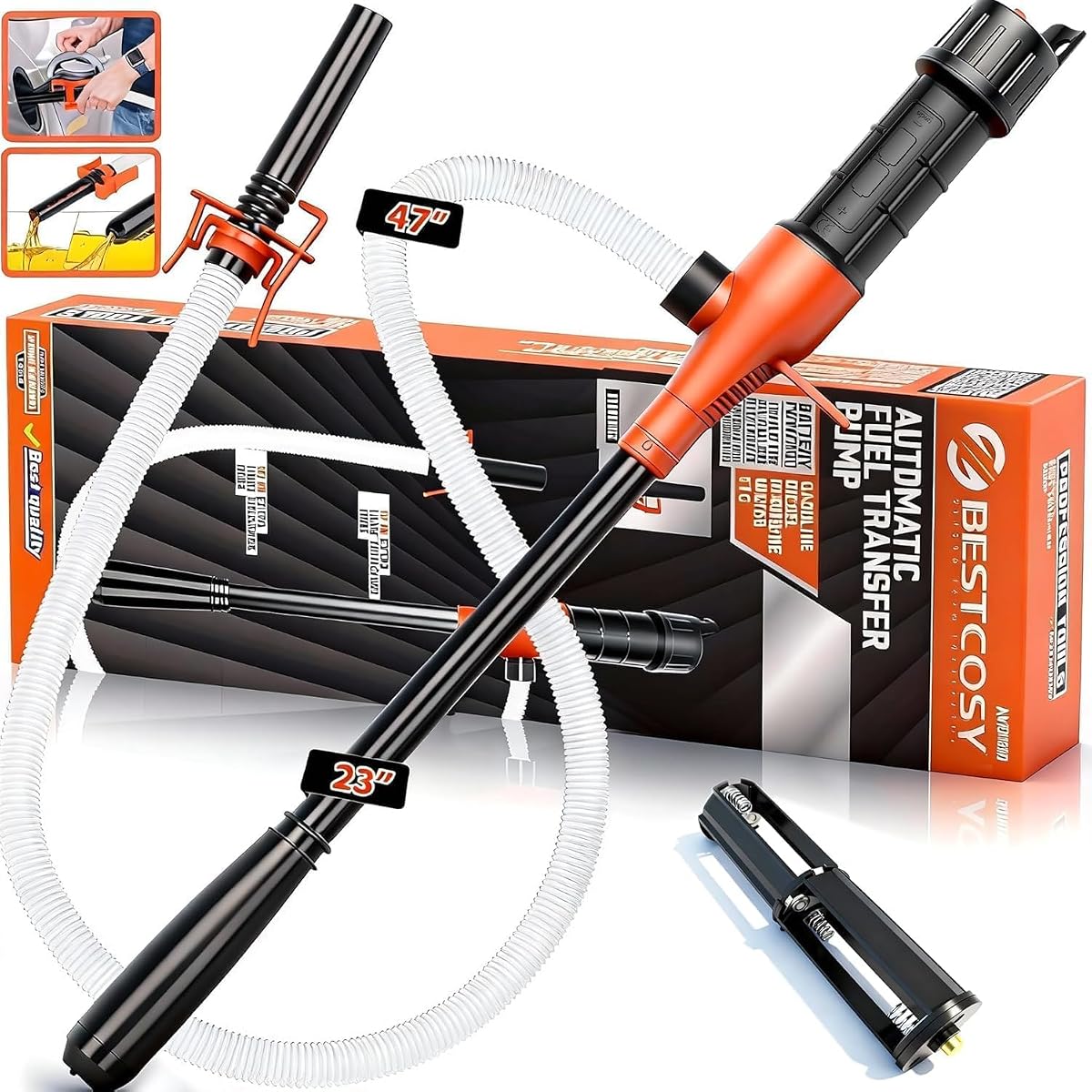
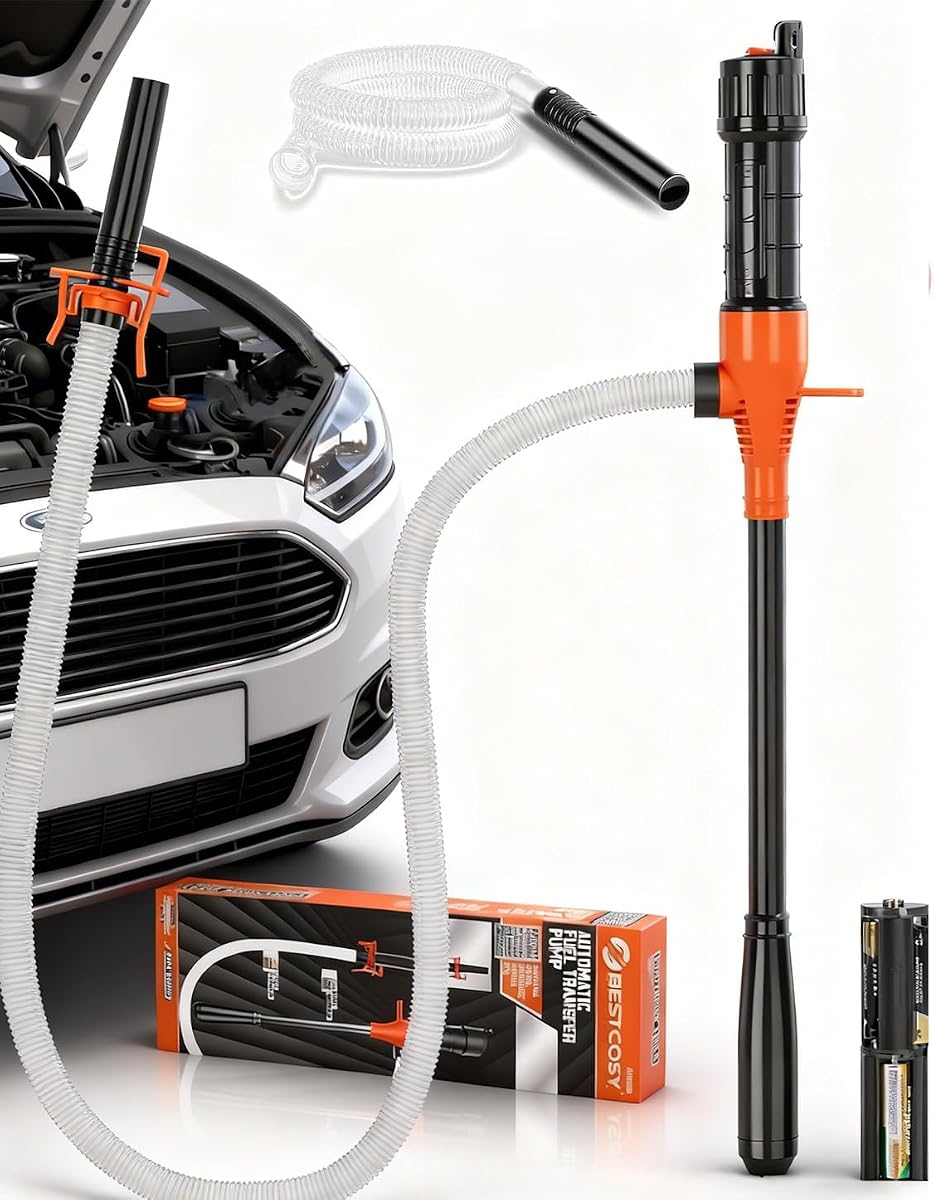
This compact 2.4 GPM pump offers a straightforward way to move gasoline, diesel, water, or light non-corrosive oils. Its 4.1 rating places it among the accessible options in this guide, particularly for buyers who value simple construction, familiar batteries, and enough hose length for routine can-to-tank transfers.
We may earn a commission when you buy through this link, at no additional cost to you.
A high-torque impeller supports a stated flow rate of 2.4 GPM, while the 47-inch discharge tube gives the pump more reach than many small hand-transfer alternatives. The 16-inch suction tube is described as fitting standard 3- to 5-gallon cans, Jerry cans, pails, and even 55-gallon barrels when positioned correctly. It can accept either two D-cell or six AA batteries.
The stated ability to transfer more than 1,000 gallons on fresh batteries should be understood in the context of compatible liquids, starting conditions, and battery age. The listing also advises using fresh batteries, cleaning the tube after use, and avoiding corrosive chemicals. The absence of a described automatic shutoff means users must monitor the receiving tank themselves.
Choose this pump when portability and straightforward battery power matter more than automatic shutoff or maximum transfer speed. It is a practical choice for routine fuel movement around a garage, farm, campsite, or outdoor work area.
The pump accepts two D-cell or six AA batteries, so it can use common cells instead of a proprietary battery pack. Keeping a spare set available is advisable for extended work away from power.
Beyond fuel, the listed compatibility includes water and light oils, subject to the restriction against corrosive liquids. That versatility can make it useful for non-potable liquid-transfer tasks as well as refueling.
We may earn a commission when you buy through this link, at no additional cost to you.
The 2.8 GPM version of this portable cordless pump delivers a useful increase in rated flow over the 2.4 GPM model while retaining the same battery, hose, and container-oriented design. Its 4.1 rating makes it an appealing budget-focused choice for users who regularly move fuel but do not need a high-output tool-battery system.
We may earn a commission when you buy through this link, at no additional cost to you.
The pump uses a high-torque impeller, a 47-inch discharge tube, and a 16-inch suction tube. It can handle gasoline, diesel, water, and light oils, provided the liquid is non-corrosive. The manufacturer also states that it can move more than 1,000 gallons on a set of fresh batteries under suitable operating conditions.
Its advantages are simplicity and portability. There is no built-in charging cable, rechargeable display, or listed liquid sensor, so operation depends on two D-cell or six AA batteries and attentive monitoring of the destination. As with similar basic pumps, keeping spare cells and cleaning the tube after use are important maintenance practices.
This model is a strong pick for the best budget balance because it offers more flow than the basic 2.4 GPM alternative. It is most appropriate for homeowners, campers, and equipment users comfortable supervising each transfer.
The 2.8 GPM rating provides a meaningful improvement over slower portable pumps. That helps reduce the time required to empty a standard can or fill a smaller equipment tank.
Its battery-operated, lightweight format avoids the need for AC power. The pump can therefore be carried in a vehicle, packed for camping, or taken to a remote work area.
We may earn a commission when you buy through this link, at no additional cost to you.
The ANSE Model X1 Ultra focuses on rechargeable convenience, combining a built-in 6000mAh lithium-ion battery with a 2.7 GPM flat-surface flow rate. Its 4.2 rating and stated runtime of more than 90 minutes after approximately four hours of charging make it an interesting middle ground between disposable-cell pumps and larger tool-battery systems.
We may earn a commission when you buy through this link, at no additional cost to you.
The battery compartment and pump body arrive as two wired pieces that snap together, simplifying installation without requiring loose electrical connections. Structural enhancements are intended to support leak-resistant transfer, while patented core motor technology is designed to improve sealability and durability. The pump handles gasoline, diesel, kerosene, and non-potable water.
Important limitations include its larger housing and the need for a container opening that is at least 1.3 inches wide. It is not intended for oil or beverages, and its 2.2 GPM ground-to-tank rate is lower than its flat flow rating. These constraints make prior measurement of the can opening and tank arrangement worthwhile.
Choose the Model X1 Ultra if a rechargeable internal battery and long cordless runtime are the priorities. It is well suited to mobile vehicle, mower, yacht, or similar refueling where carrying spare AA batteries would be inconvenient.
A 6000mAh battery and stated runtime of more than 90 minutes support sustained transfer work. The battery is built into the pump, eliminating disposable cells while preserving cordless mobility.
The pump housing is designed for flow but may not fit openings under 1.3 inches. Checking the neck diameter before purchase can prevent an otherwise straightforward installation problem.
We may earn a commission when you buy through this link, at no additional cost to you.
This amber 2.4 GPM pump is designed as a general-purpose liquid transfer tool for fuel, water, light oil, kerosene, and diesel. Its 3.6 rating is the lowest in this comparison, so buyers should weigh its simple feature set and broad intended uses carefully against the stronger-rated alternatives.
We may earn a commission when you buy through this link, at no additional cost to you.
A high-torque impeller supports the stated flow rate, while the 47-inch discharge tube provides reach between the source and destination. The 16-inch suction tube is intended for 3- to 5-gallon gas cans, Jerry cans, pails, and similar containers. Power comes from two D-cell or six AA batteries, which makes it useful in emergency or outdoor settings.
The listing emphasizes non-toxic, tasteless, corrosion-resistant materials and easy operation, but corrosive liquids must not be transferred. There is no listed automatic shutoff, so the receiving tank requires active supervision. The battery configuration also means users should carry fresh spare cells for extended jobs.
This pump is best for buyers seeking a versatile battery-operated liquid mover with familiar components rather than premium speed or automatic sensing. Those who transfer fuel frequently should consider a model with stronger ratings, a rechargeable display, or a clearly documented auto-stop feature.
The listed liquid range includes gasoline, diesel, water, kerosene, and light oil. It should be used only with compatible, non-corrosive fluids.
Two D-cell or six AA batteries let the pump operate without wall power. Carrying a spare cell set is an easy way to remain prepared for roadside or outdoor use.
We may earn a commission when you buy through this link, at no additional cost to you.
The MISFANS Cordless Fuel Transfer Pump combines up to 5 GPM flow, audible automatic shutoff, and flexible professional power options. Its 4.4 rating makes it one of the stronger general-purpose picks in the guide, especially for users who already own compatible DeWalt or Milwaukee lithium-ion slider batteries.
We may earn a commission when you buy through this link, at no additional cost to you.
The battery docking slot accepts DeWalt 20V or Milwaukee 18V packs, while an included 12V vehicle cigarette-lighter adapter supports continuous operation during longer fleet servicing or when a battery is depleted. The 5 GPM rating means a standard five-gallon container can be emptied in less than a minute under the manufacturer's stated conditions.
A sensor at the nozzle tip stops the flow and sounds an audible beep when the destination is full. The 51-inch reinforced hose and five adapters are intended to reach awkward destinations and fit most standard plastic utility jugs. The bare-tool package does not include a battery, so existing tool-battery compatibility is central to its value.
Choose this pump for fast, frequent transfers across cars, trucks, tractors, boats, mowers, and generators. If you do not own a compatible battery or need 12V power, the simpler MISFANS model may offer a more straightforward path.
An up-to-5-GPM rating supports rapid movement between containers and tanks. This can be valuable when several vehicles or machines need refueling in sequence.
Compatible slider batteries provide cordless freedom, while the included 12V adapter allows continuous vehicle-powered operation. Buyers should account for the cost and availability of their preferred battery system.
We may earn a commission when you buy through this link, at no additional cost to you.
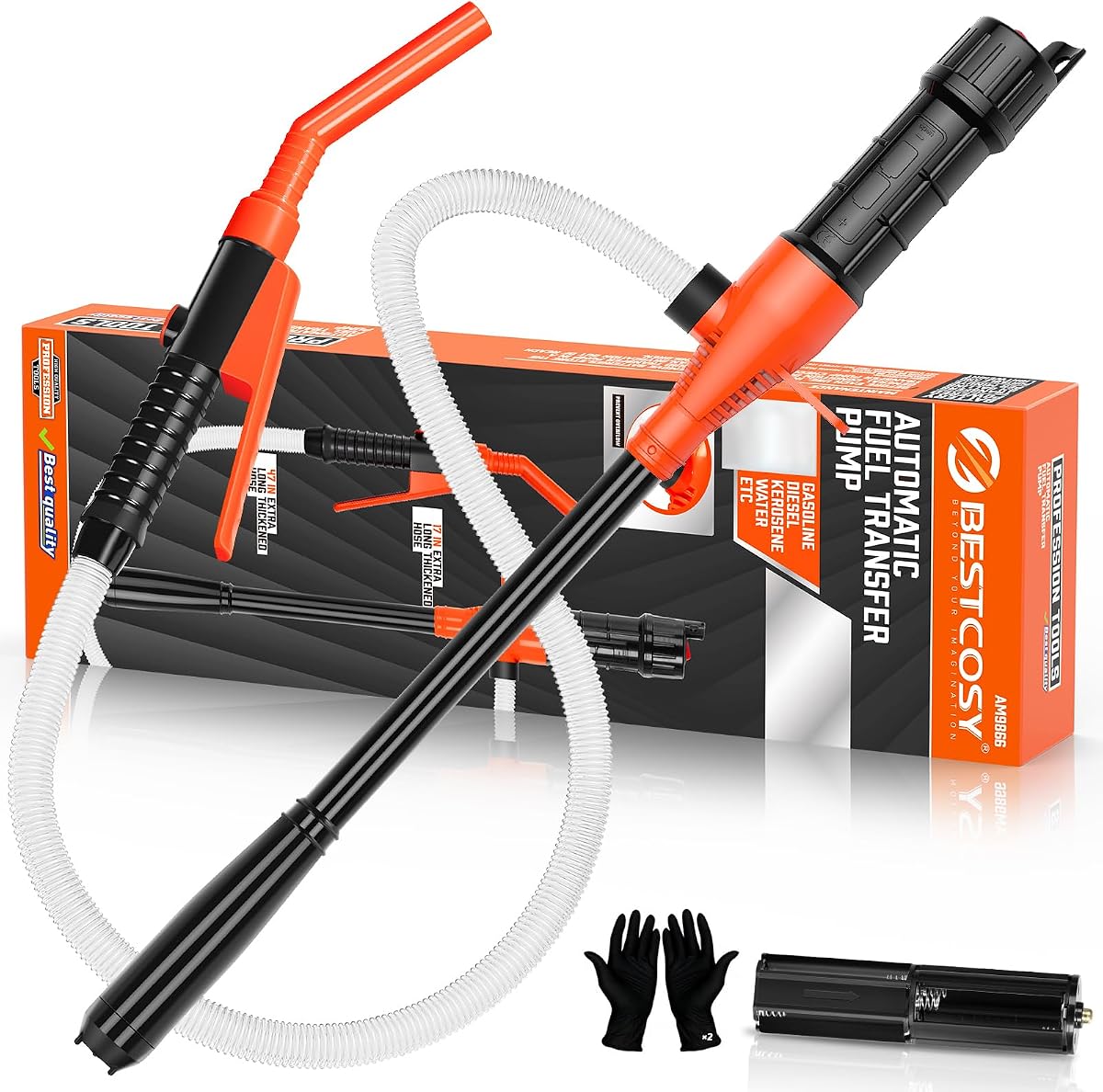
This 2.4 GPM cordless pump stands apart from similar models through its integrated adjustable nozzle. The nozzle can be set to a chosen flow or locked for a steady, drip-resistant stream, making it particularly relevant to chainsaws, small engines, motorcycles, and other containers where a powerful unmodulated flow could be inconvenient.
We may earn a commission when you buy through this link, at no additional cost to you.
The pump retains a 47-inch discharge tube, 16-inch suction tube, high-torque impeller, and compatibility with two D-cell or six AA batteries. Its stated liquid range includes gasoline, diesel, water, and light oils, with corrosive materials excluded. Standard cans, Jerry cans, pails, and 55-gallon barrels are identified as possible source containers.
As with the other 2.4 GPM portable models, the absence of a listed automatic tank sensor places responsibility for monitoring on the user. That is less significant when the nozzle is locked at a controlled rate, but it remains relevant during large transfers. Fresh batteries are recommended, and the tube should be cleaned after use.
Choose this version when precise nozzle adjustment is more important than maximum speed. It gives owners of small equipment a more practical control method without requiring a larger cordless tool system.
The built-in adjustable nozzle lets users reduce or lock the stream. That control is helpful around narrow tank openings, motorcycle tanks, and small fuel tanks.
Using two D-cell or six AA batteries keeps the power system familiar. It also makes this model convenient for emergency kits that already contain common batteries.
We may earn a commission when you buy through this link, at no additional cost to you.
With an up-to-6-GPM flow rate and a 4.8 rating, this is the highest-output model in the group. It is designed for owners who transfer fuel frequently and already use DeWalt 20V or Milwaukee 18V lithium-ion batteries, providing cordless operation without requiring a separate proprietary battery ecosystem.
We may earn a commission when you buy through this link, at no additional cost to you.
The pump also supports 12V battery clamps for an alternative power source. Its liquid sensor automatically stops the pump when the receiving tank is full, reducing spills and unnecessary fuel loss. A 51-inch discharge hose, 18-inch suction hose, five adapters, storage bag, clamps, and user manual create a well-equipped package.
The rugged ABS shell and corrosion-resistant components are specified for operation from 41 to 113 degrees Fahrenheit. One-touch controls are designed to work with thick gloves, and a built-in hook supports hands-free refueling and storage. Compatible liquids include gasoline, diesel, kerosene, light oil, and non-potable water.
This is the premium choice for workshops, farms, construction sites, and high-volume vehicle service. Its strongest advantages are throughput, automatic shutoff, and established tool-battery compatibility, although buyers must supply a compatible battery or appropriate 12V connection.
At up to 6 GPM, this pump is designed for the shortest transfer times in the comparison. That makes it a logical choice for repeated refueling and larger liquid volumes.
The built-in liquid sensor stops pumping when the destination is full. This reduces overflow risk during transfers where the user may need to focus on hose placement or another part of the setup.
Five adapters cover common neck sizes, while the long hoses provide useful positioning flexibility. A storage bag and included clamps make the pump easier to organize between jobs.
We may earn a commission when you buy through this link, at no additional cost to you.
The TERA PUMP TRFA01-XL is the most specifically focused racing-oriented model in the guide. Its 4.4 rating reflects a distinctive set of features for moving fuel into racing cells and tall racing jugs, including a 51-inch vinyl discharge hose, extended intake hose, universal adapter, and a dedicated racing-can adapter.
We may earn a commission when you buy through this link, at no additional cost to you.
Its transfer rate reaches 2.5 GPM, while a built-in sensor provides automatic shutoff when the destination is full. A corrugated flexible intake hose and extended intake range of 18 to 23.6 inches help the pump reach the bottom of containers. The upgraded metal impeller cover is intended to protect against debris found in fuel.
The pump supports gasoline, E15, E85, diesel, kerosene, and non-potable water. E85 users should remove the pump after use because it may corrode seals. The splash-resistant power-button cover and pump-head air-breakage technology are additional design details intended to improve handling during wet or messy work.
Choose the TRFA01-XL for racers or builders who need specific access to deep fuel cells and tall racing jugs. For general vehicle refueling, the higher-flow cordless models may offer more speed and broader automatic shutoff features.
The extended intake and included racing-can adapter make this pump distinctive. These details allow access to container bottoms that standard short-intake pumps may not reach.
The built-in sensor stops flow when the receiving tank is full. This helps preserve fuel and reduce spill risk during transfers into confined racing environments.
E85 is listed as compatible, but the pump should be removed after use because the fuel may corrode seals. Users of other blends should also verify their material and warranty requirements.
We may earn a commission when you buy through this link, at no additional cost to you.
The Auto-Stop 3.2 GPM pump combines a 4.8 rating, a built-in 4000mAh battery, and a 60-inch discharge hose. Its defining feature is the digital charge display, which helps users determine when the pump is ready and reduces uncertainty when preparing for a transfer away from an outlet.
We may earn a commission when you buy through this link, at no additional cost to you.
Two speed settings provide more control than a single-flow design. At the maximum rated rate, the manufacturer states that approximately five gallons can be transferred in 90 seconds. The lower setting is intended for smaller tanks, while automatic shutoff at full capacity helps reduce spills and overfilling.
The long flexible discharge hose gives the pump considerable reach between a can and a car, mower, generator, boat, or tractor. Built-in dry-run, overcharge, overcurrent, and overload protection add safeguards for operation and charging. The pump transfers gasoline, diesel, or water, although users should confirm their specific fluid and equipment requirements.
Choose this model for users who value a rechargeable battery, clear battery status, selectable flow, and strong hose reach without needing a high-capacity tool battery platform. It is especially useful for mixed household and small-equipment refueling.
The digital display shows remaining charge, allowing users to recharge before beginning a job. That is a meaningful convenience over pumps using only disposable batteries.
The lower setting supports smaller containers and controlled filling, while the higher setting provides up to 3.2 GPM. This makes the pump adaptable without requiring multiple devices.
The 60-inch discharge hose can span longer gaps between a source container and destination. This is helpful around vehicles, boats, trailers, and equipment stored at different heights.
We may earn a commission when you buy through this link, at no additional cost to you.
The most useful pump balances flow, reach, power, safety, and compatibility rather than maximizing one specification. These factors determine whether a model will work efficiently with your containers, tanks, fluids, and typical work environment.
Flow rate indicates how quickly the pump can move liquid. Options in this guide range from 2.4 GPM to as much as 6 GPM, with the MISFANS 5 GPM and 6 GPM tool-battery models positioned for rapid work. A faster pump is valuable when moving large volumes or refueling several machines, while a 2.4 to 2.8 GPM pump may adequately serve routine can-to-tank transfers.
Prioritize the maximum rated flow, but also consider whether the destination tank needs a slower setting. The Auto-Stop 3.2 GPM pump offers two speeds, while the adjustable-nozzle model lets users regulate the outlet stream. Match the pump to the job rather than assuming the highest flow is always preferable.
Battery-powered pumps divide into disposable-cell, built-in rechargeable, tool-battery, and vehicle-powered designs. Models using two D-cell or six AA batteries are inexpensive to deploy and easy to keep in an emergency kit. Built-in rechargeable pumps eliminate disposable batteries, while pumps accepting DeWalt or Milwaukee slider packs can be especially convenient for existing tool owners.
Consider runtime, charging logistics, battery ownership, and backup power. Some tool-battery models also accept 12V clamps, and the MISFANS 5 GPM model includes a cigarette-lighter option. Do not assume a bare-tool pump includes a battery; several listings explicitly state that batteries are not included.
Discharge hose length determines how far the pump can reach from the source to the destination, while intake length affects how deeply it can draw from a container. The listed systems range from 47-inch discharge tubes to a 60-inch flexible discharge hose, with several models also including an 18- to 19-inch intake hose.
Measure the actual arrangement before purchasing. Consider the height of the tank, the distance between the can and receiving port, and whether the source liquid is deep enough for the intake to remain submerged. Racing users should pay particular attention to extended intake reach and dedicated fuel-cell access.
An automatic tank-full sensor stops the pump when the receiving container reaches capacity. This feature appears in the MISFANS models, the ANSE design, the 6 GPM tool-battery pump, and the TERA racer pump. It is particularly useful when hose positioning, darkness, or a large receiving tank makes constant observation difficult.
Automatic shutoff should not be confused with guaranteed zero spills. Correct sensor placement, proper hose seating, clean connections, and compatible adapters still matter. If a basic pump lacks sensing, choose a lower flow setting, keep the outlet visible, and never leave an unrestricted transfer unattended.
A pump that cannot seal correctly to its source container may perform poorly or leak. Included adapters support different can-neck sizes, while some products include a racing-can adapter or a universal plastic-can adapter. Measure the container opening and neck diameter before buying, especially for unusually wide or narrow utility jugs.
The ANSE Model X1 Ultra has a housing that may not fit openings below 1.3 inches, while other models emphasize compatibility with North American plastic cans. The larger kits include five adapters covering several common neck sizes. Confirm both the source-container fit and receiving-tank connection.
Most of the listed pumps are intended for gasoline, diesel, and sometimes kerosene or non-potable water. Several basic models also list light oils, but they exclude corrosive fluids. The TERA model supports E15 and E85, although it instructs users to remove the pump after E85 use because seals may corrode.
Never assume a pump is suitable for every fluid associated with automotive work. Oil, beverages, solvents, corrosive chemicals, and contaminated runoff may require different materials and pump designs. Match the manufacturer's stated liquid list to the exact fluid and follow any fuel-blend restrictions.
Portable pumps are especially useful when no AC outlet is available. Their size, weight, hose arrangement, and storage case affect how easily they can move between a garage, vehicle, campsite, farm, or jobsite. Compact models using common AA or D-cell batteries are simple to carry, while rechargeable and tool-battery systems add cable, battery, or docking requirements.
Look for a storage bag, removable hose, nozzle clip, or built-in hook if you expect to use the pump away from a workbench. Choose a design that can be packed without crushing the hose or leaving the outlet exposed and dripping.
Hose construction affects durability, visibility, and positioning. Transparent PE hose makes flow easier to observe, reinforced hoses are positioned for higher-output use, and vinyl tubing is designed to resist minor nicks and cuts. Nozzle design also influences control: a hand-trigger nozzle, an adjustable outlet, and a locking stream serve different needs.
For small engines and narrow openings, precise nozzle control can be more useful than maximum flow. For larger tanks and fast fleet work, reinforced hose reach and automatic shutoff deserve greater attention. Review the complete hose length and whether the discharge and intake sections can be routed without sharp bends.
Before transferring liquid, verify that the pump and every hose are clean, dry, and free of damage. Confirm that the source fluid appears in the compatibility list, inspect the adapter fit, and ensure the receiving container has enough room. Use fresh batteries or a fully charged battery, and keep a compatible backup power option nearby.
Place the source container at a practical height and insert the intake tube fully, allowing enough hose to reach the bottom. Connect the discharge hose securely, position its outlet into the receiving tank, and start the pump at a low setting when multiple flow options are available. Watch the outlet and tank level until the transfer ends, especially if the pump does not have automatic shutoff.
Stop the pump promptly after filling, disconnect the outlet before moving the container, and wipe away residual fuel or water. Empty and clean the tube after use as the manufacturer recommends. Store the pump dry and protected from corrosive chemicals, and follow special removal guidance when using E85 or another restricted fuel blend.
The best flow rate depends on the volume and frequency of transfers. A 2.4 to 2.8 GPM pump is suitable for routine refueling of smaller cans and equipment, while 3.2 to 5 GPM is better for frequent transfers. A 6 GPM pump is most attractive for workshops, farms, and other high-volume work.
Many of the listed pumps are designed to transfer gasoline, diesel, and non-potable water, while some also specify kerosene or light oil. Always read the complete liquid list for the exact model. Corrosive liquids, beverages, and unsuitable oils should not be transferred unless the manufacturer explicitly approves them.
Several models that accept AA or D-cell batteries do not include them, and the tool-battery pumps are generally sold as bare tools. The ANSE and 3.2 GPM rechargeable models have built-in batteries that must be charged. Check the package contents before buying so you can obtain the correct power source.
The MISFANS 5 GPM and 6 GPM tool-battery pumps support the stated DeWalt 20V and Milwaukee 18V slider battery formats. That does not mean every battery in either ecosystem is automatically compatible. Confirm the physical fit, voltage requirements, and manufacturer instructions before operation.
Automatic shutoff stops the pump when the liquid sensor detects a full receiving tank. This reduces overflow, fuel waste, and cleanup, especially when the outlet is hard to see. The system still depends on correct sensor positioning, proper hose placement, and clean, compatible connections.
The intake should extend deeply enough to draw liquid near the bottom without pulling air into the pump. Many models have a 16-inch intake, while the TERA racer pump offers an extended 18- to 23.6-inch range. Always place the source container high enough to keep the intake submerged as the fluid level falls.
The TERA TRFA01-XL is specifically designed with an XL discharge hose, extended intake hose, and racing-can adapter for racing fuel cells. Other pumps may work with standard tanks, but buyers should confirm hose reach, opening size, and adapter compatibility before using them in a racing application.
Use fresh or fully charged batteries, clean the tube after every use, and keep the housing and connections dry when possible. Avoid corrosive chemicals, wipe away residue, and store the unit with the hose protected from kinks and sharp objects. E85 users should also remove the pump after use because it may corrode seals.
The MISFANS 3.8 GPM pump is the most balanced overall choice because it combines automatic shutoff, useful speed, two power options, four adapters, and extended hose reach. The 6 GPM tool-battery pump leads in throughput and suits owners of compatible DeWalt or Milwaukee batteries, while the 2.8 GPM portable pump offers an efficient budget-oriented alternative.
Prioritize the features your actual transfers require: maximum flow for frequent high-volume work, a built-in rechargeable battery for convenient cordless use, automatic shutoff for safer unattended positioning, and the correct adapters for your cans. Long hoses, broad liquid compatibility, and adjustable flow can matter more than headline GPM in some situations.
Before making a final selection, verify the container opening, receiving-tank connection, battery format, liquid restrictions, and included accessories against the manufacturer's current product information. Product features and configurations can change, so checking the live listing helps ensure the pump you choose fits the job you actually have.
