
OHAYO A7
5.0Editor score
Only 4.7g per earbud
Designed for glasses wearers
Forty-hour case battery
This Bluetooth Headset for Glasses Wearers guide compares comfort, audio, battery life, microphones, water resistance, and fit.
A Bluetooth headset for glasses wearers must balance secure positioning with all-day comfort, especially when frames, temples, and ear hooks compete for the same space. The best options use open-ear, clip-on, external, or bone-conduction designs to avoid blocking the ear canal while reducing pressure against glasses and the sides of the head.
This guide compares ten headsets using the information available for each product, including its physical design, weight, audio hardware, wireless features, microphone functions, battery claims, and resistance to sweat or water. It also considers whether a headset is intended for commuting, exercise, driving, work calls, or extended everyday wear.
The list includes dedicated glasses-compatible models as well as general open-ear and bone-conduction headsets that can work alongside frames. Each review highlights the strongest features, practical limitations, and likely user profile, while noting that product specifications, availability, and prices can change over time.
5.0Editor score

4.6Editor score
4.5Editor score
The comparison covers dedicated glasses-compatible headsets alongside clip-on, hook-style, external, air-conduction, and bone-conduction designs, with particular attention to comfort, sound, calls, battery life, and outdoor readiness.


This bone-conduction headset earns a 4.6 rating and stands out as a balanced choice for glasses wearers who want audio without inserting anything into the ear canal. Its open-ear architecture, flexible neckband, and stated 25g weight address the pressure problems associated with conventional earbuds, while the anti-leak feature seeks to keep personal listening from becoming overly noticeable.
We may earn a commission when you buy through this link, at no additional cost to you.
Bluetooth 6.0, dual-device connection, and a built-in microphone make it useful beyond exercise. Users can move between music, video, calls, and work tasks without repeatedly pairing two sources. The three EQ modes—Vocal, Bass, and Balanced—cover common listening needs, including clearer speech for podcasts, stronger low-end for music, and a more neutral option for general media.
The headset is rated IP65 for waterproof and sweatproof use and offers up to 10 hours of playback with Type-C charging. It is not designed for swimming or underwater use, which is reasonable for a neckband headset intended for running, cycling, hiking, commuting, gym sessions, and outdoor work. Its open construction also has an unavoidable limitation: some audio can escape, particularly in quiet surroundings.
This is a strong general recommendation for glasses wearers who value a stable, low-weight form, useful wireless controls, and flexible EQ settings. It may not be the first choice for someone who insists on completely invisible audio, but its balance of comfort, awareness, battery life, and connectivity makes it especially practical for active users and multitaskers.
The flexible neckband rests around the neck while the transducers sit near the ears, avoiding the insertion and pressure associated with in-ear buds. Its 25g stated weight also makes it more plausible to wear through workdays and extended listening sessions.
Dual-device connectivity reduces the need for constant reconnection, while Vocal, Bass, and Balanced modes provide quick adjustments for music, speech, and media. The microphone supports hands-free calling for commuting and work use.
We may earn a commission when you buy through this link, at no additional cost to you.
The OHAYO A7 has a 5.0 rating and is the most explicitly glasses-oriented headset in this guide. Its clip-on open-ear construction is designed to sit around the ears without pressing against frame temples or blocking the ear canals. At only 4.7g, each earbud also places a very light demand on the wearer's ears and surrounding accessories.
We may earn a commission when you buy through this link, at no additional cost to you.
Sound is produced through 12mm dual drivers, while Bluetooth 5.4 is specified to offer a stable connection and reduced delay. Those characteristics suit music, movies, gaming, and calls, particularly when synchronized audio matters. Environmental noise control is included for microphone performance, which can be useful during meetings or outdoor conversations.
The charging case supports up to 40 hours of total playback, making this a convenient choice for people who do not want to recharge frequently. IPX6 protection helps resist sweat and light rain, and the stable clip-on shape is suitable for running, HIIT, commuting, and other active settings. Open-ear designs can still produce noticeable sound leakage, and IPX6 should not be interpreted as full waterproof protection.
The A7 is a compelling option for budget-conscious glasses wearers who prioritize minimal weight, purpose-built compatibility, and long battery life. It is less suited to buyers seeking a headband or a device that attaches directly to the frames. For everyday listening, exercise, and travel, however, its compact design and glasses-aware construction form a strong package.
Rather than relying on a bulky neckband or a hook that must share space with a temple, the A7 uses compact clip-on earbuds. The stated 4.7g weight and skin-conscious design make the headset particularly attractive for users who wear glasses for many hours.
The case-based battery system is one of the model's strongest practical advantages. Forty hours of case-assisted playback is well suited to travel and busy schedules, while the included charging system supports quick top-ups when needed.
We may earn a commission when you buy through this link, at no additional cost to you.
The LICAEVEY model takes a different approach by attaching directly to the temples of eyeglasses or sunglasses. Its 3.5 rating is the lowest among the listed products, but the frame-mounted design solves a genuine problem for wearers who find ordinary earbuds, hooks, or neckbands incompatible with their glasses.
We may earn a commission when you buy through this link, at no additional cost to you.
An elastic, adaptive silicone cover is intended to grip the temples and keep the speakers in position. Because the hardware does not need to rest in or around the ear, it avoids pressure against the ear canal and reduces competition for space around the sides of the head. That makes it especially relevant for people with narrow temples, unusual frame shapes, or a need to switch between eyewear regularly.
The headset uses Bluetooth 5.3, provides up to eight hours of continuous playback, and supports voice-assistant activation and multifunction key controls. Its open-ear approach keeps users aware of traffic, conversations, and other surroundings during running, cycling, driving, or general outdoor activity. The main limitation is that attachment depends on whether the silicone cover grips a particular frame securely.
This model makes the most sense for buyers who specifically want audio built into the glasses rather than a separate earbud or headset. Its lower rating and frame-specific fit requirements deserve attention, but for users who have struggled to find comfortable open-ear hardware around their eyewear, that focused design may outweigh the compromises.
Mounting the speakers on the temples means the audio travels with the frames and leaves the ear area entirely free. This is helpful when ordinary earbuds press against the side of the head or when a wraparound hook conflicts with the arms of the glasses.
The universal-fit claim still depends on the dimensions and shape of the temples. A product that feels secure on one pair of frames may sit differently on another, so buyers should consider frame thickness and profile before choosing.
We may earn a commission when you buy through this link, at no additional cost to you.
TOZO OpenEarRing has a 4.3 rating and combines a compact clip-on form with one of the more extensive customization systems in this roundup. Each earbud weighs 5.1g, and the product is specifically designed to avoid clashing with glasses. The skin-friendly silicone and contoured shape are intended to remain comfortable during extended wear.
We may earn a commission when you buy through this link, at no additional cost to you.
TOZO's OrigX acoustic technology targets stereo detail for music and movie dialogue, while the companion app provides 32 EQ modes. That level of adjustment can be useful for listeners who move between genres or want to emphasize vocals. Bluetooth 5.4 is specified for stable connectivity, and the product offers one-step automatic pairing after the earbuds are removed from their case.
The charging case has a digital display and supplies an additional 30 hours beyond the stated 10 hours from the earbuds, for 40 hours overall. Type-C charging, simple button controls, and IPX5 water resistance add convenience for commuting and exercise. As with other open-ear products, some sound can leak, and the app-based EQ setup may not appeal to users who prefer physical controls only.
OpenEarRing is a good match for glasses wearers who want a lightweight, recognizable-brand option with more sound personalization than a basic headset. It is particularly suitable for daily use, movies, and light exercise. Buyers who need the same 40-hour total from a much smaller case or expect complete sound isolation should look elsewhere.
The app's 32 EQ modes give users a way to adjust the presentation for vocals, genres, or spoken content. That makes the headset more flexible than simple three-mode designs, especially for listeners who alternate between music, movies, and podcasts.
A digital display on the charging case helps users understand remaining power without guessing. Combined with 10 hours of earbud playback and 30 additional hours from the case, it supports extended use between full charging cycles.
We may earn a commission when you buy through this link, at no additional cost to you.
The O2 Open Ear Headphones carry a 4.9 rating and are explicitly designed with glasses wearers in mind. The product description says the ergonomic hook was specially tested for compatibility, while the 26.4g titanium frame is intended to sit outside the ear canal without the soreness associated with inserted earbuds or the bulk of over-ear headphones.
We may earn a commission when you buy through this link, at no additional cost to you.
Its 15mm dynamic drivers are larger than those found in many sport-oriented competitors, and air conduction directs sound toward the ear while limiting disturbance to nearby listeners. The stated connection range reaches 33 feet, and Bluetooth 5.3 supports two-device connectivity for switching between a phone and another source. Built-in microphones and tactile button controls support calls without relying on touch gestures.
Battery performance is another strong point. The headset provides up to 12 hours of continuous music and calls, and ten minutes of magnetic fast charging adds one hour of playback. Standby time is stated at 150 hours. The headset is sweat-resistant for running, hiking, cycling, and general workouts, although it is expressly not intended for swimming.
O2 is a compelling recommendation for active users who wear glasses and need a secure, lightweight headset with stronger-sized drivers. The hook will still occupy some space near the frame, so people with very narrow or unusual temples should assess the geometry. Even so, the combination of glasses testing, battery life, multipoint connectivity, and quick charging makes it especially practical for workouts and long outings.
The product's glasses-specific testing is a meaningful differentiator in a category where many headsets are simply marketed as open-ear. The flexible titanium frame and external hooks are designed to avoid putting pressure inside the ear while accommodating common frame profiles.
Twelve hours of continuous use covers most full-day activity, and magnetic fast charging provides a useful option when the battery is low. The long standby figure also means the headset is more likely to be ready when a walk, run, or call begins.
We may earn a commission when you buy through this link, at no additional cost to you.
The LEVN open-ear trucker headset has a 3.8 rating, but its call-focused design makes it a practical option for drivers and people who spend substantial time talking while wearing glasses. The 29g silicone construction is intended to remain light, and rotating ear hooks are designed to fit different ears while accommodating frames, hats, or helmets.
We may earn a commission when you buy through this link, at no additional cost to you.
Its advanced AI microphone system is intended to reduce background clutter, while a dedicated mute button provides immediate control over the microphone. A boom can rotate through 270 degrees to place the microphone closer to the mouth, which is a more specialized approach than the simpler microphone arrangements found on many music-focused open-ear earbuds.
Bluetooth 5.3 provides stable pairing and true multipoint support, allowing a laptop and phone to remain connected simultaneously. The stated range reaches 49 feet. A multifunction button handles track changes, calls, and playback, and when the headset is not in use it can rest around the neck. It is also described as sweatproof for workouts and wet-weather use.
This is the strongest fit in the list for truck drivers, remote workers, and frequent callers who need easy muting and microphone placement. The tradeoff is that the boom microphone and bulky open-ear architecture are less discreet than compact clip-on earbuds. It also does not create a private listening bubble, so users must remain mindful of surrounding noise and audio leakage.
The adjustable boom, noise-reducing microphone system, and dedicated mute control distinguish this headset from models designed mainly for music. These features make it more relevant to driving, online meetings, and work environments where clear pickup and quick privacy control matter.
Three-dimensional rotating hooks are intended to create a stable fit across different ear shapes and compatible accessories. The open design leaves the ear canal uncovered, which also helps users remain aware of their surroundings during outdoor activity.
We may earn a commission when you buy through this link, at no additional cost to you.
This second bone-conduction listing shares the same 4.6-rated core feature set as the first headset but is available under a separate ASIN and product image. Its 25g flexible neckband, open-ear operation, and skin-friendly design make it a relevant option for glasses wearers who prefer a stable structure around the back of the head.
We may earn a commission when you buy through this link, at no additional cost to you.
The design leaves the ears available for environmental awareness, which can be valuable near traffic, on crowded paths, or during outdoor work. Anti-leak audio is intended to reduce sound spill, although open headsets cannot provide the isolation of sealed earbuds. The transducers sit outside the canal, reducing the sort of pressure many glasses-wearing listeners complain about with inserted models.
Bluetooth 6.0 supports fast pairing, stable connectivity, and simultaneous connections to two devices. Vocal, Bass, and Balanced modes allow quick changes for calls, podcasts, streaming, and workouts. The included microphone supports hands-free communication, while Type-C charging, 10-hour playback, and IP65 protection make the headset suitable for a wide range of active and everyday settings.
For buyers who like the steadiness of a neckband, this product offers a well-rounded package with little need to trade away modern wireless features. Its main limitations are universal to the format: the band can interfere with a collar, and personal audio may be audible in quiet rooms. It is not designed for swimming or underwater use.
The neckband distributes the headset around the back of the head, which can feel more secure than a small clip during movement. It also gives the product a consistent platform for the open-ear transducers without placing either in the ear canal.
Dual-device support is useful for people who move between work and entertainment. Bluetooth 6.0 is intended to make pairing and everyday switching smoother, while the three EQ modes offer practical control over vocals and bass.
We may earn a commission when you buy through this link, at no additional cost to you.
The O1 Trucker Bluetooth Headset has a 5.0 rating and emphasizes clear communication, extended talk time, and open-ear air conduction. Its 15mm dynamic driver is described as delivering rich, clear, natural sound with stronger bass than traditional bone-conduction alternatives, making it useful for podcasts and coaching cues as well as calls.
We may earn a commission when you buy through this link, at no additional cost to you.
Dual microphones with AI noise reduction are intended to filter road and background noise. The boom rotates through 210 degrees so the user can optimize the microphone position, and a triple press of the minus button activates or deactivates mute with a voice prompt. A multifunction control also manages playback, track changes, and calls.
Bluetooth 5.4 provides a stable connection with a stated range of 33 feet. Battery life is rated at up to 12 hours of talk time, directly addressing the needs of long-haul drivers and extended meetings. The open-ear format preserves environmental awareness, but it also means some audio can escape and the wearer does not receive passive noise isolation.
This headset is best for people who communicate frequently and want the microphone to remain easy to position. The trucker-style boom is not as understated as the compact designs elsewhere in the list, and the open construction is not appropriate for anyone who needs private audio in a shared space. As a dedicated work-and-call headset, though, it offers a persuasive feature set.
Dual microphones and AI noise reduction target common distractions such as road noise and background activity. The adjustable boom gives the user more control over pickup than a fixed microphone embedded in an earbud.
The triple-press mute action is easy to remember and provides an audible confirmation. That makes it practical during client calls, online meetings, or driving when the wearer needs to stop transmitting quickly.
We may earn a commission when you buy through this link, at no additional cost to you.
Xmenha Open Over Ear Earbuds have a 3.6 rating and distinguish themselves with ultra-thin memory-metal ear hooks. The hooks are described as barely thicker than 15 strands of hair, offering a low-profile alternative to bulkier over-ear fitness earbuds. The open air-conduction structure keeps the ear canal unobstructed, which helps with comfort and awareness.
We may earn a commission when you buy through this link, at no additional cost to you.
The product information specifically identifies the design as glasses-friendly, noting that the thin hooks can be worn without the discomfort associated with more substantial ear supports. It is designed for all-day use, running, and exercise, and the open acoustic structure lets users hear warnings, traffic, and nearby conversations without removing the earbuds.
Battery life is the main limitation. Each earbud provides four hours of continuous playback, while the charging case adds 2.5 full charges for 12 hours overall. The case recharges in about one hour. The product also acknowledges minor sound leakage, mild bass, and lower recommended volume in quiet indoor spaces, making it more appropriate for casual outdoor listening than private office use.
This is a lightweight option for glasses wearers who value a nearly invisible profile and broad comfort. It works well for walks, light workouts, and situations where environmental awareness is desirable. Users with demanding battery needs should favor a model offering more hours per charge, while those wanting stronger bass or complete discretion should consider the trade-offs of open-ear audio.
The memory-titanium hooks flex with the wearer and avoid the heavy visual impression created by large sport earbuds. Their slim profile may also sit more comfortably beside the arms of glasses, although individual frame geometry can still affect the result.
The product description is candid about mild bass and sound leakage. Those traits are natural to the open format, and they make the earbuds more suitable for podcasts, light music, walking, and outdoor awareness than for isolated listening in busy shared rooms.
We may earn a commission when you buy through this link, at no additional cost to you.
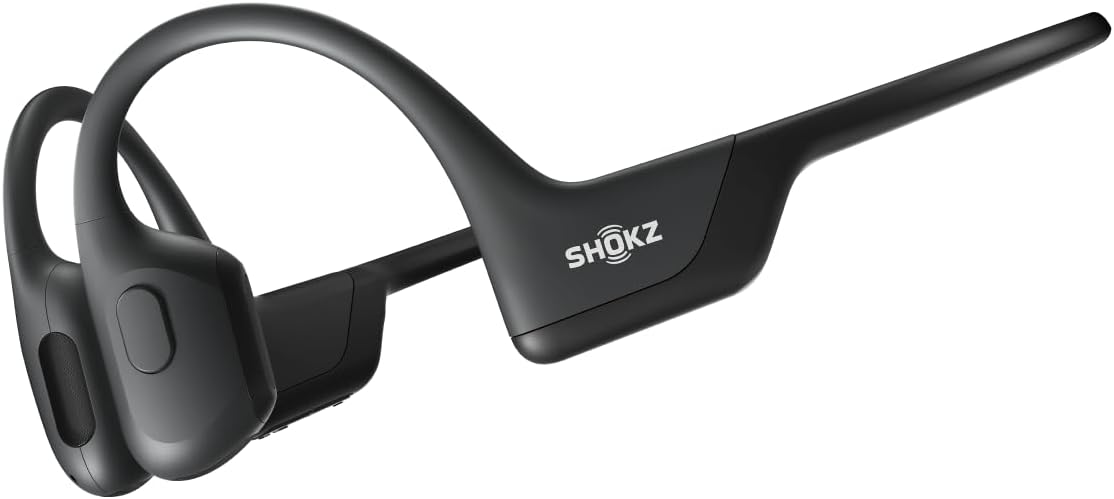
SHOKZ OpenRun Pro has a 4.5 rating and is the premium choice in this guide. It uses Shokz bone-conduction technology and TurboPitch processing to deliver sound through the cheekbone while keeping both ears uncovered. The bud-free structure is intended to avoid the discomfort of inserted headphones and maintain awareness of the surrounding environment.
We may earn a commission when you buy through this link, at no additional cost to you.
A lightweight wraparound titanium frame provides stability during running and training, while the sweat-resistant construction targets demanding workouts. The product description also mentions a clear built-in microphone for conversations. Rather than relying on a conventional earbud driver placed in the canal, the system focuses on open-ear playback, which can be comfortable alongside glasses without creating a sealed feeling.
Battery performance includes 10 hours of continuous music, calls, and podcast playback. A five-minute quick charge can add up to 1.5 hours, useful when a long run begins with a low battery. Magnetic induction is used for charging, and the headset pairs with Android, iOS, Windows, and other Bluetooth-enabled devices. The included headband can help keep the rear section secure during demanding movement.
OpenRun Pro is best for athletes and active users willing to prioritize a refined, specialized open-ear platform. It avoids ear-canal insertion, remains stable during exercise, and provides the strongest premium-focused feature package here. The added headband may not be desirable for users who prioritize minimalism, and bone-conduction audio will not recreate the bass impact of a sealed consumer headphone.
The ninth-generation bone-conduction system and TurboPitch processing distinguish OpenRun Pro from general clip-on earbuds. The design delivers audio while keeping the ears available for environmental sounds, supporting both focused listening and awareness during outdoor activity.
The wraparound titanium frame is intended to remain stable during intense training, while the included headband adds another layer of support. Glasses wearers benefit from the absence of earbuds inserted into the canal and the lack of bulky over-ear cups.
We may earn a commission when you buy through this link, at no additional cost to you.
The best choice depends on how the headset occupies the space around your ears and temples, how long you need to wear it, and whether calls, music, exercise, or environmental awareness come first.
A headset that works technically with glasses may still become uncomfortable if its hooks, clips, or neckband press against the temples. Clip-on earbuds place the hardware around the outer ear, external glasses headphones attach to the frames themselves, hook-style earbuds loop over the ear, and neckband headphones stabilize around the back of the head. Dedicated frame-mounted models can be especially practical for narrow or unusually shaped glasses, while bone-conduction neckbands avoid putting a hook directly beside the temple.
Choose the attachment that matches your frame profile and activity. Exercise generally favors secure hooks or clips, while commuting and office use may favor the lower-profile appearance of a frame-mounted or compact clip-on design.
Weight becomes increasingly important when a headset is worn for hours alongside glasses. The OHAYO A7 is listed at 4.7g per earbud, while the TOZO OpenEarRing is listed at 5.1g per earbud. Neckband and work headsets are heavier at 25g, 26.4g, and 29g, but those totals include larger structural components. Lower weight can reduce downward pressure and make a headset easier to wear with frames.
If you already feel the weight of your glasses, favor compact earbuds or the lightest feasible design. Compare the stated total weight carefully because some products list the headset and case together while others describe an individual earbud.
Explicit glasses compatibility is more useful than a generic open-ear claim. Look for products that mention a tested glasses fit, skin-friendly silicone, contours that avoid frame temples, or an attachment system built for eyeglass arms. Even then, glasses vary in temple width, thickness, curvature, and how far the arms sit above the ears. A secure fit on a narrow metal frame may not carry over to broad acetate frames.
Read customer feedback carefully for compatibility details and consider returning the headset if the fit fails. The best open-ear product is ineffective if it constantly shifts, presses, or blocks the arms of your glasses.
Bone-conduction systems send sound through the cheekbone and generally avoid the ear canal, making them a natural match for long wear. Air-conduction open-ear models use small speakers positioned near the ear and may deliver stronger bass or a wider sense of stereo sound. Both formats allow environmental awareness, and both can leak enough audio for nearby people to hear.
Choose bone conduction for a more specialized open-ear experience and maximum freedom from earbuds. Choose air conduction when fuller bass, podcasts, movies, or gaming sound matter more. Neither format provides complete privacy.
Battery claims come in several forms. The OHAYO A7 and TOZO OpenEarRing provide 40 hours with their charging cases, while individual headset playtimes range from four hours on the Xmenha model to 12 hours on the O2. The SHOKZ OpenRun Pro and several neckband options provide 10 to 12 hours directly from the headset, with quick charging available in selected models. Consider both earbud life and case capacity rather than looking only at the largest headline figure.
For heavy daily use, prioritize at least eight hours from the headset itself and a portable case. For active users, quick charging can be more valuable than a large case, especially when sweat or weather makes carrying a case inconvenient.
Call quality depends on microphone placement, noise reduction, and whether the design uses a boom. The O1 and LEVN trucker headsets offer adjustable boom microphones, dual-microphone systems, and dedicated or shortcut mute controls, making them stronger choices for driving and work. Compact music earbuds generally rely on built-in microphones and may be adequate for casual calls but less optimized for noisy environments.
Choose a boom-style headset if speaking clearly is central to your work. If calls are occasional, prioritize the overall fit, sound quality, and battery life of a more compact glasses-compatible model.
Water-resistance ratings are not interchangeable. The rank-one and rank-seven bone-conduction headsets use IP65, the OHAYO A7 uses IPX6, and the TOZO OpenEarRing uses IPX5. These levels indicate varying degrees of protection against sweat, rain, and dust, but none of the listed products is presented as suitable for swimming. Some products explicitly warn against underwater use.
For running, cycling, hiking, and gym sessions, an IPX5 or higher rating is generally a relevant feature. Keep the headset away from pools and submersion unless the manufacturer specifically states that it is safe for those conditions.
Open-ear headsets are designed to let environmental sound reach your ears, and personal audio can also escape because the drivers are not sealed. This is desirable for traffic awareness, conversations, and outdoor running, but it makes the category less suitable for confidential listening in offices, public transit, or shared rooms. Bone conduction may appear more private because the transducers sit away from the ear, but the audio is not completely invisible.
Look for anti-leak features, and use moderate volume in quiet settings. If privacy is your primary requirement, choose a sealed or semi-in-ear model instead of an open headset, even if that means changing how it interacts with your glasses.
Charge the headset fully before the first use, then pair it through the Bluetooth menu of your phone or computer. Remove or power on the earbuds according to their instructions, select the appropriate product name in the device list, and confirm any prompts. Models with an app or case may require an initial setup, so completing those steps before adjusting the fit makes it easier to evaluate sound, EQ, controls, and microphone behavior.
Place the headset or earbuds before putting on your glasses when the design allows it, then adjust the position of both the audio hardware and the frame. The goal is to avoid pressure at the temple hinge, ear hook, and ear-canal entrance. For frame-mounted models, position the attachment around the middle portion of each temple rather than the hinge, then confirm that the speaker remains aligned with the intended listening position.
For daily care, wipe the earpieces, silicone surfaces, and charging contacts with a soft dry or lightly damp cloth, then allow them to dry before charging. Do not immerse open-ear electronics in water, even when their rating indicates sweat or rain resistance. Store the headset in its case, remove excess moisture after workouts, and follow the manufacturer's guidance for battery, replacement parts, firmware, and cleaning.
They can be, particularly when the manufacturer has designed the clip, hook, or neckband around glasses. The best approach is to compare the headset with the shape and thickness of your temples, then adjust both until the frame does not shift or press against the audio hardware. Dedicated glasses-compatible models are usually more predictable than general open-ear earbuds.
Yes, provided the fit is secure and the product has suitable sweat resistance. Clip-on and hook-style models are generally better for vigorous movement than loose frame-mounted attachments. Start with a short test run to check whether the glasses, earbuds, or frame temples move, and stop if you feel pressure or irritation.
They avoid inserting speakers into the ear canal and can be comfortable when glasses temples make inserted earbuds awkward. However, the neckband or rear section must still fit behind the head without conflicting with the frames. Open-ear air-conduction models can also work well and may provide stronger bass.
Some leakage is common because the drivers remain open rather than sealed in the ear canal. Anti-leak audio and higher-positioned speakers may reduce it, but none of the listed products guarantees complete privacy. Use moderate volume in quiet offices, libraries, or shared transportation if nearby sound is a concern.
The O1 and LEVN trucker headsets are the strongest call-focused options because they include adjustable microphones, noise-reduction features, and easy mute controls. They also leave the ear canal open and are designed to sit alongside frames. For occasional calls, the OHAYO A7 or TOZO OpenEarRing may be preferable for their lighter, more compact form.
None of the listed models is presented as suitable for swimming or underwater use. Some have IPX5, IPX6, or IP65 ratings for sweat, rain, and dust resistance, but those ratings should not be interpreted as permission to submerge the electronics. A dedicated swim-capable product is the safer choice for pool or open-water swimming.
Start with the correct attachment style, place the headset before the glasses, and adjust each component separately. Thin hooks may work with narrow frames, while clip-on models can be easier to stabilize around wider temples. If movement remains excessive, choose a more secure sports-oriented design and avoid using oversized frames with unusually wide temples.
A 10-hour or 12-hour figure usually describes playback from the headset itself, while a 40-hour figure may include additional runtime from a charging case. The OHAYO A7 and TOZO OpenEarRing provide 40 hours with their cases, not 40 continuous hours from each earbud. Compare both figures to understand how much listening is available away from a power source.
The OHAYO A7 stands out as the best budget option for its dedicated glasses design, exceptionally light clip-on construction, and 40-hour case-assisted battery. The rank-one bone-conduction headset is the strongest overall choice for users who want flexible EQ, dual-device connectivity, environmental awareness, and a stable neckband, while SHOKZ OpenRun Pro is the premium pick for athletes and buyers seeking a specialized bone-conduction platform.
Start with the attachment style rather than audio specifications alone. Frame-mounted headphones may eliminate ear-side conflict, compact clips minimize weight, hooks secure the product during exercise, and neckbands provide a stable alternative. From there, match battery life, microphone capability, water resistance, and sound characteristics to the environment in which you will use the headset most often.
Always check the current product listing, fit guidance, included accessories, warranty information, and specifications before purchasing, since details and availability can change. Comparing the headset with the shape of your glasses remains essential: a broadly compatible design can still require small adjustments, and return options can provide valuable protection when finding the right configuration.
