
ACR ResQLink View RLS PLB
4.8Editor score
Return Link Service confirmation
28+ hours operating life
Five-year battery lifespan
Satellite Messenger Personal Locator Beacon options are compared for emergency signaling, battery life, portability, durability, and global safety coverage.
A satellite messenger personal locator beacon can be the difference between being found quickly and waiting for help in remote terrain, open water, or other places without cellular coverage. The best units combine a dependable emergency signal, accurate positioning, long battery life, rugged construction, and an activation process simple enough to use under stress.
This guide compares ten beacons and satellite communicators based on their supplied specifications, including emergency frequencies, GNSS compatibility, Return Link Service, waterproofing, battery life, attachment options, messaging functions, and whether ongoing satellite service is required. It includes traditional personal locator beacons as well as Garmin communicators that offer more everyday contact features.
Each review explains the strongest reasons to consider a particular model, along with its practical limitations and ideal use case. The comparison highlights how traditional registered PLBs differ from subscription-based two-way communicators. Product availability, registration requirements, service terms, and pricing can change, so confirm current details before purchasing.
4.8Editor score

4.7Editor score
4.5Editor score
The comparison below places all ten devices on an equal footing, highlighting their core emergency technologies, positioning systems, battery characteristics, physical features, and service models so readers can choose the right device for their trips and risk level.


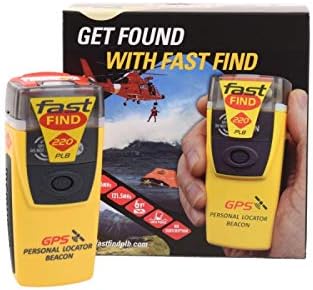
The McMurdo FastFind 220 is a focused personal locator beacon with a 4.5 rating and a clear mission: transmit a distress alert when its owner faces grave and imminent danger. Its standout quality is the straightforward activation process. The user deploys the antenna, removes the anti-tamper seal, and presses the ON button, reducing the number of steps that must be remembered during a crisis.
We may earn a commission when you buy through this link, at no additional cost to you.
This unit is programmed for registration with the United States country code. Although it can function around the world, the initial emergency contact identified in the supplied information is the US Search and Rescue authority with which it is registered. A separate rest-of-world programming option is available, and the seller also offers free reprogramming on that alternative listing when required.
Registration is not an optional administrative detail. The device must be registered in most countries so rescuers can connect the beacon to its owner and the emergency contact information supplied. That registry also allows search-and-rescue teams to consider the travel plans associated with the registered user. Without a valid registration, the process can begin more slowly.
The FastFind 220 is best for travelers who want a dedicated emergency beacon without an ongoing satellite subscription or a full communications user interface. Its trade-offs are equally clear: it is programmed for US registration in this listing and does not offer ordinary two-way messaging, photos, tracking, or weather functions. For hikers, boaters, climbers, and overseas travelers who value simplicity and direct emergency signaling, however, it remains an uncomplicated and capable choice.
Deploying the antenna, pulling the anti-tamper seal, and pressing the ON button gives the FastFind 220 a short, learnable sequence. That simplicity is especially valuable when the wearer is injured, cold, frightened, or unfamiliar with technical equipment.
The emergency alert becomes more useful when authorities know whose beacon is transmitting and which contacts can provide travel information. International travelers should confirm the correct country-specific programming before relying on the device.
We may earn a commission when you buy through this link, at no additional cost to you.
The Ocean Signal rescueME PLB1 earns a 4.6 rating and stands out for its unusually small 4-ounce design. It is 30 percent smaller than the manufacturer's next-smallest beacon, making it easy to carry without occupying substantial room in a backpack or equipment pouch. It also includes a mounting clip for attachment to a lifejacket.
We may earn a commission when you buy through this link, at no additional cost to you.
Operation is designed around one-handed use, which helps when a user is dealing with an injury or working in difficult conditions. The 66-channel GPS receiver supports positioning, while a 1-candela high-intensity strobe adds visible signaling. The device is waterproof to 49 feet, making it a natural fit for boating, paddling, and other environments where immersion is possible.
Its battery specification is particularly reassuring for a device expected to remain ready for years. Ocean Signal lists a seven-year battery life and more than 24 hours of operational life. The PLB1 also requires no subscription because it uses the international government rescue satellite infrastructure.
The rescueME PLB1 is a strong fit for people who prioritize low weight, simple emergency activation, and extensive time away from shore. It does not provide a screen for routine messages, live tracking, or confirmed receipt of a distress transmission in the supplied specifications. Users wanting two-way communication should look toward a satellite communicator, while those wanting a dedicated marine or outdoor beacon can appreciate its compact, subscription-free design.
At only 4 ounces, the PLB1 is small enough to remain on a lifejacket or in a frequently used pack. A beacon that is easy to carry is more likely to be available at the moment it is needed.
The stated waterproof depth of 49 feet gives the device substantial protection for boating and watersports. It should still be operated according to the manufacturer's instructions and kept in a location that permits rapid access.
We may earn a commission when you buy through this link, at no additional cost to you.
The ACR ResQLink View RLS PLB holds the highest listed rating among the dedicated PLBs in this roundup at 4.8. Its defining feature is Return Link Service, which confirms that Search and Rescue has received the distress signal. That confirmation can provide valuable peace of mind while also reducing uncertainty about whether the alert made it through the satellite system.
We may earn a commission when you buy through this link, at no additional cost to you.
Positioning is supported by GPS, Galileo GNSS, and MEOSAR compatibility, giving the device access to multiple satellite navigation and rescue infrastructure. It offers more than 28 hours of operational life and a five-year battery lifespan. A digital display provides clear information, while the strobe and infrared strobe improve visibility in different emergency conditions.
The enclosure is compact, lightweight, and buoyant, with a multifunction clip system for attachment. Those physical characteristics suit marine, hiking, climbing, camping, and other outdoor activities. Unlike a communicator designed for everyday conversations, the ResQLink View RLS focuses on transmission, positioning, visual signaling, and confirmation of emergency receipt.
This is the strongest premium choice for someone who wants a feature-rich dedicated beacon rather than a subscription-based messaging device. The trade-off is its narrower role: it is not intended to replace a phone, provide daily check-ins, or exchange routine messages with a travel group. For a user who values Return Link Service, a long operating window, a display, and robust visibility, the additional sophistication is well aligned with the purpose.
Return Link Service provides an acknowledgment when the distress message is received by the rescue network. That distinction makes this model appealing to users who want more than an implied transmission indicator.
The digital display, high-intensity strobe, and infrared strobe serve different visibility needs. This combination is useful around dusk, at night, and in environments where a conventional light may be difficult to see.
We may earn a commission when you buy through this link, at no additional cost to you.
The ACR ResQLink 400 combines a 4.7 rating with a straightforward, standards-based emergency design. It sends a 406 MHz distress signal and provides a 121.5 MHz homing signal, while compatibility with Cospas-Sarsat and MEOSAR supports broad international rescue coverage. GPS and Galileo GNSS are used for positioning.
We may earn a commission when you buy through this link, at no additional cost to you.
One of its most practical advantages is that it requires no subscription. The device is intended to work through the international search-and-rescue satellite network, so users do not need to manage a communications plan for the core distress function. The LED strobe and infrared strobe improve the chance that rescuers can see the wearer in low-light or nighttime conditions.
As a dedicated PLB, it does not offer the two-way messaging, location sharing, weather forecasts, or route tools found in the Garmin products in this guide. The missing Return Link Service also means it does not provide the same explicit signal-receipt confirmation as the ResQLink View RLS and ResQLink 410 RLS.
The ResQLink 400 is a balanced choice for travelers who want proven global emergency infrastructure without recurring service. It is well suited to backpacking, boating, climbing, and expedition travel where cellular service is absent. Users who prioritize a direct distress signal, multiple positioning systems, visible strobes, and no subscription should find it easier to justify than a general-purpose satellite communicator.
The combination of 406 MHz distress and 121.5 MHz homing signals follows a familiar personal locator beacon format. It is designed around direct alerting rather than app-based communication.
Compatibility with Cospas-Sarsat and MEOSAR provides access to international rescue infrastructure. Because no subscription is required, the core emergency function does not depend on maintaining a consumer satellite plan.
We may earn a commission when you buy through this link, at no additional cost to you.
The Jotron Tron SA20 distinguishes itself with an 11-year battery lifespan, Return Link Service feedback, and integrated Near-Field Communication. It is programmed for US registration in the supplied listing, while the seller states that the device can be reprogrammed after purchase if a buyer needs it for another country.
We may earn a commission when you buy through this link, at no additional cost to you.
The PLB transmits on 406 MHz and 121.5 MHz frequencies for maritime and land-based emergencies. Return Link Service provides confirmation that the distress signal has been received and the user's location identified. For users who want an occasional readiness check without opening the device, the NFC feature allows status readout through a compatible smartphone.
It is described as compact, lightweight, waterproof, and SOLAS approved, making it relevant to maritime users as well as people exploring land. Its long battery specification is especially useful for anyone who wants the device to remain ready without frequent replacement. Registration remains legally important in most countries and links the beacon to its owner and travel details.
There is no current numerical customer rating in the supplied data, so the decision should rest on specifications rather than an apparent rating advantage. The Tron SA20 is a compelling option for users who prioritize battery longevity, confirmation of receipt, and convenient status checks. Its country-programming requirement deserves attention for international travel, and it remains a dedicated emergency beacon rather than a two-way messenger.
The stated battery lifespan is the defining specification for many users. It reduces the likelihood that a beacon will need frequent replacement, although actual readiness still depends on correct storage and activation.
Near-Field Communication adds a convenient way to read status through a smartphone. It does not turn the PLB into a messaging device, but it can make routine readiness checks less intrusive.
We may earn a commission when you buy through this link, at no additional cost to you.
The ACR ResQLink View PLB425 is a 4.6-rated, buoyant personal locator beacon designed for a broad range of outdoor settings. Once activated, it sends an SOS distress signal with a GPS position directly to Search and Rescue authorities worldwide through the 406 MHz emergency signal, accompanied by a 121.5 MHz homing signal.
We may earn a commission when you buy through this link, at no additional cost to you.
Its attachment system is unusually flexible for a dedicated PLB. The package includes a belt clip, oral inflation tube clip, straps, and lanyards. That makes it easier to keep the device on a lifejacket, clothing, or outdoor gear, improving the chance that it remains accessible during an emergency.
The supplied information also mentions optional 406Link testing, which can send pre-canned non-emergency self-test and GPS test messages to multiple contacts by SMS or email. These test functions are separate from the core rescue signal and do not require a subscription for the emergency function itself. A bright LED strobe and infrared strobe improve visual detection.
The PLB425 makes sense for hikers, campers, climbers, RVer, and boaters who value buoyancy, global coverage, and flexible mounting. It does not provide routine two-way communication, and the optional messaging test feature adds a service element. Even so, it remains a capable emergency-focused choice with broad attachment support and a practical mix of satellite positioning, visual signaling, and testing.
Belt, lanyard, strap, and lifejacket-compatible clips make it possible to select a carry method suited to the activity. A beacon carried consistently is generally more useful than one left in storage.
The optional 406Link service supports non-emergency self-test and GPS test messages. Users can send a customized test to several contacts through SMS or email while keeping the actual distress alert reserved for genuine emergencies.
We may earn a commission when you buy through this link, at no additional cost to you.
The ACR ResQLink 410 RLS is a compact, buoyant emergency beacon with a 4.5 rating. Its primary advantage is Return Link Service, which confirms to the owner that Search and Rescue has received the distress signal. That acknowledgment adds information beyond simply knowing that the activation command was entered.
We may earn a commission when you buy through this link, at no additional cost to you.
GPS, Galileo GNSS, and MEOSAR compatibility support positioning and global rescue compatibility. The beacon has more than 24 hours of operational life and a five-year battery lifespan. It also includes a strobe and an infrared strobe to enhance visibility under different emergency conditions.
A multifunction clip system provides flexible attachment options, while built-in buoyancy makes the device suitable for water exposure. Like other dedicated PLBs in the list, it requires no subscription for its core search-and-rescue alert. It does not provide the everyday text, weather, tracking, and app functions found in Garmin satellite communicators.
The ResQLink 410 RLS is a balanced choice for a traveler who wants a compact, buoyant beacon with signal confirmation but does not need a full communications device. Its 24-plus-hour operating period is shorter than the 28-plus hours listed for the ResQLink View RLS, so buyers prioritizing maximum post-activation runtime may favor that model. For everyone else, it offers a focused and well-rounded emergency package.
Return Link Service tells the user that the distress signal has reached the rescue network and that a location has been identified. This makes the PLB more informative than a basic alert-only design.
The built-in buoyancy supports use around lakes, rivers, and coastal areas. It complements the compact body and multifunction clips, making the device easier to integrate into boating and watersports gear.
We may earn a commission when you buy through this link, at no additional cost to you.
The Garmin inReach Mini 3 Plus is a 4.7-rated satellite communicator that goes well beyond emergency-only signaling. It uses the global Iridium satellite network to send interactive SOS messages with location coordinates to Garmin Response, a 24/7-staffed international coordination center. An active satellite subscription is required, and some jurisdictions regulate or prohibit satellite communication devices.
We may earn a commission when you buy through this link, at no additional cost to you.
Beyond SOS, it can exchange photos, texts, and voice messages without cellular service. Photo sending requires pairing with a compatible smartphone through the Garmin Messenger app. LiveTrack lets contacts follow a traveler's progress and view information such as distance, elapsed time, and elevation, while voice commands can initiate check-ins and tracking in supported languages.
The color touchscreen is scratch resistant, and the enclosure has an IP67 water rating while being designed to withstand impact, extreme weather, and harsh temperatures. Its internal rechargeable battery supports up to 350 hours with 10-minute inReach tracking or up to 95 hours in performance messaging mode. It also offers weather reports, forecasts, navigation, activity recording, and course following when paired with the Garmin Explore app.
This is the most versatile device in the guide for travelers who want both routine communications and emergency support. Its trade-off is the active subscription requirement and the extra complexity of a touchscreen, smartphone integration, and satellite service. For users who value check-ins, two-way conversations, weather information, and interactive rescue coordination, the Mini 3 Plus provides a much broader safety package than a traditional PLB.
Two-way texts, photos, voice messages, group check-ins, and LiveTurn-style location sharing make the device useful before an emergency occurs. It can serve as a daily link with family and friends as well as a rescue tool.
The supplied specifications state that users do not need to aim the device at the sky for global satellite reception. That convenience is valuable in forests, canyons, and other locations where sky visibility is restricted.
We may earn a commission when you buy through this link, at no additional cost to you.
The Garmin inReach Messenger is a compact satellite communicator designed to keep travelers in touch even where cellular coverage is unavailable. It supports two-way global text messaging through the Garmin Messenger app, preset check-ins that do not count toward allotted text messages, group messaging, and GPS location sharing.
We may earn a commission when you buy through this link, at no additional cost to you.
Its emergency function sends an interactive SOS to the Garmin IERCC, a 24/7-staffed monitoring and coordination center. The device can optimize messages to use cellular or satellite communication when appropriate. It also pairs with select smart devices, Garmin handhelds, wearables, and marine equipment, making it useful for people who already use Garmin equipment.
The internal rechargeable battery provides up to 28 days in 10-minute tracking mode and can provide safety charging for a depleted phone. That emergency charging function is helpful when a traveler has used the device's own power to restore phone communication. The rugged, lightweight housing is designed for outdoor use.
Compared with a registered PLB, the inReach Messenger offers a much wider communications experience, but it depends on an active satellite subscription. Users must also accept a smartphone-based workflow and jurisdiction-specific restrictions on satellite devices. It is a strong fit for hikers, travelers, boaters, and families who want check-ins, group conversations, location sharing, and monitored emergency response in one compact device.
Preset messages and group chats allow travelers to communicate without using every allotted text. Routine check-ins can reduce the information gap for contacts waiting at home or coordinating a group trip.
The safety charging function can help recover a depleted phone. It should be treated as an emergency convenience rather than a substitute for careful battery management throughout a long trip.
We may earn a commission when you buy through this link, at no additional cost to you.
The Garmin inReach Messenger Bundle has a 5.0 rating and combines the inReach Messenger handheld with a selection of charging and travel accessories. The bundle includes a 10-foot USB Type-A to USB Type-C cable, USB charging adapters, a USB car adapter, a 6Ave microfiber cleaning cloth, and a P-Bank portable battery charger.
We may earn a commission when you buy through this link, at no additional cost to you.
The handheld provides global two-way satellite messaging, group conversations, threaded discussions, and direct contact syncing through the Garmin Messenger app. It can send and receive messages over cellular or satellite networks, display message status, and allow responses to be read directly on the device. These functions extend the product well beyond emergency-only use.
GPS coordinates can be shared for tracking, and the device can be controlled remotely by compatible Garmin equipment for messaging and SOS triggering. It also supplies detailed current and planned-location weather updates and uses the TracBack feature to help navigate back to a starting point. The battery provides up to 28 days in 10-minute tracking mode.
The bundle is a convenient all-in-one choice for a traveler who wants charging flexibility, including car use and portable battery support. Its active satellite subscription remains necessary for the communications service, and some jurisdictions regulate or prohibit these devices. The five-star rating and broad feature set make it attractive, while the included accessories may be particularly useful for road trips, long expeditions, and group travel.
The included car adapter, wall charging adapters, cable, cleaning cloth, and portable charger cover several charging contexts. This reduces the chance that a long trip leaves the communicator without a practical way to replenish its battery.
Threaded conversations and multi-contact group messaging are useful when several people need to coordinate plans. Reading responses directly on the device also reduces the need to keep checking a paired phone.
We may earn a commission when you buy through this link, at no additional cost to you.
The right device depends on whether you need a dedicated emergency beacon or an always-available satellite communicator. Registration, positioning, battery readiness, water resistance, attachment, and service requirements should be considered together before choosing.
A personal locator beacon is designed primarily for grave and imminent emergencies. It generally sends a distress alert and position to Search and Rescue authorities without requiring a subscription, but it does not provide ordinary conversations with contacts. A satellite communicator supports two-way text, check-ins, location sharing, and often interactive SOS coordination, although an active satellite subscription is required. Travelers who only need an emergency backup may prefer the simplicity of a PLB, while people who want to communicate throughout a trip may find a Garmin communicator more useful.
Registration is legally required for personal locator beacons in most countries. It links the device to the owner's identity, emergency contacts, and relevant travel plans, helping authorities begin a search with useful information. Some listings are programmed for US registration only, while others are intended for rest-of-world use. International travelers must verify the correct country code, and may need a listing that can be registered or reprogrammed for the destination. A beacon that transmits internationally but is registered to the wrong country may still create delay at the critical first stage of an emergency.
GPS and Galileo GNSS can improve positioning options, while MEOSAR and Cospas-Sarsat compatibility indicate support for international search-and-rescue systems. A communicator may also use the Iridium network for two-way messaging. The number of satellite systems a device supports is only one part of the equation; accurate position fixing, dependable signal reception, and compatibility with the rescue infrastructure relevant to your travel area are more important than a long acronym list. Users should also consider whether the device must be aimed toward open sky, although the Garmin Mini 3 Plus is specifically described as not requiring sky aiming.
Battery specifications cover two different needs. Standby or service life indicates how long a device can remain ready, while operational life describes how long it can transmit after activation. Products in this guide list battery lifespans ranging from five to eleven years, and operating periods from more than 24 hours to 28-plus hours for traditional PLBs. Garmin communicators use rechargeable batteries, with up to 28 days in 10-minute tracking mode for the Messenger models and up to 350 hours in that mode for the Mini 3 Plus. Follow the manufacturer's storage, test, and battery replacement guidance rather than assuming the headline figure applies under every condition.
Water resistance matters whenever gear may be exposed to rain, spray, river crossings, or immersion. The rescueME PLB1 is listed as waterproof to 49 feet, while the Garmin Mini 3 Plus carries an IP67 water rating. Buoyancy is a separate advantage: the ACR ResQLink View RLS, ResQLink View PLB425, and ResQLink 410 RLS have built-in buoyancy. Water-resistance ratings do not necessarily mean a device will float, and ratings may not cover every exposed button or connector. For marine travel, a buoyant beacon is generally a more useful selection than a water-resistant device that could remain underwater.
Return Link Service provides acknowledgment when a distress signal reaches the rescue system, offering more certainty than an alert that may appear to transmit without visible confirmation. The ACR ResQLink View RLS, ResQLink 410 RLS, and Jotron Tron SA20 include this feature. Visibility also matters: dedicated PLBs commonly include LED and infrared strobes for nighttime or low-light conditions. A communicator may also have a screen, but a screen does not replace a physical strobe. Consider the environment, visibility, and the presence of nearby rescuers when deciding whether confirmation and strobe features justify the added complexity.
A beacon is most useful when it is carried consistently and can be reached quickly. The rescueME PLB1 weighs four ounces and includes a lifejacket mounting clip. The ACR PLB425 supplies a belt clip, oral inflation tube clip, straps, and lanyards, while other ACR models use multifunction clip systems. The Jotron Tron SA20 is described as compact and lightweight, and both Garmin communicators are also portable. Choose an attachment method that suits the activity, keeps the device clear of obstruction, and does not make it so easy to dislodge that it will be lost.
Traditional PLBs in this guide do not require a subscription for their core emergency function, while all three Garmin communicators explicitly require an active satellite subscription. Garmin devices also use the Garmin Messenger or Explore app for some features, and compatibility with a phone or other Garmin equipment can expand the experience. Before buying, verify service coverage where you will travel, app compatibility, message allowances, and local restrictions. Some jurisdictions regulate or prohibit satellite communication devices, and those rules can affect whether a communicator is legal and practical for the trip.
Begin by registering the device in the correct country before your trip. Enter accurate owner, emergency-contact, and travel-plan information, then confirm that the beacon matches the registration region. For a Garmin communicator, install the required app, pair the device with a compatible smartphone, activate the appropriate satellite service, and verify that contacts can receive check-ins and location updates before leaving coverage.
Test the device according to the manufacturer's instructions. A PLB self-test can identify obvious problems, while a personal test message on a communicator allows contacts to confirm delivery without triggering an emergency response. Never activate the distress function merely to see what happens. Learn the normal activation procedure, the meaning of its lights and tones, and how to stop an accidental alert if the instructions permit.
For care, keep the unit within its specified operating and storage conditions, protect connectors and buttons from damage, and follow the required battery replacement or charging schedule. Rinse salt- or mud-contaminated equipment with fresh water when the manufacturer allows it, then allow the housing to dry fully. Before each trip, confirm the attachment is secure, the battery meets the required readiness level, the registration remains current, and the device is stored where it can be reached quickly.
A personal locator beacon is primarily an emergency device that sends a distress alert and position to Search and Rescue authorities. A satellite communicator also supports two-way messages, check-ins, location sharing, weather, and other interactive features. Traditional PLBs generally do not need a subscription for the core rescue function, while the Garmin communicators listed here require an active satellite subscription.
Yes, registration is legally required for PLBs in most countries. Registration links the beacon to the owner's identity, emergency contacts, and relevant travel information so rescuers have context when an alert is received. Travelers must also ensure that the unit is programmed for the correct country, since a US-programmed listing may not be the appropriate choice for every destination.
Yes. A PLB uses satellite-based emergency infrastructure rather than cellular towers, making it suitable for remote land and maritime environments. The McMurdo FastFind 220 is described as capable of functioning worldwide, although its initial emergency contact depends on the country with which it is registered. Users should still verify registration and local requirements before traveling.
Return Link Service provides confirmation that a distress signal has been received by the search-and-rescue network. In the supplied product information, the ACR ResQLink View RLS, ACR ResQLink 410 RLS, and Jotron Tron SA20 specifically highlight this feedback. It helps the user know that the alert reached the system, although it should not be interpreted as a guarantee of rescue timing or outcome.
The listed Garmin inReach models require an active satellite subscription for their core satellite communication services. That includes interactive SOS, location sharing, and two-way satellite messaging. Users should also check local rules because some jurisdictions regulate or prohibit satellite communication devices. A subscription and a suitable phone or app are therefore important parts of the ownership experience.
Water resistance does not necessarily mean a device will float. If a beacon could fall into the water, built-in buoyancy is the more important specification. The ACR ResQLink View RLS, ResQLink View PLB425, and ResQLink 410 RLS are listed as buoyant, while the rescueME PLB1 is specified as waterproof to 49 feet.
Use only the manufacturer's self-test or designated test-message procedure. The ACR ResQLink View PLB425 can send non-emergency test messages through the optional 406Link service, while Garmin communicators can send check-ins to confirm normal operation. Never use the actual distress activation for routine testing, because false alerts can divert emergency resources.
A PLB is attractive when the main need is a dedicated, subscription-free emergency alert with long standby life. A satellite communicator is more useful when regular check-ins, two-way conversation, weather, location sharing, and interactive rescue coordination are important. Some travelers carry both, although they must balance redundant features against weight, battery management, and complexity.
The ACR ResQLink View RLS stands out as the most feature-rich dedicated premium PLB, with a 4.8 rating, Return Link Service, 28-plus hours of operating life, a five-year battery lifespan, multiple positioning systems, and both digital and infrared visibility. The ACR ResQLink 400 offers a proven 406 MHz and 121.5 MHz platform with global Cospas-Sarsat and MEOSAR support, while the McMurdo FastFind 220 delivers the simplest activation experience for users focused on emergency-only protection.
Your priorities should determine the category. Choose a registered PLB when low complexity, long readiness, and direct rescue signaling matter most. Choose a Garmin inReach model when you want two-way communication, group messaging, weather information, location sharing, and interactive coordination. Ocean Signal's PLB1 deserves attention for compact weight and waterproofing, while the Jotron Tron SA20 stands out for NFC status checks, Return Link Service, and an 11-year battery lifespan.
Before ordering, confirm the current listing details, country-specific registration, battery requirements, service availability, app compatibility, and local regulations. Product specifications and seller offerings can change, so use the comparison as a framework and verify the latest information directly before making a final purchase decision.