
HP 21.5-inch FHD All-in-One
4.5Editor score
Intel N100 quad-core processor
Compact 21.5-inch FHD display
Keyboard and mouse included
All in One Pcs for Students combine a desktop display, computer, and essential connectivity in a compact package. This format suits dorm rooms, shared study spaces, home offices, and classrooms because it reduces cable clutter while leaving room for peripherals. The right model balances processor capability, screen quality, memory, storage, and online-learning features.
This guide compares ten all-in-one computers using the specifications, features, and customer ratings supplied for each model. The list covers compact systems with Intel N100 processors, higher-performance Core and Core i7 configurations, different screen sizes, and storage options. It also examines displays, cameras, microphones, wireless standards, ports, included accessories, and the operating system.
Each review explains who the configuration is best suited for, along with its notable strengths and trade-offs. The three leading recommendations are highlighted separately for budget, overall, and premium use. Product configurations and availability can change, and prices fluctuate, so readers should confirm the current specifications and listing details before making a purchase.
4.5Editor score

4.9Editor score

4.5Editor score
As an Amazon Associate we earn from qualifying purchases.
The comparison below highlights the processor, display, memory, and storage differences that matter most when selecting an all-in-one PC for student life.




This HP all-in-one combines an Intel N100 processor, a 21.5-inch Full HD display, and a compact white enclosure in a configuration aimed at students who need a straightforward computer for coursework and communication. Its supplied customer rating is 4.5, and its most appealing qualities are the space-saving design, included keyboard and mouse, broad selection of ports, and useful combination of local storage and external expansion.
We may earn a commission when you buy through this link, at no additional cost to you.
The Intel N100 has four cores and four threads with a maximum boost clock of 3.4GHz. It is designed primarily for education, browsing, office applications, video calls, and general productivity rather than demanding software or intensive multitasking. The 8GB of DDR5 memory supports everyday work, while the listed storage combines a 384GB internal drive with storage supplied through the included SD card and docking hub. The 1920 x 1080 anti-glare VA display provides a sharp workspace, and the stand tilts from negative six to 21 degrees.
Connectivity is unusually useful for a compact model. It includes one USB-C 3.1 port, two USB-A 2.0 ports, two USB-A 3.0 ports, Ethernet, HDMI, a combined headphone and microphone jack, Wi-Fi 6, and Bluetooth. Windows 11 Home, a front-facing 720p camera, DTS Audio speakers, and an eight-in-one docking hub make it convenient for study sessions and video meetings. The main compromises are the modest amount of RAM and a screen that may feel less expansive than 24-inch alternatives.
This is a strong pick for students in dorm rooms, compact apartments, or shared workspaces where desk space is limited and a straightforward computer is needed. It is particularly suitable for writing, research, browsing, joining online classes, and handling routine productivity tasks. Those who routinely edit large media files, run advanced software, or want more room for simultaneous documents should consider one of the 16GB configurations.
The integrated computer, display, and stand occupy a single footprint, making this model easier to place on a small desk than a conventional tower setup. Its clean white enclosure also distinguishes it from many black business-oriented alternatives.
USB-A, USB-C, HDMI, Ethernet, and a combined audio jack cover most common student peripherals. Wi-Fi 6 and Bluetooth support reduce cable dependence, while the docking hub provides an additional route for accessories and SD-card storage.
We may earn a commission when you buy through this link, at no additional cost to you.
The HP 24-inch OmniStudio is designed for students who want a polished, moderately sized all-in-one with more memory and storage than entry-level compact models. It carries a supplied customer rating of 4.5. Its defining features include a Full HD IPS panel, 16GB of DDR5 memory, 640GB of solid-state storage, a pop-up privacy camera, dual noise-reducing microphones, and an environmentally conscious design.
We may earn a commission when you buy through this link, at no additional cost to you.
The slim-bezel display has a 90% screen-to-body ratio, providing a contemporary look while preserving a useful 24-inch working area. The 16GB of high-speed memory is well suited to students who keep browser tabs, documents, messaging apps, and video calls open at the same time. Solid-state storage also supports quick boot times and rapid access to coursework, photographs, and course materials.
The pop-up camera is a thoughtful option for shared rooms because it can retract when it is not needed. Dual microphones with noise reduction support clearer video communication, while the EPEAT Gold registration and ENERGY STAR certification add an environmental credential that may appeal to sustainability-conscious buyers. Some important details are missing from the supplied information, however. The exact processor model and the full port selection are not specified, so buyers should check the live listing before relying on particular accessories.
The OmniStudio makes sense for students who want a roomy screen, generous memory, and fast storage without moving to the largest display size or the highest-performance processor class. It is appropriate for document-heavy study, research, communication, and regular productivity. A student expecting advanced engineering, animation, or professional media work may prefer a model with a disclosed processor and more explicit connectivity details.
Sixteen gigabytes of DDR5 gives students more headroom for research, collaboration tools, and numerous browser tabs. It is a practical middle ground between basic home use and a higher-end workstation.
The retractable camera helps protect the user's privacy when it is not required. Noise-reducing microphones further improve its value for tutorials, interviews, group study, and online classes.
We may earn a commission when you buy through this link, at no additional cost to you.
This Lenovo 24-inch Business AIO combines Windows 11 Pro, 16GB of memory, and a solid-state drive in an entry-level processor platform. Its supplied rating is 4.2, and its strongest case is for students whose programs place importance on business-oriented software, connectivity, and a conventional keyboard-and-mouse package rather than maximum processing power.
We may earn a commission when you buy through this link, at no additional cost to you.
The Intel N100 processor provides four cores, four threads, a 6MB cache, and a maximum turbo frequency of 3.4GHz. Paired with 16GB DDR4 RAM, it can handle research, browser-based learning, video conferencing, documents, and routine multitasking. The 256GB PCIe SSD provides a much more responsive storage experience than a conventional hard drive, although its capacity may require students to manage large lecture archives, photographs, or videos carefully.
The 23.8-inch 1920 x 1080 IPS display is non-touch, uses anti-glare treatment, reaches 250 nits, and covers 99% of sRGB. That combination is appropriate for prolonged document and spreadsheet work. Wireless connectivity includes Intel Wi-Fi 6 AX203 and Bluetooth 5.2. For wired accessories, there are two USB-A 2.0 ports, two USB-A 10Gbps ports, HDMI 1.4b output, Ethernet, and a 3.5mm combined audio connection. A wireless keyboard and mouse are included.
This model is best for students using Windows utilities, Microsoft-oriented productivity tools, online learning platforms, and standard office applications. The included Windows 11 Pro license also provides a more extensive feature set than the Home editions on several alternatives. Students with large software libraries or demanding creative workloads should look for a faster processor and more storage, while those prioritizing simple everyday performance will find the 16GB configuration more useful than a model with only 8GB.
Windows 11 Pro supports the security, administration, and remote-access features commonly required in academic and workplace environments. It makes this all-in-one particularly relevant for internships and technically oriented courses.
Wi-Fi 6 and Bluetooth 5.2 help students connect quickly, while USB-A, HDMI, Ethernet, and audio connections cover common accessories. The included wireless keyboard and mouse complete the desk setup.
We may earn a commission when you buy through this link, at no additional cost to you.
The Dell 27-inch Core 5 all-in-one is the most premium-oriented option in this guide, combining a large FHD IPS panel with an Intel Core 5 120U processor and a sophisticated camera and audio system. Its supplied customer rating is 4.5. It is aimed at students who want a generous screen, polished everyday performance, and features designed for online communication and extended viewing.
We may earn a commission when you buy through this link, at no additional cost to you.
The 27-inch FHD IPS display covers 99% of sRGB and offers higher contrast than the previous generation according to the supplied product information. Dell ComfortView Plus is designed to reduce harmful blue light emissions, and the stated refresh rate is 66% higher than on the preceding generation. These characteristics make the display suitable for long research sessions, reading, lectures, and video calls. The narrow border keeps the large panel visually clean.
Video-call features are especially notable. The camera combines 5MP and infrared capabilities with HDR support, uses a pop-up design for privacy, and can tilt from zero to 20 degrees. Dual Bluetooth speakers and Dolby Atmos spatial sound support music, movies, and conversations. The stand also stores the keyboard underneath the display, reducing desk clutter. A one-year onsite service option adds support beyond the standard all-in-one experience.
This is a compelling premium recommendation for students who regularly work with long documents, research papers, spreadsheets, or multiple windows and want to video-call classmates or instructors. The Core 5 120U platform is more capable than the entry-level N100 models for demanding multitasking, although the supplied information does not state the exact RAM and storage configuration. Buyers should verify those details and confirm that the included accessories meet their needs.
The under-display keyboard storage removes the need for a separate keyboard tray and keeps the footprint visually clean. It is a practical benefit in shared rooms where desk organization matters.
The pop-up 5MP+IR camera can be hidden when it is not needed. HDR support, adjustable tilt, dual microphones, and noise-reducing audio create a capable setup for lectures and collaborative sessions.
We may earn a commission when you buy through this link, at no additional cost to you.
The Lenovo IdeaCentre 24-inch combines an Intel N100 processor, 8GB of DDR4 memory, and a 512GB SSD in a straightforward student-friendly package. It has a supplied customer rating of 4.3. This configuration makes the most sense for students who value storage capacity and a complete desk setup more than heavy multitasking or advanced software performance.
We may earn a commission when you buy through this link, at no additional cost to you.
The 23.8-inch Full HD display offers 99% sRGB color coverage and anti-glare treatment, making it suitable for online learning, document editing, browsing, and general entertainment. Intel N100 processing provides four cores and is designed for responsive everyday work such as web browsing, video calls, document editing, and streaming. The 512GB solid-state drive gives students room for applications, coursework, images, and larger multimedia files while supporting fast startup and file access.
The system includes Wi-Fi 6, Bluetooth 5.1, an HD webcam, dual microphones, USB 3.2, USB 2.0, HDMI, Ethernet, and an audio jack. A wired keyboard and mouse are included, along with lifetime access to the Office 365 applications without a subscription. That software allowance can be useful for immediate productivity, although access terms and included applications should be confirmed through the listing and Microsoft account process.
This IdeaCentre is a good fit for a first student computer, a homework station, or a shared family workspace. The storage is the standout advantage, while 8GB of RAM is the main limitation. Students running many browser tabs alongside virtual meetings, demanding coursework, or specialized applications may benefit from a 16GB model. For basic research and office tasks, however, this configuration offers a balanced, approachable package.
A 512GB SSD provides considerably more room than the smallest configurations in the guide. It allows students to keep sizable document, media, and project collections on the internal drive.
The HD webcam and dual microphones support everyday video calls. Anti-glare display treatment, Wi-Fi 6, and Bluetooth provide a practical foundation for remote learning.
We may earn a commission when you buy through this link, at no additional cost to you.
This HP 22-inch Pro all-in-one is built around an Intel N100 processor, Windows 11 Pro, and a compact 21.5-inch Full HD display. Its supplied rating is 4.4. It is a practical option for students who value a small footprint, current wireless connectivity, a privacy shutter, and Pro operating-system features over a large screen or high-end processing.
We may earn a commission when you buy through this link, at no additional cost to you.
The N100 has four cores and four threads, reaches a maximum of 3.4GHz, and includes a 6MB cache. Intel UHD Graphics handles standard visual output. The configuration lists 8GB of DDR5 memory, 128GB of internal UFS storage, and an additional 512GB HP external flash drive for a combined total of 640GB. This combination provides useful storage capacity while retaining a quick internal drive for operating-system and application access.
Its port selection is well suited to peripherals. There is one 5Gbps USB-C data port, two high-speed USB-A ports, one additional 5Gbps USB-A port, a 3.5mm combination audio jack, Ethernet, and HDMI output. Built-in Wi-Fi 6 and Bluetooth 5.3 support modern accessories. The display has anti-glare coating, dual stereo speakers, and an HD webcam with a physical privacy shutter. Windows 11 Pro 64-bit adds business features and remote desktop support.
The model suits students working primarily in a compact dorm, apartment, or home-office area. It is especially attractive for coursework that relies on standard Windows software and for users who want to keep peripherals physically disconnected from the camera when it is not in use. The limited 128GB internal drive and 8GB of memory make it less suitable for extensive local media libraries or demanding multi-application workflows, but the included external drive helps compensate for file capacity.
The integrated privacy shutter provides a simple way to block the webcam image. It offers useful reassurance for students working in shared or communal living environments.
USB-C, multiple USB-A connections, HDMI, Ethernet, and the audio jack cover most common accessories. Wi-Fi 6 and Bluetooth 5.3 help keep the desk less dependent on cables.
We may earn a commission when you buy through this link, at no additional cost to you.
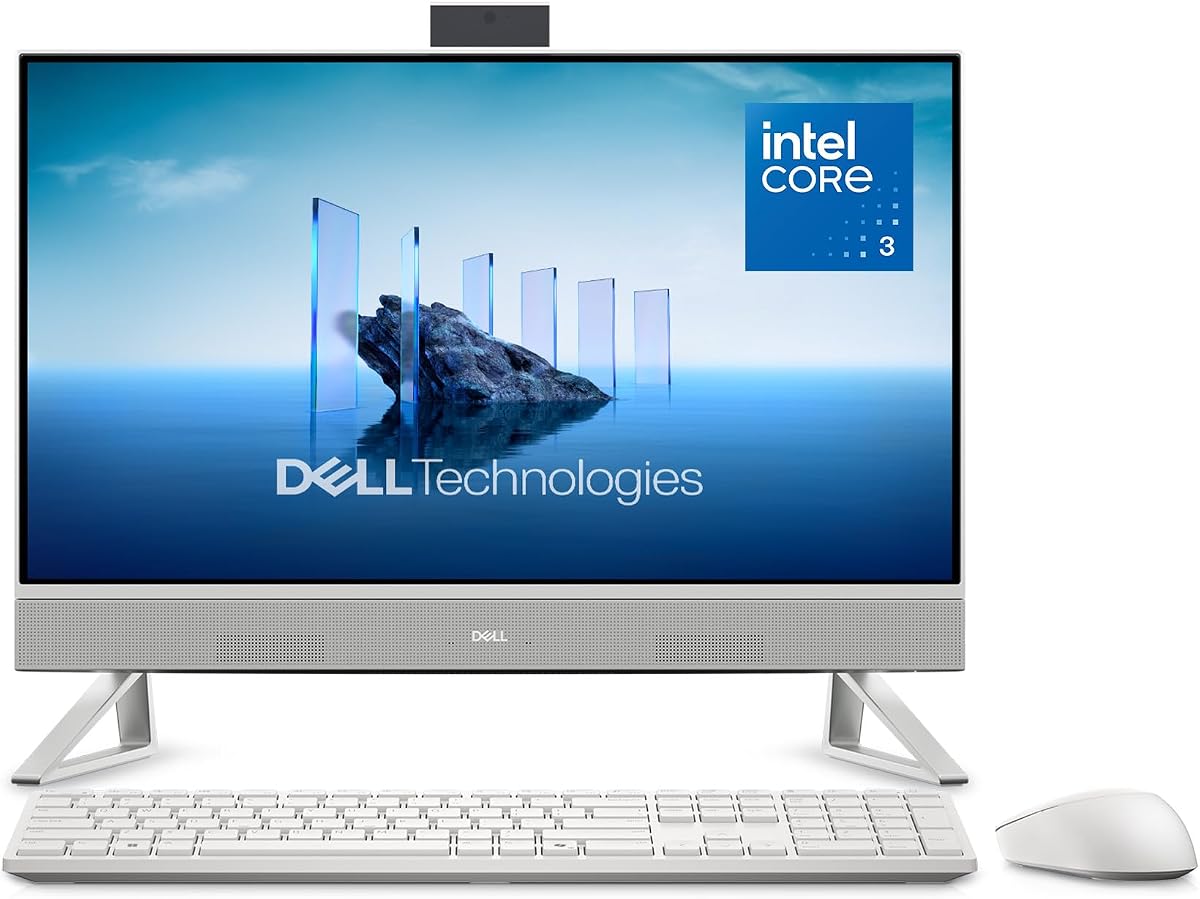
The Dell 23.8-inch Core 3 is a well-rounded all-in-one for students who want strong screen features and communication tools in a slightly smaller format than the 27-inch Dell. It carries a supplied customer rating of 4.6, the highest among the models not designated as a top premium pick. Its Intel Core 3 100U processor, FHD IPS display, pop-up camera, and audio system distinguish it from basic N100 desktops.
We may earn a commission when you buy through this link, at no additional cost to you.
The display offers 99% sRGB color coverage, higher contrast than the prior Dell generation, and a stated refresh rate that is 66% higher. Dell ComfortView Plus is designed to reduce harmful blue light emissions during extended sessions. Its narrow border helps the 23.8-inch panel maintain a modern appearance while preserving enough desk area for notes, textbooks, and a keyboard.
The 5MP+IR HDR camera can be pushed down for privacy and adjusted through a zero-to-20-degree tilt range. Dual Bluetooth speakers provide wireless audio, while Dolby Atmos spatial sound supports music, films, and video communication. Windows 11 Home includes modern multitasking tools and interface features, and a one-year onsite service option can assist with eligible hardware issues that cannot be resolved remotely. Dell Migrate is also included for transferring files and personal records.
This model is suitable for students who regularly attend video classes, collaborate with classmates, and need a comfortable display for long reading or document work. It may also appeal to students who want a Dell camera and audio system without moving to a larger premium chassis. Exact memory and storage specifications are not included in the supplied information, so those details should be verified before purchase. Heavy software users may also prefer Windows 11 Pro or a more powerful configuration.
The 5MP+IR camera, adjustable tilt, and dual Bluetooth speakers make this a strong choice for group projects and online classes. The pop-up mechanism also keeps the camera hidden when privacy is the priority.
ComfortView Plus is designed to reduce blue light emissions, while the FHD IPS panel provides wide, clear viewing. These features are meaningful for students spending hours reading notes and editing documents.
We may earn a commission when you buy through this link, at no additional cost to you.
The Lenovo 23.8-inch all-in-one is a straightforward option for students who need a reliable Full HD display, modern connectivity, and a solid-state drive without a large footprint. Its supplied rating is 4.3. The Intel N100 processor, 8GB of DDR4-3200 memory, and 256GB NVMe SSD form a familiar platform for browsing, research, office work, video calls, and coursework.
We may earn a commission when you buy through this link, at no additional cost to you.
The 1920 x 1080 anti-glare IPS screen covers 99% of sRGB and reaches 250 nits. Integrated Intel UHD Graphics, an HD camera, dual speakers, and HDMI output provide a complete everyday setup. The NVMe drive supports quick startup and rapid access to files, while 8GB of memory is adequate for standard applications and several open browser tabs when heavier multitasking is avoided.
Connectivity is particularly strong for the class. Intel AX203 Wi-Fi 6, Bluetooth 5.2, Gigabit Ethernet, four USB-A ports, HDMI output, and a 3.5mm audio connection are included. Two USB-A ports support 10Gbps transfer speeds and two support USB 2.0. Windows 11 Home comes preinstalled with TPM 2.0 support, and a Kensington lock slot adds physical security for shared environments. USB keyboard and mouse accessories are included.
This Lenovo is a sensible dorm-room choice for a student focused on writing, research, video meetings, and standard productivity applications. It is also attractive for families seeking a straightforward secondary computer. Students who need large project files, extensive media collections, intensive software, or seamless switching among many demanding applications should consider a model with more memory and storage. Within the guide, it provides a good middle ground between smaller 21.5-inch systems and larger 24-inch options.
The NVMe solid-state drive improves startup and file-access times compared with a traditional hard drive. That responsiveness is noticeable during frequent use of web applications and documents.
TPM 2.0 and the Kensington lock slot add useful layers for a computer kept in a shared room. Physical cable security can complement the protections built into Windows.
We may earn a commission when you buy through this link, at no additional cost to you.
The Lenovo IdeaCentre 27-inch is the strongest all-around recommendation in this guide, combining the highest supplied customer rating with the most advanced processor configuration. Its 4.9 rating reflects an especially positive user reception. With an Intel Core i7-13620H processor, 16GB of DDR5 memory, a 512GB SSD, and a large 100Hz display, it suits students who need more computing headroom than an entry-level all-in-one provides.
We may earn a commission when you buy through this link, at no additional cost to you.
The 13th-generation Core i7 processor has 10 cores, 16 threads, 24MB of Intel Smart Cache, a 2.4GHz base frequency, and a maximum turbo frequency of 4.9GHz. Those specifications distinguish it clearly from the four-core N100 models. The listed 16GB of DDR5 memory and 512GB solid-state drive provide a capable platform for demanding research, large project files, sophisticated productivity applications, content creation, and sustained multitasking.
The 27-inch FHD IPS panel is one of the strongest displays in the list. It offers a 100Hz refresh rate, 300 nits of brightness, 99% sRGB coverage, anti-glare treatment, low-blue-light and flicker-free operation, a 14ms response time, and a borderless design. The 16:9 aspect ratio is familiar, but the large panel gives students room for documents, editing windows, and lessons without feeling cramped.
Windows 11 Pro 64-bit adds suitability for technical coursework and remote access. Connectivity includes Wi-Fi 6, USB-C, four USB ports, HDMI input and output, Ethernet, and a combined audio connection. A wired keyboard and mouse are included. The main practical drawback is the larger footprint, and the non-touch panel rules out direct finger interaction. For students seeking serious performance in a polished one-piece package, this is the leading recommendation.
Ten processor cores and 16 threads provide substantially more headroom for advanced applications and sustained multitasking. The configuration is better suited to computationally demanding coursework than the N100-based alternatives.
The 100Hz refresh rate offers fluid movement for scrolling, interface navigation, and supported media. Combined with 99% sRGB color coverage and anti-glare treatment, it is well suited to both study and entertainment.
We may earn a commission when you buy through this link, at no additional cost to you.
The Lenovo 23.8-inch i3-N305 configuration stands out for its combination of 16GB memory and a 1TB NVMe solid-state drive. Its supplied customer rating is 4.5. With an eight-core processor, a Full HD IPS display, and generous local storage, it is a well-balanced option for students who keep large project collections or routinely work with several applications.
We may earn a commission when you buy through this link, at no additional cost to you.
The Intel Core i3-N305 has eight cores, a maximum turbo frequency of 3.8GHz, and integrated graphics. Compared with the four-core N100 configurations, it offers additional processing resources for multitasking, web browsing, streaming, and productivity work. The 16GB of DDR4 RAM supports multiple applications and browser tabs, while the 1TB NVMe drive provides ample room for documents, photographs, videos, software, and course archives alongside fast boot and file-access times.
The 23.8-inch IPS display operates at 1920 x 1080 with 250 nits of brightness and 99% sRGB coverage. Its anti-glare finish and three-sided borderless design make it suitable for reading and long study sessions. A tiltable stand helps users find a comfortable viewing angle, and the all-in-one form factor reduces desktop clutter. An HD camera and microphone support online classes and calls.
Wireless connectivity includes Wi-Fi 6 and Bluetooth 5.2. The port selection consists of four USB ports, including two USB 3.2 Gen 2 and two USB 2.0 ports, plus HDMI output, Ethernet, and a headphone connection. Windows 11 Home 64-bit is preinstalled, a wired keyboard and mouse are included, and the system has a one-year manufacturer warranty. It is a practical choice for students who prioritize storage and memory over a premium display or Core i7 performance.
A 1TB NVMe drive provides enough local capacity for substantial coursework and media without constant reliance on cloud storage. Fast solid-state performance also improves application launching and file transfers.
Sixteen gigabytes of memory gives students more room to keep documents, browser tabs, messaging applications, and calls active. The eight-core processor adds further flexibility for routine multitasking.
We may earn a commission when you buy through this link, at no additional cost to you.
Choosing a student all-in-one involves balancing performance with display size, portability, software needs, connectivity, and the amount of course material stored locally. The most important starting point is the type of work your academic program expects you to complete.
The processor determines how comfortably the computer handles web applications, documents, video calls, and more demanding academic software. Entry-level Intel N100 models use four cores and four threads, which are suitable for standard coursework, browsing, and office productivity. The Core i3-N305 configuration provides eight cores, while the Core 3 and Core 5 100U options represent more capable mainstream platforms. The Core i7-13620H in the IdeaCentre 27-inch offers 10 cores and 16 threads, making it the strongest choice for advanced applications and sustained multitasking.
RAM controls how many applications and browser tabs can remain open without slowing down. Eight gigabytes is workable for document editing, research, and video calls, particularly in an Intel N100 system. Sixteen gigabytes offers a better margin for students who use communication platforms, many browser windows, and several productivity tools at once. It is also advisable for longer-term use because modern browsers and applications can consume memory quickly, particularly on a machine intended to last through several academic years.
Storage should be judged by both capacity and technology. SSDs are markedly more responsive than mechanical hard drives, making them preferable for operating-system startup, application loading, and access to large project files. The guide includes options from 128GB internal storage with external expansion to 256GB, 512GB, and 1TB internal SSDs. Students with large video, design, or research archives should prioritize more internal capacity, while lighter users can make efficient use of cloud storage and removable media.
A 21.5-inch screen is easier to fit on a compact dorm desk and works well for general browsing and document tasks. The 23.8-inch and 24-inch options create a more comfortable productivity area without becoming excessively large. A 27-inch panel is best for students who regularly keep multiple windows open, read long documents, or want a larger media experience. Resolution, anti-glare treatment, brightness, color coverage, and refresh rate also matter, with several models offering 99% sRGB and blue-light reduction features.
Video calls are central to student life, so camera and microphone quality deserve careful attention. Several systems include HD cameras, dual microphones, or noise reduction. Dell's two featured models use pop-up 5MP+IR cameras that can be hidden when privacy matters, while the HP 22-inch Pro adds a physical privacy shutter. The basic HP 21.5-inch system includes a front-facing 720p camera, and the Lenovo models include HD cameras and microphones. Speakers should also be considered for group classes and multimedia lessons.
Wireless connectivity is essential for accessing course platforms, joining calls, and sharing files. Wi-Fi 6 appears throughout this guide, with Bluetooth 5.1, 5.2, or 5.3 depending on the model. Wired options vary but commonly include USB-A, HDMI, Ethernet, and a 3.5mm audio connection. USB-C is less universal but can simplify accessory management, while multiple USB-A ports remain useful for flash drives, keyboards, mice, and laboratory equipment. Students should confirm the exact ports needed for their courses before purchasing.
Windows 11 Home is sufficient for many students using standard productivity, research, and communication tools. Windows 11 Pro adds features that may be more relevant for technical courses, internships, remote access, administration, and business-oriented work. Some configurations include lifetime access to Office 365 applications, while others require the student to install productivity software separately. University IT requirements, specialized engineering applications, and accessibility needs should be checked before settling on a model.
An all-in-one can offer good value when it arrives with the peripherals a student needs. Included keyboard-and-mouse packages appear on many models, and some listings include lifetime Office 365 access. Warranty and service terms also vary: the Lenovo 1TB configuration includes a one-year manufacturer warranty, while both Dell models provide a one-year onsite service option. Students should compare these provisions with warranty requirements from their school and with the support available for the device's place of residence.
Begin by placing the all-in-one on a stable desk with enough clearance for ventilation. Connect the keyboard and mouse, attach any monitor needed for additional workspace, and complete the initial Windows setup. Use a surge-protected power strip for a stationary desk and avoid placing the system near direct sunlight, heating vents, or sources of moisture. The adjustable or tiltable stands provided with many models should be set to a comfortable viewing level.
Create separate folders for each semester and back up important coursework regularly. Keep assignments, notes, research, and media organized by class so files remain easy to locate. Students using the included external storage should treat it as an additional drive rather than the only copy of important work. Maintain at least one backup in cloud storage or on another drive, and use a password-protected account with multifactor authentication whenever possible.
Clean the display with a soft microfiber cloth and avoid abrasive or ammonia-based cleaners. Keep the vents free of dust, and never block the rear or underside openings. For cameras, use the pop-up mechanism or privacy shutter when available, and cover the lens temporarily if a model lacks one. Update Windows, applications, and security software regularly, shut down cleanly when moving the computer, and contact the listed manufacturer support if hardware issues arise.
All-in-one computers can be excellent student computers because they combine the display and computer in a compact unit that reduces desk clutter. They are especially convenient for browsing, writing, research, video classes, and office work. Students with advanced computational, engineering, or creative requirements should choose a processor and memory configuration appropriate to those workloads.
Eight gigabytes can handle standard coursework, browsing, video calls, and document editing, particularly with an efficient processor. It becomes restrictive when many browser tabs and applications remain open simultaneously. A 16GB model offers greater headroom and is preferable for heavier multitasking or a computer intended to last for several academic years.
A 24-inch model offers a useful balance between screen area and desk footprint, making it appropriate for most dorm rooms and study spaces. A 27-inch model is more comfortable for keeping multiple windows, documents, and lessons visible at once. The larger display takes more room and may be less convenient in a small or shared workspace.
Most standard student tasks, including research, document editing, presentations, and video classes, work well with a conventional non-touch display. A touchscreen can help with drawing, handwritten annotation, or certain interactive applications, but it is not essential for every course. Confirm program requirements before paying extra for touch capability.
An Intel N100 is suitable for routine university tasks such as web-based learning, word processing, spreadsheets, video calls, and media playback. It is less appropriate for intensive software, advanced engineering simulations, or heavy multitasking. Students in demanding fields should review their program requirements and consider a Core i3, Core 5, or Core i7 configuration.
The right amount depends on the size of the student's applications, documents, photographs, and video files. A 256GB SSD can work for lighter use if cloud storage and backups are used, while 512GB or 1TB gives more room for large projects and media. The type of storage matters too, because the models in this guide use SSDs or other flash storage for responsiveness.
Wireless accessories help reduce cable clutter on a desk already occupied by an all-in-one. They can also make it easier to reposition the display or use the computer from a different angle. Students should confirm that the keyboard layout matches their region and that the accessories support their preferred connection method.
Check the processor, RAM, storage, display size, operating-system edition, and required ports against your course requirements. Also consider camera and microphone quality for online classes, desk space, warranty coverage, and the availability of required academic software. Finally, review the live listing because configurations and included accessories can change.
The HP 21.5-inch FHD All-in-One is the most budget-conscious recommendation, combining a compact enclosure, 8GB of DDR5 memory, useful connectivity, and an included keyboard and mouse. The Lenovo IdeaCentre 27-inch stands out as the strongest overall choice because its Core i7 processor, 16GB of DDR5 memory, 512GB SSD, 100Hz display, and 4.9 supplied rating provide exceptional capability. The Dell 27-inch Core 5 is the premium option for students who prioritize a large display, a pop-up 5MP+IR camera, Dolby Atmos sound, and onsite service.
For most students, processor class, memory, and daily workload matter more than cosmetic differences. Basic courses can be handled well by an N100 system with 8GB of memory, while 16GB is a wiser target for multitasking and longer-term ownership. Those working with large media collections should prioritize solid-state capacity, and those attending frequent online classes should examine cameras, microphones, speakers, and privacy controls before choosing.
Ratings and configurations provide a useful starting point, but they should not replace a personal requirements check. Current prices, included accessories, operating-system details, and technical specifications may change over time. Confirm the live product listing and compare the final configuration with your courses, desk space, software needs, and peripheral requirements before purchasing.