
Radial Mix 2:1
4.8Editor score
Passive two-channel summing
Dual input connections
Single mono output
Explore the best analog summing mixers for studio summing, live mixing, and DJ workflows, comparing channels, routing, monitoring, and key features.
Analog summing mixers combine multiple audio paths through real circuitry, helping engineers shape mixes with the depth, dynamics, and cohesion associated with traditional hardware. The right model depends on channel count, signal flow, monitoring needs, and whether the focus is studio summation, live sound, or DJ performance.
This guide compares ten analog mixers using their supplied channel configurations, preamp and routing features, filter sections, outputs, monitoring tools, and control options. It covers dedicated studio summing consoles alongside compact live mixers and performance-oriented analog DJ mixers, clarifying where each belongs in a signal chain.
Each selection highlights a different practical path: no-bus passive summing, premium transformer-balanced routing, hybrid production, live and studio flexibility, or hands-on DJ control. Product ratings are included when available, and prices change over time, so readers should confirm current listings and system requirements before purchasing.
4.8Editor score

The table below compares all ten products by their most relevant format, channel count, processing, and routing features, making it easier to separate dedicated summing tools from general-purpose and DJ mixers.




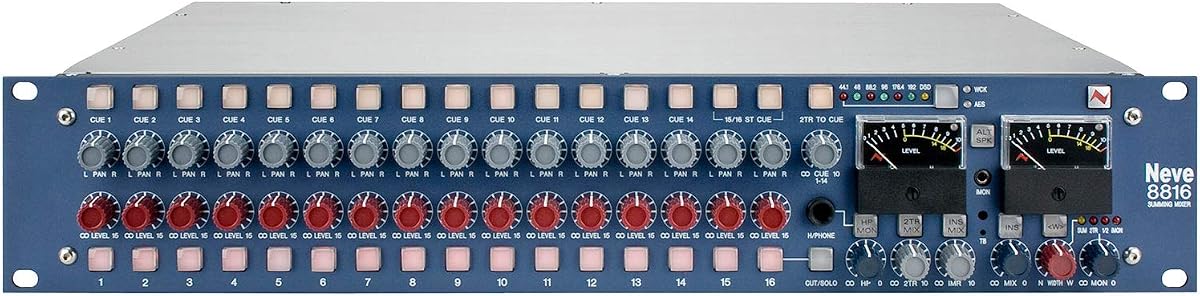
The Neve 8816 is a dedicated 16-channel analog summing and monitoring system rather than a conventional all-purpose mixer. Its defining features are transformer-balanced signal handling, main and alternate speaker outputs, dual headphone outputs, and a built-in monitoring section. No marketplace rating is supplied for this model, so its value is better assessed from the architecture than from an aggregated customer score.
We may earn a commission when you buy through this link, at no additional cost to you.
The 8816 is designed for studios that need to combine many analog sources into a cohesive mix without routing every source through a conventional input strip. Its transformer-balanced mixer section is the central attraction, while the separate monitoring controls make it practical to compare sources and manage cueing. Two headphone outputs are especially useful when an engineer and a second listener need different references or a shared feed is required for a guest.
Its trade-offs are primarily about scale and specialization. A large-format analog system is less convenient for a small room than a compact passive summing box or a conventional live mixer, and its level of investment can exceed the budget of an entry studio. However, for a facility that regularly handles multichannel analog mixes, the dedicated routing, transformer balance, alternate output selection, and dual monitoring provisions justify the specialized format.
Choose the Neve 8816 when the core requirement is serious analog summation with integrated monitoring rather than portable live mixing or DJ cueing. It is the strongest overall choice in this roundup for users who value a purpose-built 16-channel system, flexible speaker comparison, and a clearly defined analog signal path.
The 16-channel design separates summation from the demands of live reinforcement or DJ performance. That focus makes the Neve 8816 a natural centerpiece for studios combining outboard preamps, analog processing chains, and external monitoring controllers.
Main and alternate speaker outputs plus two headphone outputs support a deliberate reference workflow. Users can compare sources or feeds without repeatedly changing the main studio signal path.
We may earn a commission when you buy through this link, at no additional cost to you.
The Radial Mix 2:1 is a small passive mixer built around one clear task: combining two channels into a mono output. It carries a 4.8 customer rating, and its limited architecture makes it easier to understand than larger consoles. It is an appealing choice for a project studio, rehearsal room, or any location that needs a dependable analog summing point without a full mixer.
We may earn a commission when you buy through this link, at no additional cost to you.
The product data identifies two inputs, one mono output, and a passive two-channel design. Rather than offering channel preamps, equalizers, effects, or extensive routing, it keeps the chain direct. That simplicity can be valuable when the sources entering the box already carry the desired level and character, particularly if a separate interface or preamp handles the upstream work.
The limitation is equally clear: this is not a flexible console for live sound, multichannel studio routing, or stereo performance. The mono output means it cannot independently preserve left and right information, and its passive operation means it does not add the active gain or processing offered by broader analog mixers. A studio that already needs a full-featured control surface should look elsewhere.
The Radial Mix 2:1 is best for users who want an uncomplicated way to sum two analog sources into one. Its focused design, strong customer rating, and straightforward operation make it the budget winner, while its narrow routing makes it most appropriate for a specific rather than universal studio role.
Two inputs feeding one mono output keep the decision-making process minimal. The unit is useful when the goal is a single consolidated analog feed rather than a complete production mixer.
The passive architecture fits well beside a preamp, interface, or recording chain. It adds a physical summing point without trying to become the control center for an entire room.
We may earn a commission when you buy through this link, at no additional cost to you.
The Rupert Neve Designs 5059 Satellite Summing Mixer is a premium 16+2 analog summing system in the Shelford Edition. No customer rating is supplied in the product data, so it is not assigned a numeric score here. Its appeal comes from a clear studio proposition: a large dedicated mixer designed to receive numerous analog sources and combine them with a recognizable high-end hardware identity.
We may earn a commission when you buy through this link, at no additional cost to you.
The 16 x 2+2 designation is central to the design. Sixteen primary channels are complemented by two additional stereo channels, allowing a studio to accommodate a broad collection of line-level sources. Compared with the Neve 8816, the Satellite concentrates more explicitly on the act of summing, making it appropriate for facilities that already have high-quality preamps, monitoring, and outboard processing.
The obvious trade-off is financial and operational scale. A 16+2 console represents a major studio commitment, and buyers should consider the electrical environment, patchbay requirements, signal levels, and monitor integration before installation. It is also unnecessary for a project room that only needs to blend two or four sources. A smaller live or hybrid mixer may offer more flexibility for less money.
The 5059 Satellite is the premium pick for a serious studio that wants a dedicated Rupert Neve summing centerpiece. It is most compelling when the surrounding system already provides high-quality conversion, preamplification, and monitoring, leaving the mixer to perform its central role with authority and cohesion.
The dedicated format allows analog signals from preamps, processors, and playback systems to converge in one recognizable mixer. It is designed for workflows where summing quality matters more than built-in effects or USB recording.
Sixteen channels plus two stereo channels provide substantial capacity for a busy studio. The additional stereo paths can accommodate grouped sources when the main channel allocation is already occupied.
We may earn a commission when you buy through this link, at no additional cost to you.
The Headliner R4 is a four-channel analog rotary DJ mixer with a 4.8 customer rating and a hardware-oriented workflow. It accepts four stereo channels, three phono inputs, and two microphone inputs, giving it enough input variety for turntables, media players, microphones, and other performance sources. Its filter, isolator, cue, booth, and master controls make it best understood as a live DJ tool.
We may earn a commission when you buy through this link, at no additional cost to you.
Each channel includes gain control with a peak LED, a three-band isolator EQ, a filter activation switch, and a generous volume knob. The high-pass and low-pass filter includes frequency and resonance controls, allowing the performer to shape the sound during a set rather than relying only on channel-level changes. Genuine ALPS potentiometers and a metal enclosure support the impression of a performance-oriented instrument.
For an engineer seeking a dedicated analog summing mixer, the R4 is less direct than the Radial, Neve, or SSL choices. Its rotary channel controls and DJ-oriented outputs prioritize live cueing and mixing rather than nuanced studio bus management. The main and booth outputs are useful, but the product data does not indicate the same level of dedicated analog summation and monitoring infrastructure found in the studio-specific models.
The R4 is a strong selection for a DJ who wants to sum four stereo sources while using real-time filters, EQ, cue mixing, and booth control. It is less appropriate as the centerpiece of a complex recording studio, but it serves a distinct and useful form of analog mixing very well.
Rotary controls, channel peak LEDs, and per-channel filters support quick operation in a live setting. The layout is intended to make essential changes accessible while a DJ is working with multiple sources.
Four line inputs, three phono inputs, and two mic inputs cover a wide range of performance equipment. This makes the R4 suitable for mixed-format sets and rehearsal spaces.
We may earn a commission when you buy through this link, at no additional cost to you.
The Mackie Onyx Series 16-Channel Premium Analog Mixer is a hybrid-production console that combines 16-channel analog mixing with extensive recording features. Its supplied rating is 4.4. Unlike a dedicated passive summing box, it includes Onyx microphone preamps, Perkins-style channel EQ, a digital effects engine, Bluetooth streaming, and multi-track capture to Mac or PC.
We may earn a commission when you buy through this link, at no additional cost to you.
The standout capability is integration between the analog mixer and digital workflow. Recording can operate at 96 kHz and 24-bit through USB, while direct-to-SD-card stereo recording and playback provides another route. The preamps offer up to 60 dB of gain, and the sweepable midrange EQ gives users meaningful tone shaping on each channel.
This breadth also creates a trade-off. If the goal is only to sum several already-processed analog sources, the onboard preamps, effects, Bluetooth path, and digital recording tools add complexity without being necessary. Compared with the SSL BiG SiX, which is specifically framed around hybrid production, this Mackie is a general analog console enhanced with digital recording rather than a compact hybrid desktop system.
The Onyx model is a strong choice for rehearsals, small productions, and studios that want one mixer to handle live input, analog mixing, effects, and multitrack capture. It bridges traditional channel-strip mixing and computer-based recording without requiring a separate interface for those listed USB functions.
Multi-track USB capture turns the console into more than an analog signal router. The same hardware that shapes and sums live inputs can also feed a Mac or PC recording session.
User-customizable reverbs and delays add a practical effects layer. Bluetooth streaming to a channel strip adds another quick source for rehearsal, playback, or less critical media.
We may earn a commission when you buy through this link, at no additional cost to you.
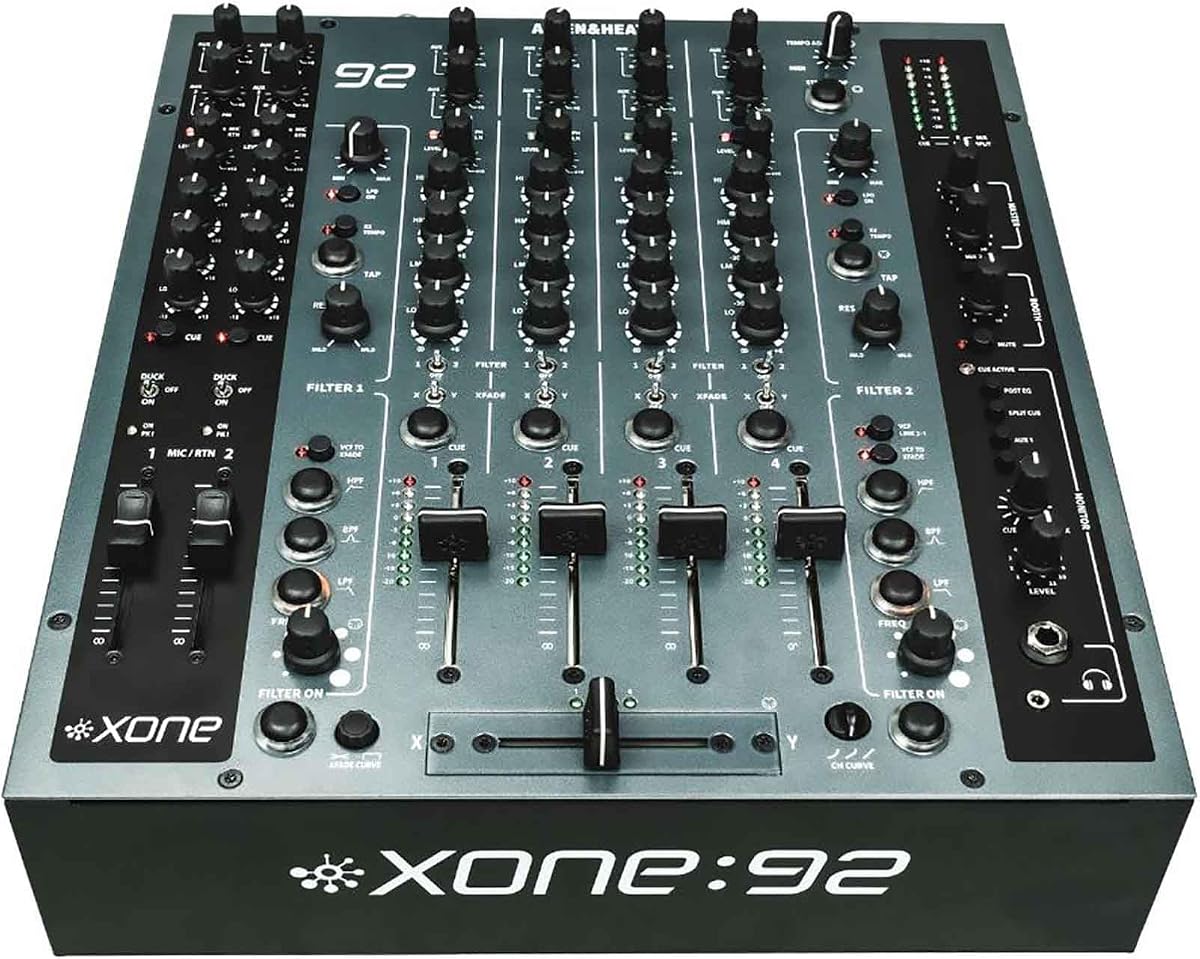
The Allen & Heath Xone:92 Mk2 is an analog four-channel DJ mixer built around expressive performance control. No customer rating is provided in the source data, so it receives no numeric score in this review. Its filters, auxiliaries, send-return connections, and microphone inputs make it a particularly feature-rich option for DJs who treat mixing as an active performance.
We may earn a commission when you buy through this link, at no additional cost to you.
Two multimode filters and XONE:VCF switching provide more creative options than a conventional channel mixer. Two quarter-inch stereo auxiliaries and two send-return paths allow external processing to be integrated, while two microphone inputs support announcements or another live source. This routing flexibility helps the Xone:92 function as more than a basic four-channel fader mixer.
The same specialization limits its relevance to conventional summing. It does not present itself as a studio console with line-level summing buses and a comprehensive monitoring section, and its DJ feature set may be unnecessary in a recording room. Users who only want passive combination or reference-grade bus management should compare the dedicated models instead.
The Xone:92 Mk2 is best suited to a serious DJ setup that values analog hands-on control. It gives a performer multiple filter and effects-routing choices while maintaining a four-channel core workflow, making it particularly compelling for live sets, streaming, and rehearsal environments.
XONE:VCF switching and two multimode filters allow dramatic tonal shaping during a set. These controls turn channel summation into an expressive process rather than a simple level balance.
Aux and send-return connections provide routes for outside processors. Those additional paths let the mixer work with shared studio-style effects rather than restricting every sound to onboard controls.
We may earn a commission when you buy through this link, at no additional cost to you.
The Allen & Heath Xone:43 is a four-plus-one-channel analog DJ mixer with a supplied rating of 5.0. It combines four performance channels with an additional channel and a voltage-controlled filter system. The result is a focused but expressive mixer aimed at DJs who want substantial creative control in a comparatively compact instrument.
We may earn a commission when you buy through this link, at no additional cost to you.
The XONE Voltage Controlled Filter includes high-pass and low-pass modes, resonance control, and filter-frequency adjustment. Each channel also has a dedicated send and return with an individual dry/wet control, making it easier to blend an external effect without sacrificing the original source. Dedicated booth and record outputs support the practical demands of a performance system.
For studio summation, the Xone:43 is less complete than a dedicated analog console. It is designed around DJ cueing, performance transitions, and effect integration rather than a broad collection of mix buses. The optional Innofader compatibility also means a user seeking a compatible fader must confirm that the accessory is included or purchase it separately.
The Xone:43 is a strong recommendation for a DJ who wants a 4+1 analog layout, powerful filtering, and flexible external effects without moving to a large-format performance console. Its perfect supplied rating is encouraging, while its specialist design makes it most convincing in a dedicated DJ environment.
Individual dry/wet controls let performers determine how much of an external effect enters each channel. That fine control is more useful in a live setting than a fixed global blend.
The four-plus-one layout provides room for several sources while remaining focused. Booth and record outputs address the everyday monitoring needs of a working DJ booth.
We may earn a commission when you buy through this link, at no additional cost to you.
The Mackie 1202VLZ4 is a compact 12-channel analog mixer with a 4.9 customer rating. It is designed for broadcast, live sound, and recording, providing a strong balance of input capacity, routing, and channel processing. Although it is not a dedicated summing console, its bus architecture makes it a capable option for small studios, rehearsal rooms, and compact installations.
We may earn a commission when you buy through this link, at no additional cost to you.
Four Onyx microphone preamps provide a 60 dB gain range, and the mixer accepts up to twelve high-margin line inputs with +22 dBu line input management. The stated dynamic range is 128.5 dB, while distortion is specified below 0.0007% from 20 Hz to 50 kHz. A three-band EQ and 75 Hz low-cut filter are included on every channel for practical tone and noise control.
Routing is one of the model's strongest features for a compact analog mixer. It provides two auxiliary sends, per-channel level, pan, and solo PFL, two stereo feedback channels, a third and fourth alternate stereo bus, plus control and headphone outputs. Those options let the mixer function as a small live console or central studio router rather than merely a basic input selector.
The 1202VLZ4 is a good fit for users who need more channel flexibility than the Radial Mix 2:1 but do not require a 16-channel premium summing system. Its compact format, strong rating, Onyx preamps, and flexible bus routing make it a versatile and practical choice across studio and live applications.
Onyx microphone preamps, a wide gain range, and high-margin line inputs provide a solid starting point for varied sources. The low-cut filter adds another useful defense against unwanted low-frequency energy.
Auxiliary sends, PFL, feedback channels, alternate stereo buses, and headphone outputs create several useful paths. That makes the compact mixer viable for both live routing and controlled studio playback.
We may earn a commission when you buy through this link, at no additional cost to you.
The Solid State Logic BiG SiX is a hybrid studio and stage console with a supplied 5.0 rating. It combines four console-grade SuperAnalogue microphone preamplifiers, four stereo line inputs, two external inputs, a 16-channel USB interface, and an 18-input summing architecture at mixdown. It is designed for producers who want analog mixing and computer-based recording in one system.
We may earn a commission when you buy through this link, at no additional cost to you.
The USB section uses 24-bit, 96 kHz AD/DA converters, while each main channel provides three-band EQ and dynamics processing. A stereo master bus compressor and a listen microphone compressor on the talkback input add studio-oriented dynamics. The comprehensive monitoring section, including 18-input mixdown summing, helps tie the recording and mixing workflows together.
This breadth can be a disadvantage for someone seeking a transparent two-channel summing path. The BiG SiX offers more processing, conversion, and control than a passive mixer, and its physical and operational complexity calls for careful setup. It is also not the same kind of large-format dedicated summing system represented by the Neve models. Its value lies in combining several professional roles rather than specializing in only one.
The BiG SiX is an excellent recommendation for a project studio or production room that wants to record through a computer while retaining hands-on analog mixing. The perfect supplied rating, high-resolution conversion, analog summation, and monitoring system make it the most complete hybrid-production option in this list.
The 16-channel USB interface allows the console to participate directly in a computer-based session. Analog channel control and digital capture can then coexist without requiring a separate interface for the listed functions.
24-bit, 96 kHz AD/DA conversion supports high-resolution capture and playback. The combination gives users a capable path between analog sources, processing, and a digital recording environment.
We may earn a commission when you buy through this link, at no additional cost to you.
The Yamaha MG10 is a compact 10-input stereo analog mixer with a 4.7 customer rating. It omits USB and onboard effects, but that restraint produces a simple, purpose-built mixer for rehearsals, small live sets, podcasting, and entry-level studio use. It is less specialized for analog summation than the dedicated products in this guide, yet it offers a useful combination of preamps, EQ, and compression.
We may earn a commission when you buy through this link, at no additional cost to you.
Its discrete class-A D-PRE preamplifiers use an inverted Darlington circuit, with the stated intent of delivering natural bass and smooth highs. Every channel includes a three-band EQ and high-pass filter, while a one-knob compressor makes it easier to control dynamics without navigating a complex compressor panel. Phantom power is also available for compatible condenser microphones.
The lack of USB, digital effects, and extensive bus routing means the MG10 cannot replace a recording interface or a full hybrid console. It is also not a premium analog summing system. For users who specifically need to combine numerous outboard channels with transformer-balanced circuitry, the Neve, SSL, or dedicated Radial options align more closely with that brief.
The Yamaha MG10 is best for a first mixer, a rehearsal room, or a small setup that needs dependable analog level control in a compact package. Its 4.7 rating, straightforward design, rugged chassis, and easy-to-use channel processing make it a practical entry point into hands-on analog mixing.
Class-A preamps, three-band EQ, high-pass filters, and one-knob compressors cover the most common channel adjustments. The layout favors quick decisions over extensive digital menus.
The powder-coated metal chassis is designed for movement between rooms and repeated handling. A modest channel count also keeps the surface manageable in a rehearsal or small live environment.
We may earn a commission when you buy through this link, at no additional cost to you.
The right analog summing mixer depends on the number of sources, desired level control, monitoring arrangement, physical space, and whether the mixer also needs to handle live inputs or computer recording. These factors separate a simple passive summing box from a complete production console.
A dedicated summing box usually does one thing well: it combines a small number of analog signals into a unified output. A full console also provides preamplification, per-channel EQ, dynamics, effects, bus routing, monitoring, and often recording or playback features. Choose the dedicated format when upstream gear already handles those tasks and you want a clean final summation point. Choose a console when the mixer must actively shape each source or serve as the room's central signal hub.
Count the sources that must be available simultaneously, then add a margin for future equipment. A two-channel passive mixer is appropriate when only two feeds need combining, while a four-channel unit supports a compact live or DJ workflow. Studio systems commonly begin at 12 or 16 channels, with larger options providing additional stereo or auxiliary paths. Overbuilding wastes space and budget, while underbuilding forces awkward splits or compromises.
Summing alone establishes a combined signal, but control over its level and tonal balance can be equally important. Onyx, SuperAnalogue, and Yamaha preamps provide input gain, while the Mackie, Yamaha, SSL, and DJ models add EQ or dynamics. Transformer-balanced circuitry on the Neve models serves a different priority: maintaining a specific analog signal character and balanced integration. Consider whether sources arrive already conditioned or need individual shaping.
A studio summing mixer is only as useful as its monitoring system. The Neve 8816 provides main and alternate speaker outputs, dual headphone outputs, and a dedicated monitoring section. The SSL BiG SiX adds a comprehensive monitoring section and talkback-related dynamics. DJ mixers emphasize cueing, split monitoring, booth control, and master output instead. Choose based on whether comparisons, performer cues, or a conventional stereo reference are the priority.
Aux sends, returns, alternate stereo buses, feedback paths, solo PFL, and external-effect connections determine how widely the mixer can serve other equipment. These routes are especially useful for live sound, DJ effects, rehearsal spaces, and hybrid studios. A passive two-channel mixer has almost no routing, whereas the 1202VLZ4, Xone models, Headliner R4, and BiG SiX offer more ways to connect external processors and destination paths.
Users pursuing analog mixing often value the character, reliability, and hands-on operation of a hardware signal path, but not every model aims at the same sonic position. The Rupert Neve and Neve systems emphasize premium transformer-based hardware, while Mackie, Yamaha, Allen & Heath, Headliner, and SSL products provide different combinations of preamps, filters, EQ, and dynamics. Review the stated signal path and build quality rather than assuming every analog mixer sounds alike.
A mixer with USB can capture channels digitally while retaining hands-on controls, but it is not automatically the right choice for dedicated analog summation. The Mackie Onyx model supports high-resolution multi-track USB capture and direct SD-card recording, while the SSL BiG SiX includes a 16-channel USB audio interface and high-resolution conversion. The Radial, Neve 8816, and 5059 Satellite do not list equivalent computer-recording features, making separate conversion hardware more likely.
A large 16-channel console demands suitable furniture, ventilation, cable management, and room planning. Compact analog mixers fit rehearsal rooms and mobile rigs more easily, but offer fewer channels and less sophisticated monitoring. DJ models are built around performer access, illuminated cues, booth outputs, and fast transitions. The best choice is the one whose controls, connectors, and physical format suit the actual environment rather than an imagined larger workflow.
Begin by planning the signal flow from source to destination. Identify every preamp, processor, playback device, and monitoring chain that will feed the mixer, then confirm the input and output format required by each connection. For a dedicated studio summing system, upstream gear should provide suitable line levels and balanced connections. For a live or DJ mixer, assign channels deliberately so microphones, instruments, and playback sources remain easy to reach.
Power on the equipment in a safe order, begin with output levels at minimum, and raise them gradually. Set source gain appropriately before making level changes at the master output. Listen in mono when checking a summing box or stereo mixer for unwanted imbalance, and compare the mixed signal with individual sources through alternate monitoring or cue paths when those options are available. Record or print reference material only after the gain structure and headroom feel predictable.
Keep the mixer clean and stable by using quality cables, avoiding abrupt level changes, and checking connections whenever a channel behaves unexpectedly. Do not place drinks near the controls, and follow the manufacturer's guidance for cleaning, ventilation, and servicing. For a permanently installed studio system, label inputs, outputs, buses, and patch points. For mobile use, protect the chassis, transport the mixer with its controls and faders in a secure position, and inspect connectors before each setup.
An analog summing mixer combines multiple audio signals through a physical analog signal path. Depending on the model, it may only sum prepared line-level sources or also provide preamplification, EQ, compression, effects, monitoring, and recording. It is commonly used to combine outboard preamps, analog processors, playback channels, or live inputs into one manageable signal.
Neither is inherently better because they serve different purposes. A passive mixer is ideal when upstream equipment already handles level control and processing, because it adds a simple combining stage. An active console is more useful when each source needs preamp gain, EQ, dynamics, routing, or effects. The correct choice depends on the surrounding studio and the amount of control required.
A DJ mixer can combine multiple analog sources, but it is optimized for live cueing, booth monitoring, filters, and performance transitions rather than detailed studio bus management. Models such as the Headliner R4, Xone:92 Mk2, and Xone:43 can be useful for rehearsal, performance, or hybrid creative setups. A dedicated studio model is generally more appropriate for critical mixing and reference monitoring.
It depends on whether the recording workflow requires digital capture. Dedicated analog summing mixers such as the Radial Mix 2:1, Neve 8816, and 5059 Satellite do not list computer-recording functions, so a separate interface may be needed for digital recording or playback. The Mackie Onyx and SSL BiG SiX include USB recording features and can reduce that need.
Summing focuses on combining signals into a single or stereo bus. A full mixing console also gives each source preamp and processing controls, multiple buses, effects, output routing, and monitoring. A compact passive summing box can be exceptionally simple, while premium summing consoles may provide extensive features. The distinction is about the depth of control, not simply the physical size.
Count the sources that need to remain available at the same time, then add a small amount of flexibility. Two channels suit a focused summing box, four channels suit compact live or DJ setups, and 12 or 16 channels suit larger studio and live requirements. Choosing the smallest practical configuration can reduce cost, complexity, and unnecessary gain stages.
They can be, particularly when the goal is to combine external preamps and analog processors into a single cohesive path. The benefit is not simply a specification; it is the architecture and character of the summing system. Buyers should still consider room conditions, monitoring, connectivity, and the cost of the rest of the signal chain.
Verify input count, supported source types, output connectors, channel processing, bus routing, monitoring options, and physical dimensions. Also confirm whether the intended role is passive summation, live mixing, DJ performance, or hybrid recording. Current pricing, availability, warranty details, and any accessory requirements should be checked on the retailer listing before purchase.
The Neve 8816 stands out as the best overall dedicated choice because it combines 16-channel analog summation, transformer-balanced routing, main and alternate outputs, and a substantial monitoring section. The Radial Mix 2:1 is the most affordable and focused option, while the Rupert Neve Designs 5059 Satellite represents the premium dedicated-summing route for a fully equipped studio.
The other selections serve distinct needs. The SSL BiG SiX and Mackie Onyx model are strongest for hybrid recording, while the 1202VLZ4 and Yamaha MG10 address practical live, rehearsal, and compact studio workflows. The Headliner R4, Xone:92 Mk2, and Xone:43 are better understood as performance-oriented analog DJ mixers, offering filters, cueing, booth control, and effects routing that studio mixers may not provide.
Before buying, prioritize the number of sources, control features, monitoring arrangement, recording requirements, and available space. Confirm the exact connectors, accessory requirements, and current retailer information because product availability and prices can change. The right analog summing mixer is the one that integrates cleanly with your existing gear and supports the signal path you actually intend to build.