
Audiopipe XV-6-V15
4.5Editor score
Six-way crossover flexibility
Independent front and rear inputs
Remote subwoofer level control
Ground loop isolation circuit
Adjustable low-pass gain
Explore the best Audiophile Active Crossover Options, comparing signal quality, crossover control, connectivity, and system compatibility.
Audiophile active crossovers divide an audio signal into frequency bands so separate amplifiers can drive woofers, midrange drivers, and tweeters with greater precision. A well-designed unit can reduce distortion, improve system integration, and reveal subtle details, but signal purity, filter quality, adjustment range, and installation requirements all matter.
This guide compares ten products selected for audiophile listening, home theater, studio monitoring, and car-audio applications. The comparison considers architecture, filter characteristics, input and output options, level controls, phase functions, and practical usability rather than treating every crossover as a direct substitute.
Each review explains the product’s strongest features, meaningful limitations, and best-fit system. The list includes true electronic processors as well as passive crossover options, because “audiophile” describes goals rather than one fixed design. Availability, specifications, and prices can change, so confirm the current listing before purchasing.
4.5Editor score

5.0Editor score

3.9Editor score
The table below places all ten products side by side, emphasizing crossover architecture, connection types, and the degree of control each unit provides.




The Marchand XM66 is a purpose-built, fully analog two-way electronic crossover aimed at serious hi-fi systems. Its 5.0 rating reflects a particularly strong proposition for listeners who want deliberate signal routing, clear crossover selection, and a conventional high-end architecture without an elaborate digital menu. It is custom made in the USA, with a stated lead time of approximately five days.
We may earn a commission when you buy through this link, at no additional cost to you.
The standout feature is the combination of analog signal processing and a digital display of the selected crossover frequency. RCA inputs and outputs are standard, while balanced inputs and outputs are available as an option. The 20Hz infrasonic filter and 24dB/octave slopes support cleaner band separation, while the broad 20Hz-to-4000Hz setting range makes the unit practical for conventional two-way floorstanders, compact bookshelf designs, and systems with a separate subwoofer or bass amplifier.
The main limitation is architectural rather than a flaw: this is not a three-way, four-way, or six-way processor. Buyers who need independently routed midrange and tweeter channels will need a more flexible unit. Balanced connection availability is another point to verify carefully, since the exact configuration can depend on how the product is ordered or supplied. Even so, the core design remains focused, understandable, and well suited to high-end two-way installations.
Choose the XM66 when analog purity, a precise crossover readout, and flexible connection options are priorities. It is a particularly compelling option for a carefully balanced two-speaker system using separate power amplifiers. For listeners seeking broad multiway routing, the professional units in this guide offer more modes, but the Marchand provides the most focused audiophile-oriented design in the group.
Keeping crossover processing fully analog is the XM66’s defining technical choice. The digital element is limited to displaying the selected frequency, which gives users precise visual feedback without turning the processor into a general-purpose digital system. That focus can appeal to listeners who prefer direct, uncomplicated control.
The 20Hz-to-4000Hz range covers common crossover points for compact and conventional two-way speakers. RCA connections support easier integration with many amplifiers, while balanced options can help minimize interference in properly balanced installations.
We may earn a commission when you buy through this link, at no additional cost to you.
This Professional 2/3-Way Stereo & 4-Way Mono Audio Crossover is a versatile processor for studios, live-sound systems, installed audio, and PA configurations. Its 4.3 rating reflects broad functionality rather than a single specialized audiophile feature set. The ability to work as a two-way or three-way stereo unit and as a four-way mono processor is its primary attraction.
We may earn a commission when you buy through this link, at no additional cost to you.
Independent controls add practical value to the flexible architecture. Each band has output gain, phase inversion, and a 40Hz low-cut option, making it easier to correct polarity problems, balance output levels, and protect drivers from unwanted bass energy. Balanced XLR inputs and outputs support clean transfer over long cable runs, while the LED matrix provides quick confirmation of the active operating mode and signal status.
Its versatility naturally introduces some trade-offs. A studio listener searching for the simplest possible two-way control may find the mode selection and multiple band controls more involved than necessary. It is also designed primarily around live sound and professional routing rather than a domestic aesthetic or a deliberately minimalist audiophile signal path. Users should confirm that its connection format matches their existing amplifier chain.
This crossover is best for installers, musicians, and serious PA users who need one processor to cover several system arrangements. It is also a credible option for a home theater or dedicated listening room when XLR routing, phase control, and selectable mono operation are important. For a simple hi-fi installation with only two amplified channels, choose it only when its additional operating modes provide real value.
Switching among two-way stereo, three-way stereo, and four-way mono allows the unit to serve rehearsal rooms, stages, studios, and installations that evolve over time. This is especially useful for users who do not want to replace a processor whenever a driver configuration changes.
Balanced XLR connections can be advantageous in venues, houses of worship, and mobile systems where cables travel substantial distances. The front-panel matrix also makes it easier to verify mode and signal status during setup or troubleshooting.
We may earn a commission when you buy through this link, at no additional cost to you.
The Professional 2/3 Way Stereo/4 Way Mono Crossover combines a 4.4 rating with extensive routing choices. It can operate as a two-way stereo crossover, a three-way stereo crossover, or a four-way mono processor, making it suitable for sound stages, studios, conference rooms, indoor venues, outdoor events, and other amplified systems.
We may earn a commission when you buy through this link, at no additional cost to you.
Control is divided logically among the frequency bands. Separate output gain controls make it possible to balance the amplifier feeds, individual phase reverse switches help resolve polarity issues, and a dedicated 40Hz, 12dB/octave Butterworth high-pass filter can remove very low-frequency content when it is not wanted. Balanced XLR inputs and outputs support professional signal routing, while the front-panel LED matrix indicates the currently selected mode.
The product is not as specialized as the Marchand and does not focus on the same kind of high-end domestic signal path. Its identity is rooted in professional utility, rugged construction, and repeatable setup. The 12dB/octave high-pass behavior is also a specification to understand rather than judge in isolation: crossover slope choices affect system design, and the appropriate setting depends on speaker topology, amplifier behavior, and installation goals.
This crossover is an excellent candidate for a dedicated PA or install where users need more than fixed two-way routing. It may also serve a serious home theater or music system, provided XLR-equipped amplifiers are available. Its broad feature set makes it more useful than a basic high-pass unit, although less acoustically minimalist than the Marchand.
Per-band output gain and phase controls make it possible to tune amplifier feeds independently instead of relying on a single system-level adjustment. The dedicated 40Hz low-cut switch adds another layer of driver protection and tonal control.
Balanced XLR inputs and outputs align with common professional system practices. This makes the unit easier to integrate with stage equipment, studio racks, and installed systems that already use balanced cabling.
We may earn a commission when you buy through this link, at no additional cost to you.
The 80W 4-10 Ohm Audiophile High Pass Tweeter Crossover is a one-way passive filter designed to isolate a tweeter from lower-frequency content. Its 5.0 rating is notable, although the rating should not be interpreted as a comparison with fully programmable electronic processors. Its appeal lies in straightforward operation, robust component construction, and broad compatibility with common home and car speakers.
We may earn a commission when you buy through this link, at no additional cost to you.
The stated frequency range of 2200Hz to 20kHz focuses the unit on treble isolation. A 2.2µF plus 2.5µF capacitor pairing is used to shape the roll-off, while the heavy-duty inductor is intended to minimize signal loss. The flame-retardant PCB has thick copper traces and large solder points, and the supplied high-purity copper leads and screw-type connectors simplify installation.
As a passive network, it does not provide adjustable crossover frequency, independent electronic level matching, phase inversion, or active output gain. The 80W RMS handling and 4Ω-to-10Ω range describe compatible speaker loads, but they do not transform the device into an active crossover. Users must ensure the rest of the speaker network is compatible with adding this high-pass section.
This is a sensible pick for a straightforward DIY two-way speaker or car-audio installation where only tweeter protection is needed. It suits users who prefer a direct passive path and do not need digital displays or multiway routing. For a full audiophile active system, the Marchand, Behringer, or professional XLR units offer much greater configuration flexibility.
The crossover blocks mid and low-frequency energy from reaching the tweeter, reducing the risk of thermal stress and unwanted intermodulation. A properly designed high-pass section can also help improve clarity by preventing the tweeter from trying to reproduce bass.
Pre-wired leads, screw-type connectors, and large solder points reduce assembly complexity. Thick copper traces and a flame-retardant board are practical attributes for installations where heat and mechanical reliability matter.
We may earn a commission when you buy through this link, at no additional cost to you.
The Autotek ATK2 3X is an active crossover processor engineered for vehicle audio systems. It supports two-way and three-way configurations, includes built-in crossover functions, and provides an 8.5-volt output specification. Its 4.2 rating reflects a capable approach within a specialized category rather than broad compatibility with every kind of hi-fi installation.
We may earn a commission when you buy through this link, at no additional cost to you.
The product’s main purpose is helping users optimize amplifier operation by setting appropriate levels and frequency ranges for different drivers. A remote bass control is included for convenient adjustment from the driver’s seat, while a phase-shift switch reverses the subwoofer output by 180 degrees relative to the front and rear outputs. That function is valuable when the subwoofer’s placement causes timing or cancellation problems.
Its vehicle-specific design is the central limitation. Audiophiles building a domestic system may prefer balanced connections, a clear digital frequency display, or more formal output-level calibration. The ATK2 3X is also not a general-purpose replacement for a studio crossover, and its integration depends on the rest of the vehicle’s signal chain. Installation should follow good grounding and signal-routing practices.
Choose the ATK2 3X for a car system that needs a compact active processor with remote bass adjustment and phase control. It can simplify the process of balancing front, rear, and subwoofer channels. For a fixed home hi-fi installation, a more openly specified processor with balanced connectivity may be the more logical long-term choice.
Separating frequency ranges allows each amplifier to operate within a more appropriate load. The processor’s level and crossover functions help installers reduce clipping and match subwoofer output with front and rear channels.
The included remote control makes subwoofer level changes possible without moving the processor. The 180-degree phase switch offers a practical response to subwoofer placement and cancellation issues encountered in real vehicles.
We may earn a commission when you buy through this link, at no additional cost to you.
The Audiopipe XV-6-V15 is a six-way active crossover with a 4.5 rating and an unusually broad feature set. It is aimed at serious car-audio installations requiring multiple frequency bands, independent input paths, and convenient control of the subwoofer. The compact enclosure, removable trim ring, and four ISO mounting holes support integrated custom installation.
We may earn a commission when you buy through this link, at no additional cost to you.
Separate inputs for the front, rear, and subwoofer allow the installer to organize the vehicle’s signal flow more flexibly. Front and rear high-pass outputs keep low frequencies away from those drivers, while a non-fade low-pass output provides a dedicated subwoofer feed. The multiplier switch allows continuous crossover-frequency adjustment, and adjustable low-pass gain gives further control over the bass band.
Additional conveniences include a power LED, subwoofer bass boost, a remote bass knob, and a ground loop isolation input circuit. The stated total harmonic distortion is 0.04% at 1kHz, signal-to-noise ratio is greater than 105dB, and dimensions are 230 by 160 by 38mm. These specifications make the unit credible for complex mobile systems, although they do not replace careful installation and measurement.
The XV-6-V15 is best for installers who can exploit its six-way flexibility and who value separate front, rear, and subwoofer inputs. It may be excessive for a simple home stereo or factory replacement, but it becomes a powerful central hub for a sophisticated vehicle. Among the products here, it is the most specialized premium option for multiway car-audio architecture.
Six-way capability allows more driver groups to receive tailored filtering than a conventional two-way or three-way processor. Separate front, rear, and subwoofer inputs also make the unit convenient for complex vehicle wiring schemes.
The ground loop isolation circuit can help reduce unwanted noise in installations affected by electrical hum. Combined with balanced system planning and solid grounding, it supports more predictable signal flow.
We may earn a commission when you buy through this link, at no additional cost to you.
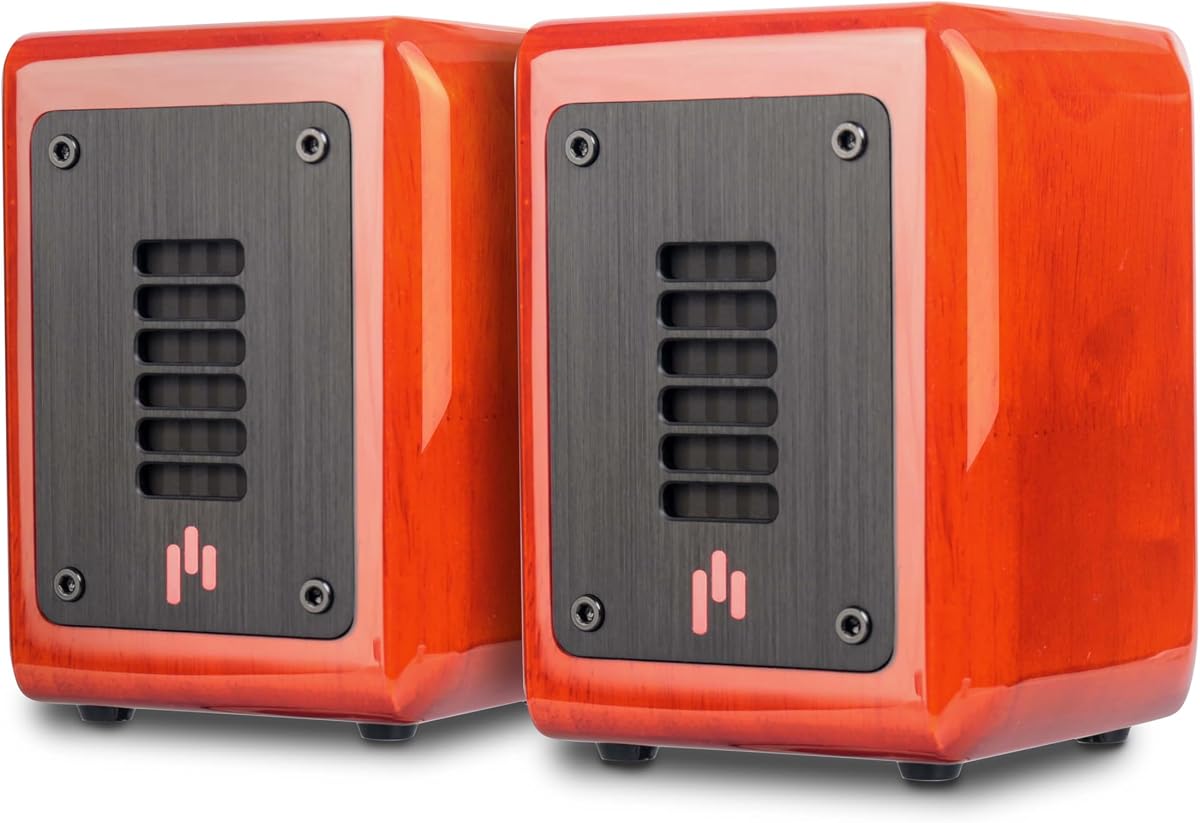
The Aperion Audio PST MKII is not a conventional active crossover. It is a matched pair of planar-ribbon super tweeters intended to sit on top of compatible main speakers and add a subtle upper-frequency extension. Its 4.0 rating reflects a specialized role within the broader audiophile ecosystem rather than a general-purpose signal processor.
We may earn a commission when you buy through this link, at no additional cost to you.
The super tweeters emphasize a range from 8,000Hz to 40,000Hz and contain a high-pass filter with five preset crossover points. Unlike a horn tweeter, the planar magnetic design handles high frequencies in a more delicate fashion. The manufacturer states that the pair works best with speakers having 85dB to 93dB efficiency, making compatibility a critical consideration before installation.
The product should not be judged as a traditional crossover because it does not divide the complete stereo signal into multiple amplifier feeds. It adds a separate high-frequency layer, and output matching is essential. Users should also heed the explicit warning that these are not extremely loud devices; trying to use them as primary high-output tweeters would be inappropriate.
Choose the PST MKII only when seeking subtle top-octave enhancement from a compatible, reasonably efficient main speaker system and want to experiment with placement. It is best treated as a complementary listening tool rather than a necessary audiophile upgrade. For actual multiway crossover processing, the Marchand, Behringer, or professional XLR products are the more direct choices.
The planar-ribbon drivers are designed to add a restrained sense of air and detail above the main speaker’s natural range. Their effect depends heavily on matching, placement, and system acoustics.
The stated 85dB-to-93dB efficiency range is central to correct use. Speakers outside that range may not interact smoothly with the super tweeters, so system matching should be confirmed before installation.
We may earn a commission when you buy through this link, at no additional cost to you.
The 400W Four-Way Speaker Crossover is a passive four-way network designed for home theater and dedicated music systems. Its 3.6 rating is the lowest in this group, which makes sense given its specialized, fixed architecture. The product is aimed at users who want multiway speaker filtering and high power handling without an active electronic processor.
We may earn a commission when you buy through this link, at no additional cost to you.
The network uses two high-frequency and two low-frequency paths with a stated crossover region of 2600Hz to 2650Hz. It is described as handling up to 400 watts and supporting speaker impedances from 2Ω to 6Ω. Oxygen-free copper inductors with blue frames and multiple specialty capacitors are used in the design, while a routing switch allows the tweeter circuit to be tailored for different speaker arrangements.
Solderless 10-pin terminals are a practical inclusion because they reduce the need for specialist assembly work. However, a passive network is inherently less flexible than an active crossover. The very narrow frequency-adjustment range, lack of separate electronic level controls, and absence of phase switching mean the result must be integrated carefully with the intended speaker design.
This crossover suits a builder or installer with a specific four-way speaker plan and confidence in passive network design. It may also appeal to someone creating a dedicated high-power home theater system. For broader tuning or multi-amplifier routing, an active unit such as the Behringer CX3400 or Marchand XM66 will offer easier post-installation adjustment.
The stated 400-watt capacity supports use with more powerful home theater or music speakers, while the 2Ω-to-6Ω range covers many common driver impedances. Exact behavior still depends on the complete speaker network and amplifier loading.
Ten solderless terminals simplify hookup compared with traditional hardwired crossover boards. The plug-based approach can reduce setup errors, provided each connection is matched to the intended driver path.
We may earn a commission when you buy through this link, at no additional cost to you.
The Taramps CRX4 is a compact electronic four-way crossover designed for car audio. It combines four-channel processing, RCA connections, customizable adjustments, and an 8-volt RMS output specification. Its 4.5 rating makes it an appealing choice for mobile systems where usable features and straightforward integration matter more than a domestic audiophile aesthetic.
We may earn a commission when you buy through this link, at no additional cost to you.
The four-channel architecture provides room for more flexible routing than a basic two-way high-pass unit. Customizable controls allow the installer to shape output behavior and integrate the processor with an existing amplifier chain. RCA connectivity is common in car installations, so the unit may integrate easily with compatible head units and signal processors without requiring balanced cabling.
Its main limitation is the absence of a more universal professional connection strategy. RCA connections do not offer the noise-rejection benefits of balanced XLR in demanding live environments. The product also appears primarily intended for vehicle use, and the product data gives less detail about its filter slopes and exact crossover-frequency ranges than it does for several alternatives.
The CRX4 is best for a car-audio installer who values compactness, four-channel control, and conventional RCA connectivity. It can also work in a simple domestic system when those features align with the available equipment. Listeners who need detailed filter specifications, balanced connections, or a highly specialized multiway architecture should examine one of the professional XLR models instead.
The compact 190 by 145 by 40mm enclosure is easy to accommodate in vehicle installations where space is limited. Four channels provide more routing options without requiring multiple separate processors.
RCA connections are familiar across most consumer and car-audio signal chains. The stated 8-volt RMS output and customizable sound adjustments make the unit practical for integrating multiple amplifier zones.
We may earn a commission when you buy through this link, at no additional cost to you.
The Behringer Super-X Pro CX3400 is a long-standing professional crossover offering a broad choice of two-way, three-way, and mono four-way operating modes. Its 3.9 rating reflects a capable, well-specified budget option rather than a flagship audiophile unit. For many listeners, the combination of steep filters, per-output protection, and mode flexibility makes it remarkably useful.
We may earn a commission when you buy through this link, at no additional cost to you.
The crossover uses 24dB/octave, state-variable Linkwitz-Riley filters for frequency separation. Its summed output is described as having flat amplitude response and zero phase difference, useful properties when combining channels to reproduce the original signal. Each output has an individual limiter and phase reverse switch, while a switchable 25Hz subsonic filter per input provides low-frequency driver protection.
The main drawback is that the design is old and does not emphasize the balanced connectivity found in the newer professional models. It is also less focused on a refined domestic signal path than the Marchand, meaning its greatest appeal lies in its flexible professional feature set. Users should confirm current availability and connector details before planning an installation around it.
This is an excellent budget choice for a studio monitor, PA system, or home theater with multiple amplified bands. It gives users steep filtering and useful protection without requiring separate crossover devices. The Marchand is preferable for a focused, high-end two-way setup, while the newer XLR processors are better for long balanced cable runs and stage-oriented workflows.
The 24dB/octave Linkwitz-Riley filters provide a steep transition between bands and are well suited to professionally designed multiway systems. Switching between operating modes makes one processor useful across several amplifier configurations.
Individual limiters help prevent overload, while phase reversal can correct polarity problems during setup. The optional 25Hz subsonic filter offers additional protection for bass drivers in systems that do not require extreme low-frequency extension.
We may earn a commission when you buy through this link, at no additional cost to you.
Choosing an audiophile active crossover means balancing channel count, filter behavior, signal quality, protection, and system compatibility. The most attractive specification sheet is not necessarily the best match for a particular speaker or installation, so establish the system design before choosing a processor.
Begin by counting the amplified frequency bands in the finished system. A two-way setup needs one crossover point and separate low- and high-frequency feeds, while three-way systems require an additional midrange band. A mono four-way or six-way design is more common in professional installations where individual driver groups need independent filtering and level control. Choosing a unit with more modes than necessary can make setup less intuitive, while choosing too few can prevent proper system integration.
Crossover slope determines how quickly out-of-band energy is attenuated. The Marchand and Behringer use 24dB/octave slopes, while the professional XLR unit includes a 40Hz, 12dB/octave low-cut option. Linkwitz-Riley filtering is often favored because it is designed to preserve a smooth summed response when multiple bands are recombined. Passive networks, by contrast, combine capacitors, inductors, impedance effects, and driver characteristics into one network, so their performance cannot be judged by slope alone.
Audiophile performance depends on more than the filter label. Fully analog processing, low-noise amplification stages, accurate level controls, and robust input buffers can all affect system performance. The Marchand uses fully analog signal processing with a digital frequency display, whereas the Audiopipe reports a signal-to-noise ratio greater than 105dB. Ask whether the product offers true balanced operation, what the output headroom is, and whether the signal path remains linear at the selected settings.
A crossover cannot be evaluated independently of the rest of the signal chain. RCA connections are common in domestic hi-fi and car systems, while balanced XLR inputs and outputs are standard in professional studios, stages, and installed sound systems. Balanced connections can be beneficial over long cable runs, but they are useful only when the source, processor, and amplifiers support a truly balanced path. Verify connector types, channel counts, and whether the supplied cables are sufficient.
Phase reverse switches, independent output gain, low-cut filters, remote bass controls, and status indicators can make real-world setup faster and more repeatable. The professional stereo and mono processors provide per-band gain and phase controls, while the Audiopipe adds a multiplier frequency switch and remote subwoofer level. These features should support careful calibration rather than substitute for it. A display that clearly reports the selected crossover point is also useful when making incremental adjustments.
A crossover should prevent drivers from receiving unsuitable frequency content and should avoid overloading amplifiers. Individual output limiters, high-pass filters, and subsonic filters all serve protective roles, but each affects system behavior. A limit can prevent a fault from escalating, while a low-cut filter changes tonal balance. Check power ratings, impedance compatibility, output voltage, and any stated clipping behavior before connecting a processor to a high-power system.
An active crossover contains signal-processing electronics and typically requires separate amplifiers for each band. A passive crossover divides the speaker signal using components within the speaker network and does not independently amplify or level-match outputs. The 80W high-pass unit and 400W four-way network are passive examples, while the Aperion super tweeter is a supplemental driver rather than a crossover processor. Comparing them as identical products would obscure their different roles.
Consider where the processor will live, how cables reach it, and which controls you will need after installation. Compact car units favor limited space, while professional XLR models suit equipment layouts built around racks and balanced patching. Remote subwoofer control is especially useful in vehicles, and front-panel mode indicators help during setup. Also consider serviceability, documentation, and whether the enclosure can be mounted securely without obstructing ventilation or connectors.
Begin with a complete plan rather than connecting a processor on a whim. Identify every driver, its intended frequency range, the amplifier assigned to it, and the desired crossover point. Confirm impedance, input format, output format, voltage requirements, and grounding. Passive networks should be installed according to the speaker designer’s specifications, while active processors should be configured before signal is sent to the power amplifiers.
Set the crossover frequency first, then establish relative output levels with modest signal levels and the system properly configured. Use familiar recordings, a measurement microphone if available, and comparisons that reveal tonal balance rather than simply increasing bass or treble. Apply phase changes and low-cut filters cautiously, saving the original settings so each adjustment can be reversed. Disable limiters or boost controls during calibration if the manufacturer recommends it, then restore them after the signal chain is stable.
For care, keep the unit in a dry, stable environment with adequate ventilation and avoid leaving it powered during wiring changes. Use quality cables, tighten connectors, respect polarity, and avoid placing a processor near heat sources or high-hum fields. Passive crossovers should be installed with correct polarity and secure solder joints, while active units benefit from periodic checks of input sensitivity, output balance, grounding, and firmware-free control settings. A printed or saved configuration record is especially useful in permanently installed systems.
An active crossover divides an audio signal into frequency bands before it reaches separate power amplifiers. Each amplifier then drives only the speakers assigned to its band, which can improve control, reduce distortion, and simplify loudspeaker design. A passive crossover performs a related division within the speaker network, but it does not provide active level control or independent amplifier feeds.
Neither is universally better. A two-way design is simpler and can provide excellent coherence when the woofer and tweeter are well matched. A three-way model gives the midrange its own band and driver, which can reduce intermodulation and improve control for demanding systems. The better choice depends on the speakers, listening space, amplifier layout, and the installer’s ability to tune the system.
You may not need an external crossover if the powered speaker already contains an internal crossover. A separate processor is useful when you want adjustable crossover points, independent band levels, multiple amplifier channels, or clearer system integration. Before adding one, verify whether the speaker’s internal network is removable or bypassable and how its input requirements differ from a conventional amplifier feed.
Balanced XLR connections can offer better noise rejection, especially over long cable runs or in electrically noisy professional environments. They are not automatically better in every domestic installation, and their advantage is realized only when the complete signal path is truly balanced. RCA remains convenient and widely compatible in car audio and many two-channel hi-fi systems.
Use the crossover point recommended by the speaker manufacturer or designer whenever possible. It is determined by driver directivity, impedance behavior, cabinet design, and the intended listening distance, not by appearance alone. If a manufacturer offers a broad adjustment range, change the frequency in small steps while checking for lobing, excessive overlap, loose bass, or audible crossover distortion.
No. Steeper slopes can reduce off-axis energy and out-of-band interference, but they also require more precise design and can make speaker behavior more demanding around the transition region. A 24dB/octave Linkwitz-Riley crossover is often valued for smooth recombination, while the correct slope still depends on the drivers, filters, and system design.
Sometimes, but only if the passive network can be disconnected correctly and the replacement has suitable topology and bandwidth. Some speaker manufacturers do not encourage modification because crossover components interact with driver impedance and can affect voicing and safety. Confirm the manufacturer’s guidance or obtain advice from a qualified designer before altering a finished loudspeaker.
No. A capable full-range or two-way speaker can reproduce very high frequencies without a supplemental super tweeter. Products such as the Aperion PST MKII are optional instruments for particular tastes and compatible systems, not necessary upgrades. They also require careful level matching and should not be expected to deliver high-output high-frequency reproduction.
The Marchand XM66 is the strongest focused choice for a high-end two-way system because it combines fully analog processing, a precise digital frequency display, broad adjustment, and flexible connection options. The Audiopipe XV-6-V15 stands apart as the most capable premium multiway option for complex car installations, while the Behringer CX3400 provides the most versatile processor design at a budget-friendly level.
The right choice for every other system depends on architecture rather than badge. Home theater and studio users may prefer the balanced XLR routing of the professional processors, while car listeners may prioritize remote bass control and compactness. Passive crossovers can be excellent when the speaker plan is fixed, but they should not be treated as adjustable substitutes for an active processor.
Before buying, verify the current specification, connector format, crossover range, power requirements, and compatibility with the speakers and amplifiers already in the system. Product details and prices can change, and a crossover cannot compensate for a poorly matched driver set. Measure, make small changes, and preserve a documented setup process for the most reliable long-term result.
