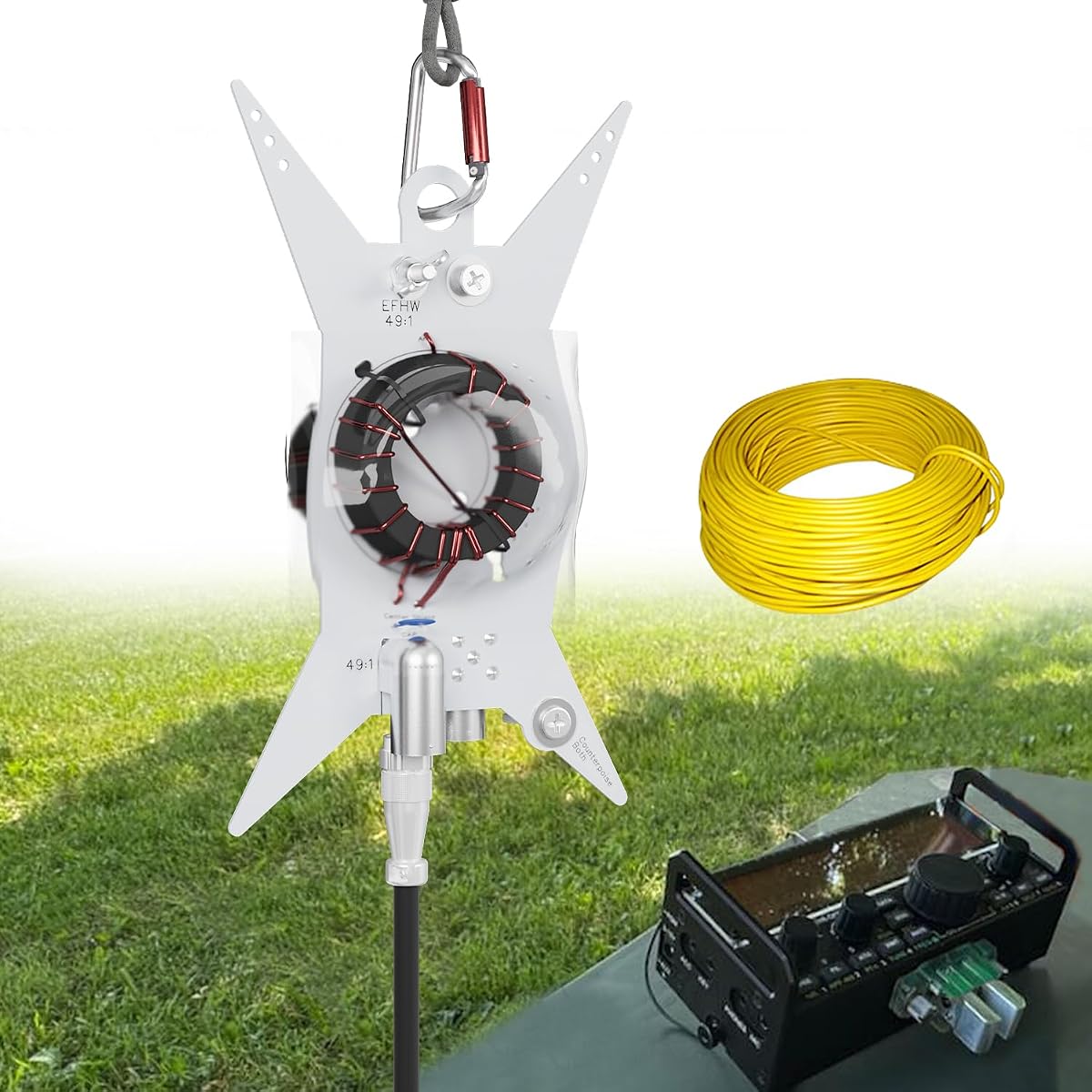
End Fed Half Wave Antenna 49:1 and 9:1
4.6Editor score
Dual 49:1 and 9:1 sides
Flexible mounting orientations
Portable field-ready design
Compare the 10 best end fed antennas for ham radio, including balun ratios, power handling, supported bands, portability, and outdoor construction.
End fed antennas offer ham radio operators a practical way to put a useful HF signal into the air without erecting a complex, multi-element array. Their appeal lies in simple installation, flexible mounting, and compatibility with portable or permanent stations. A quality model should balance bandwidth, impedance matching, power handling, durability, and the amount of setup required.
This guide compares ten end fed antennas for ham radio across the factors that most directly affect real-world operation. It examines matching systems, frequency coverage, supported modes, transmission limits, wire requirements, mounting flexibility, weather resistance, and portability. The list includes dedicated four-band and eight-band designs, dual-ratio units, compact portable antennas, and long-wire systems.
Each review shows where a particular antenna fits best, from low-power travel setups to higher-power home or field stations. Ratings and listed specifications reflect the supplied product information, while operational outcomes still depend on the radio, feed line, antenna wire, surroundings, and installation. Product availability and prices can change, so confirm current details before purchasing.
4.6Editor score

4.7Editor score

4.6Editor score
The comparison below highlights the major differences among these ten antennas, including matching ratio, band strategy, power rating, portability, and intended installation style.

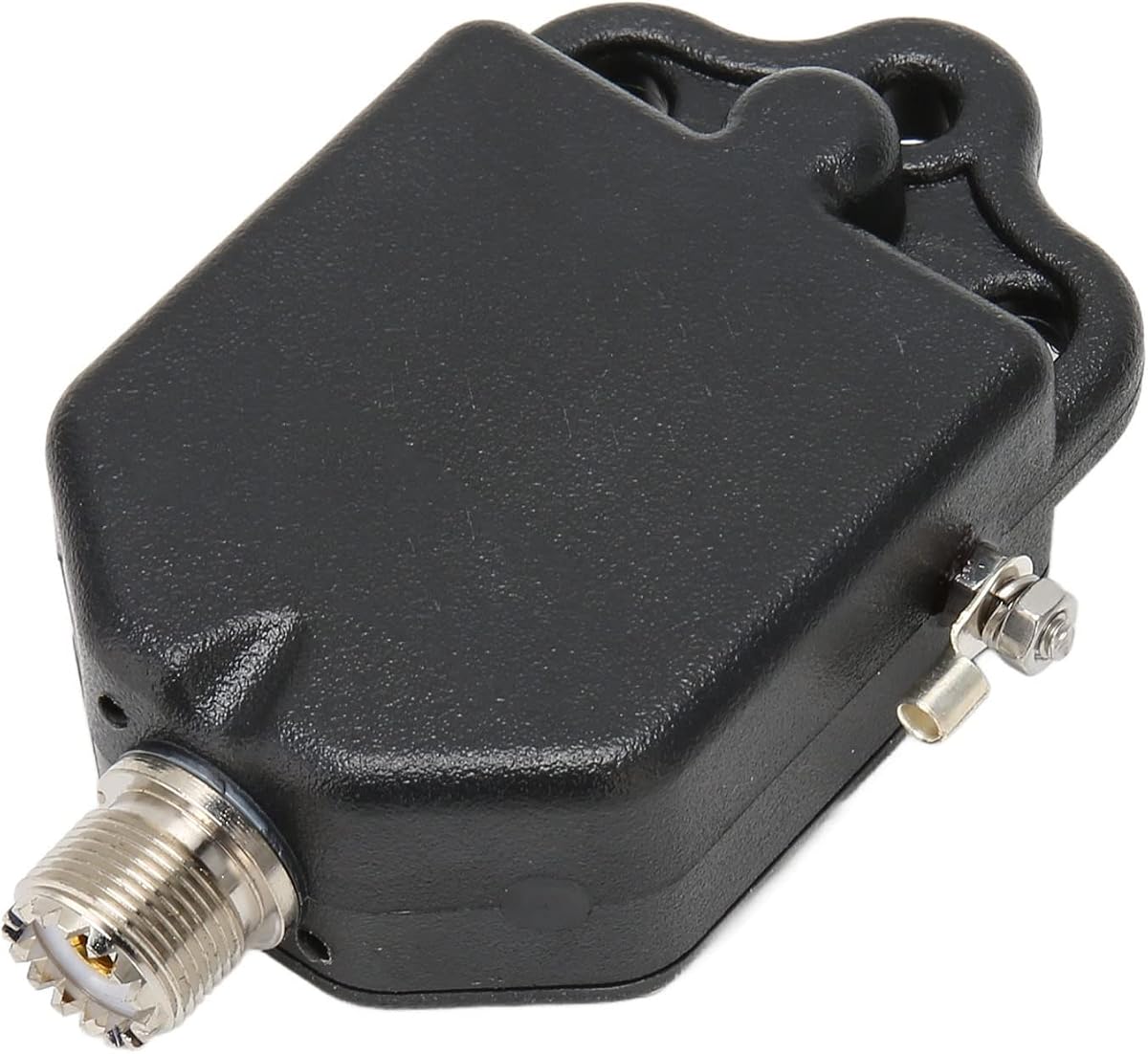


The JYR4010-150W is a four-band end fed half-wave antenna built around a 1:64 impedance transformer. It carries a 4.7 rating and stands out for a relatively restrained feature set aimed directly at practical HF operation. Its stated coverage includes 40m, 20m, 15m, and 10m, making it a natural choice for operators who want broad amateur-band access without carrying a full antenna tuner.
We may earn a commission when you buy through this link, at no additional cost to you.
Its most attractive feature is the integrated matching system. The listed specifications indicate that it can handle SSB up to 150 watts and CW or FT8 up to 100 watts without an external tuner in most setups. A standard HF transceiver connection, compact matching unit, and single-wire deployment simplify setup at home, in a field, or during portable activities. The antenna may be hung horizontally, vertically, or diagonally, with the transformer positioned for convenient routing.
Construction details receive unusual attention. The product uses an ABS housing, heavy-gauge wire, a reinforced end insulator, a clamping system, and a sealed M-J connector. A large ferrite core supports impedance transformation, while the enclosure uses convection cooling to help manage heat during extended transmissions. The listed installation guidance recommends keeping the antenna roughly three meters from obstacles and five meters from metal surfaces, which is sensible for reducing unwanted coupling.
This is an excellent choice for an operator who values simplicity, adequate output power, and easy transport more than access to every HF band. The four-band coverage will not satisfy someone expecting uninterrupted operation from 80m through 6m, but it concentrates capability around the bands most commonly used for everyday HF and portable work. For a clean, tuner-free setup, the JYR4010 offers one of the strongest combinations of features in this roundup.
The integrated 1:64 transformer is the defining feature for operators who want a compact station that can be deployed quickly. It simplifies the station arrangement, although actual SWR still depends on wire dimensions, surroundings, and correct band configuration.
A single-wire layout, portable matching enclosure, and multiple mounting orientations make the antenna suitable for POTA, SOTA, camping, backyards, and rooftops. The sealed housing also supports long-term outdoor use when inspections are performed regularly.
We may earn a commission when you buy through this link, at no additional cost to you.
The Upgrade 49:1 and 9:1 Dual Mode antenna offers two ways to match an end-fed wire to a radio. Its 3.9 rating is the lowest among the listed products, but the dual-sided design provides meaningful versatility. The 49:1 side suits end-fed resonant antennas, while the 9:1 side is intended for random-wire installations across multiple HF bands when a tuner is used.
We may earn a commission when you buy through this link, at no additional cost to you.
That distinction matters for operators who want one antenna system to handle both planned wire lengths and less predictable field deployments. A resonant configuration can be prepared and trimmed for specific bands, while the 9:1 side offers more flexibility when the available wire or support structure changes. The supplied information says the unit works with major radio brands and can provide strong SWR readings across a wide range of HF frequencies, subject to the selected wire and tuning arrangement.
The antenna is described as compact, lightweight, and easy to carry. It can be installed horizontally, vertically, or diagonally, which is useful in forests, open fields, and complex terrain. Its construction is described as windproof and rainproof, with a solid structure intended to remain stable in harsh outdoor conditions. The included wires simplify assembly, although operators should still plan the feed line and transformer position carefully.
This dual-mode product is a practical choice for portable operators who value matching flexibility over a simple single-ratio design. The main drawback is that the 9:1 side may require an external tuner, reducing the simplicity sought by operators considering a dedicated no-tuning system. Within those constraints, it serves as a versatile two-configuration option rather than a one-ratio specialist.
The paired 49:1 and 9:1 design lets the operator move between a resonant wire and a random-wire installation. This is particularly helpful when portable sites offer different lengths of wire or changing support conditions.
Lightweight construction and support for several mounting angles make deployment straightforward. Wind and rain resistance are useful for exposed camps and SOTA locations, although a sound installation remains more important than the housing material alone.
We may earn a commission when you buy through this link, at no additional cost to you.
This end fed half-wave antenna combines 49:1 and 9:1 matching sides in a compact unit designed for ham radio and portable HF operation. Its 4.6 rating places it among the stronger-reviewed products in the group. The dual-sided arrangement gives operators more choice than a conventional single-transformer end fed antenna without demanding a large collection of separate components.
We may earn a commission when you buy through this link, at no additional cost to you.
The 49:1 side is intended for resonant end-fed antennas, while the 9:1 side supports random-wire use over various HF bands with the aid of a tuner. That makes it a sensible companion for portable operators who may need to improvise around trees, poles, buildings, or uneven terrain. The product can be mounted horizontally, vertically, or diagonally, and the included wire reduces the number of items required for a field deployment.
The listed construction is described as solid, windproof, and rainproof. Its compact and lightweight format supports both temporary operation and longer outdoor deployments. Compatibility with major radio brands is another useful characteristic, although the actual connection and matching performance depend on the radio output, feed line, antenna geometry, and surrounding structures. Operators should not assume every band will present an acceptable SWR without adjustment.
For budget-conscious hams, this antenna offers a particularly useful combination of portability, two matching ratios, and a favorable rating. The 49:1 side is the logical choice for a deliberately prepared resonant wire, while the 9:1 side expands the possibilities for experimental or constrained setups. It is a strong fit for POTA, SOTA, camping, and general portable operation where a tuner is already part of the station.
The two transformer sides accommodate different antenna strategies without requiring a separate matching assembly. Operators can select the side that best suits the available wire and deployment conditions.
Included wires, a small matching unit, and broad mounting flexibility make the package convenient for travel. The same portability also suits an emergency communications kit or a station that needs to be relocated regularly.
We may earn a commission when you buy through this link, at no additional cost to you.
This HF end fed antenna offers a 1:64 balun, a stated 1–30 MHz range, and a 100-watt power rating. Its 4.5 rating suggests a generally positive reception among users, while its four-band and eight-band configurations provide a useful framework for both beginners and experienced operators. It is presented as an outdoor option supporting SSB, FT8, FM, and FSK.
We may earn a commission when you buy through this link, at no additional cost to you.
The most important installation detail is that the antenna does not arrive ready for immediate operation. The operator is instructed to prepare about 2.5 square meters of wire, corresponding to approximately 65.6 feet for the four-band arrangement or 132.5 feet for the eight-band version. That wire must then be trimmed to suit the intended frequency. This requirement makes the product more hands-on than a ready-to-run kit, but it also allows the operator to adapt the antenna to local conditions.
Its matching system uses a 1:64 transformer, and the standard interface is intended to work with ordinary HF equipment. Listed power allowances specify SSB below 100 watts and FT8, FM, and FSK below 60 watts. The ABS housing is described as hard and wear resistant, while the compact design should be straightforward to carry and install.
This antenna is a good fit for operators willing to invest time in wire preparation. It may be especially useful for portable work because the chosen wire length can be adjusted for the bands in use. The tradeoff is that the operator must understand end-fed antenna fundamentals and check tuning with an antenna analyzer or the radio itself, rather than expecting every listed frequency to work identically.
The four-band and eight-band versions use different wire lengths, and trimming determines the resonant points. Accurate measurement and tuning are therefore central to getting consistent performance.
The 1–30 MHz specification indicates wide HF potential, while the mode-specific power ratings keep expectations realistic. Matching the transmitter output to those limits helps protect the antenna and radio.
We may earn a commission when you buy through this link, at no additional cost to you.
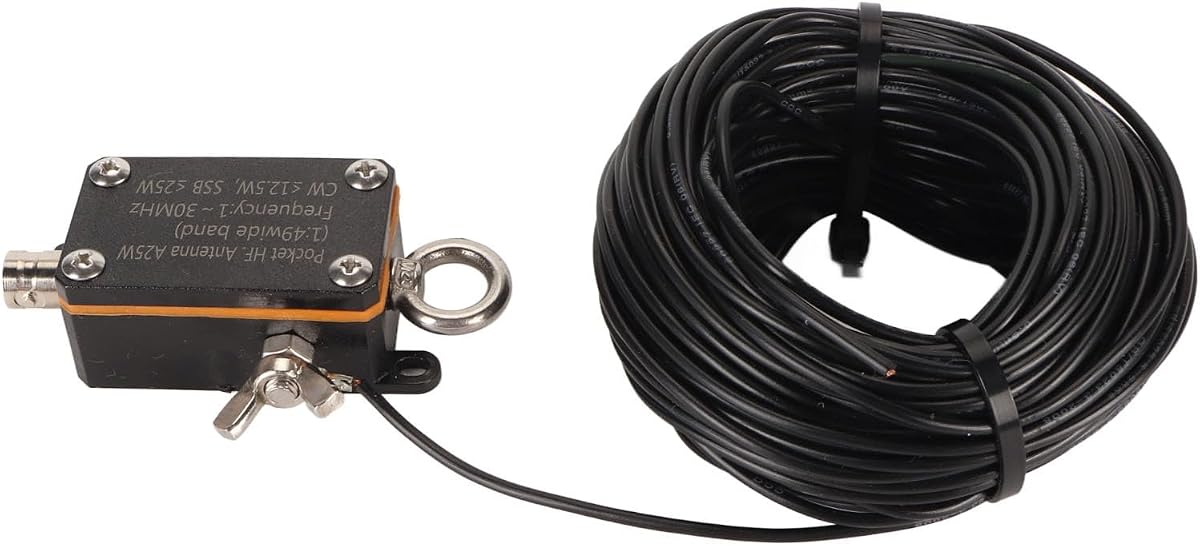
The Portable Short End Fed Antenna is designed around portability rather than high-power operation. It uses a 1:49 balun, covers a stated 1–30 MHz range, and supports SSB, CW, and FT8 within relatively low output limits. Its 4.4 rating reflects a balanced mix of convenience and performance for operators who travel with compact radio equipment.
We may earn a commission when you buy through this link, at no additional cost to you.
One of its strongest attributes is the simplified installation. A standard interface, small dimensions, and lightweight PVC construction make it easy to carry and deploy. The product is especially appropriate for backpacking, travel, restricted operating sites, or a secondary antenna when a larger wire is impractical. Its stated power allowance is SSB below 25 watts, FT8 below 5 watts, and CW below 12.5 watts.
Those power figures are the main constraint. The antenna is better aligned with a low-power radio than a typical 100-watt home transceiver, and its limits leave little margin for accidental overdrive. It may still serve well in a lightweight station, emergency kit, or portable setup where lower output is acceptable. The stated high-hardness PVC shell is presented as resistant to damage and wear.
This model makes the most sense for a traveler, beginner, or operator who values a small antenna more than output power. It is less appropriate for someone seeking a main antenna capable of sustained SSB or digital operation at conventional high-power levels. Within that light-duty niche, it offers a convenient way to put an HF signal on the air with little installation effort.
The small PVC body and uncomplicated setup reduce the space and effort required to carry an HF antenna. It can complement a portable radio kit without requiring a bulky matching assembly or permanent support structure.
The listed SSB, CW, and FT8 limits are materially lower than those of higher-power models. Operators should set the radio output conservatively and remain within those specifications to protect the antenna.
We may earn a commission when you buy through this link, at no additional cost to you.
The LW-20 is described simply as an HF long-wire antenna covering 80m through 6m. It has a 5.0 rating, the highest numerical rating among the ten products, but the supplied information is considerably more limited than for the other antennas. Its documented selling points are its wire format, HF application, and multiband range rather than a detailed list of connector, transformer, or power specifications.
We may earn a commission when you buy through this link, at no additional cost to you.
Long-wire antennas appeal to operators who want a simple radiating system and are willing to manage its matching requirements. A broad range from 80m to 6m can be valuable for experimental work, band exploration, and portable installations where multiple dedicated antennas would be inconvenient. The actual usable bands and impedance behavior will depend on the wire length, feed arrangement, radio, and tuner or matching system used.
Because the product information does not specify a balun ratio, maximum power, or included accessories, buyers should verify those points before committing to the antenna for a permanent high-power station. Those omissions also make it harder to compare the LW-20 directly with the detailed matching and power specifications of the other choices. The 5.0 rating is encouraging, but it should not be interpreted as proof of a particular output level, weather rating, or installation method.
The LW-20 is best considered for an operator who appreciates the simplicity of a long wire and wants access to a wide span of amateur frequencies. It may appeal to experimenters, but a tuner or suitable matching arrangement may be needed. A buyer who values clearly published specifications, defined power limits, or a turnkey transformer package may find one of the better-documented alternatives more suitable.
The appeal of the LW-20 lies in its straightforward long-wire architecture. That simplicity can be attractive for operators who already understand how feed impedance and wire length affect multiband performance.
The limited supplied information leaves questions about matching hardware, power handling, and included components. Confirming those specifications with the seller is important for a high-power or permanent installation.
We may earn a commission when you buy through this link, at no additional cost to you.
The WOOKLEA 1:64 End Fed Antenna has a 4.8 rating, making it the highest-rated product with a detailed feature set in this roundup. It operates across a stated 1–30 MHz range, uses a 1:64 matching ratio, and is designed for both four-band and eight-band wire arrangements. Its stated limits include 150 watts for SSB, 120 watts for CW, and 80 watts for FM, AM, FT4, and FT8.
We may earn a commission when you buy through this link, at no additional cost to you.
This combination makes the antenna a credible general-purpose option for a home station, portable operation, or emergency deployment. The 1:64 transformer is intended to reduce the impedance presented by the end-fed wire, while the wide frequency specification supports experimentation across HF. Its compact ABS housing and standard interface support quick setup, and the low weight is helpful for field activities.
The antenna still requires attention to wire configuration. The supplied information calls for approximately 2.5 square meters of wire: about 65.6 feet for the four-band setup and 132.5 feet for the eight-band setup. That wire is to be fine-tuned to the desired frequency. An antenna analyzer can help identify the appropriate trim points, reducing guesswork when the antenna is installed in a new environment.
For operators who want a highly rated, flexible package with meaningful SSB power capability, this is a strong candidate. Its weakness is ambiguity around exactly which accessories are included, and the multiple mode-specific power limits require attention. Confirm the package contents, use the appropriate wire length, and stay within the appropriate limit for the operating mode.
The 4.8 rating and 150-watt SSB ceiling distinguish this model from compact low-power antennas. Those attributes make it suitable for operators who expect more from an HF antenna while remaining portable enough for field use.
Choosing between four-band and eight-band wire changes the antenna's operating emphasis and physical footprint. The same matching unit therefore offers more than one way to build a station.
We may earn a commission when you buy through this link, at no additional cost to you.
The Upgraded 150W HF End Fed Antenna combines a 1:64 balun with a stated 1–30 MHz operating range and a broad list of supported bands. It carries a 4.6 rating and is aimed at operators who want more flexibility than a conventional four-band half-wave antenna. The listed bands extend from 80m through 60m, 40m, 30m, 20m, 16m, 12m, 10m, and 6m.
We may earn a commission when you buy through this link, at no additional cost to you.
Power handling is another major strength. SSB is rated below 150 watts, CW below 120 watts, and FM, AM, FT4, and FT8 below 80 watts. The ABS shell is described as durable and suitable for indoor or outdoor environments, including poor weather. A standard interface and compact design support rapid setup for temporary communications, emergency response, or a permanent outdoor installation.
As with several matching products in the roundup, the antenna requires the user to prepare roughly 2.5 square meters of wire. The four-band version uses about 65.6 feet and the eight-band version about 132.5 feet. The wire should be trimmed to the desired frequencies, and the supplied information recommends using an antenna analyzer to refine the operating points. This is a sensible step because nearby objects can alter the antenna's resonance.
This model is a strong all-around choice for an operator who wants broad band coverage and respectable power capability in a portable package. The setup is less turnkey than a kit that arrives with a defined wire and band plan, but the extra control can be valuable in changing locations. Confirm the package contents, prepare the correct wire, and fine-tune before relying on it for an important contact.
Support for nine listed amateur bands makes the antenna relevant to many HF activities. The practical trade-off is that achieving dependable results requires appropriate wire length and adjustment for the intended frequencies.
Its compact enclosure and straightforward interface suit rapid deployment. Weather-oriented housing and strong mode-specific power ratings make it particularly relevant to portable and emergency communications.
We may earn a commission when you buy through this link, at no additional cost to you.
The Professional 1:64 End Fed Antenna is a multiband HF system designed to cover 1–30 MHz without relying on an external tuner. It carries a 4.7 rating and uses high-hardness ABS material for its housing. The product description positions it as an easy-to-install option for both portable operation and permanent outdoor deployment.
We may earn a commission when you buy through this link, at no additional cost to you.
Its 1:64 balun is intended to provide broadband impedance transformation across the stated HF range. The antenna can use either a four-band wire plan of approximately 65.6 feet or an eight-band plan of approximately 132.5 feet. Users are instructed to trim the wire to their desired frequencies, so the installation is hands-on but adaptable. A compact design and standard interface help keep the station uncomplicated.
Power handling is listed at up to 100 watts for SSB and 60 watts for FT8, FM, AM, and FSK. Those figures position the unit as a capable home or field antenna for common HF transceivers, though operators should respect the lower limits for continuous modes. The ABS enclosure is described as resistant to wear and harsh outdoor conditions, supporting use beyond fair-weather operation.
This is a clear and approachable option for hams who want a 1:64 transformer, broad HF range, and tuner-free operation without a large collection of components. It is less suitable for an operator unwilling to prepare or trim wire, and it will not meet the 150-watt SSB targets of some competitors. Within its stated limits, it balances simplicity, portability, and durable construction particularly well.
A 1:64 transformer is intended to handle the impedance transformation across multiple HF bands. This reduces the need for a separate tuner, provided the wire is configured and tuned correctly.
The high-hardness ABS shell and weather-conscious construction suit regular field or outdoor use. Secure supports, sound routing, and periodic inspections remain essential regardless of enclosure material.
We may earn a commission when you buy through this link, at no additional cost to you.
The JYR8010-150W is the most fully specified premium package in the roundup. It includes a 39.6-meter, or 130-foot, antenna wire made from cold-drawn multistrand copper wire, along with a 20-meter installation rope. A sturdy 64:1 transformer and SO-239 connector support a ready-made installation, while the listed eight-band coverage spans 80m, 40m, 30m, 20m, 17m, 15m, 12m, and 10m.
We may earn a commission when you buy through this link, at no additional cost to you.
Its no-tuning concept is based on natural resonance across those eight bands. The manufacturer states an SWR of 2 or below across the supported bands, which provides a clear performance target. SSB and CW are rated at 150 watts, while FT8, FM, AM, and FSK are limited to 100 watts. For a substantial end-fed installation, that power capacity and defined band plan are particularly attractive.
The included hardware reduces guesswork and makes the package appealing for portable work, although 130 feet of wire demands a large open area. The product guidance recommends keeping the antenna three meters away from buildings and the ground for best performance. The conductor gauge, long wire, and transformer placement will also influence how the antenna behaves around trees, roofs, masts, and other structures.
This is the best choice for an operator who wants a substantial, ready-to-deploy eight-band system with specified wire, rope, transformer, connector, and power ratings. It offers more certainty than a bare matching unit because the major installation components are identified. The trade-off is footprint and installation effort: fewer than eight bands and a very long wire might suit someone else better.
The package includes 130 feet of multistrand copper wire, a 20-meter rope, a 64:1 transformer, and an SO-239 connector. These defined components make it easier to plan a complete station.
The product is designed around natural resonance rather than continuous external tuning. Its stated SWR target of 2 or below across eight bands gives operators a useful reference when checking installation quality.
We may earn a commission when you buy through this link, at no additional cost to you.
Selecting an end fed antenna involves balancing impedance transformation, intended bands, transmission power, wire length, portability, and the operating environment. The most important starting point is the station and deployment style you expect to use.
An end-fed wire presents a high impedance to the radio, so a transformer or balun is normally needed to create a usable relationship with the transceiver's output. Common ratios in this group include 1:49, 1:64, and 49:1 or 9:1 dual-sided designs. A 1:64 transformer is commonly suited to a standard end-fed half-wave arrangement, while a 9:1 side is useful for more flexible random-wire work and generally benefits from tuner support. The correct choice depends on the wire configuration, feed point, transceiver, and feed line rather than on the ratio alone.
A four-band design may cover 40m, 20m, 15m, and 10m, while an eight-band model can add lower and higher HF bands. Some products claim 1–30 MHz capability, but that range depends on a correctly dimensioned and tuned wire. A product that lists natural resonance bands may be more attractive to operators who prefer dependable, preset operating points. A broader tuner-assisted model can be more adaptable, although it adds another control to the station.
Power ratings should match the radio and operating mode. SSB often has a higher listed ceiling than CW, FM, AM, FT8, and FSK, and compact portable antennas may be limited to much lower output. A 100-watt SSB rating is suitable for many conventional HF stations, while a 150-watt rating offers additional headroom for operators running higher-powered transceivers. Always use the lowest applicable rating, allow for matching conditions, and avoid treating peak radio output as continuous antenna capability.
End-fed antennas require enough room for their radiating wire and a clear installation. Four-band layouts may need about 65.6 feet, while eight-band and long-wire systems can require around 132.5 feet or more. The longest models are better suited to open areas than small roofs or dense camping locations. A complete package that includes wire, rope, a connector, and a transformer can be easier to deploy than a matching unit requiring separate materials.
POTA, SOTA, camping, and emergency operations reward equipment that is light, compact, quick to connect, and easy to support. Dual-ratio antennas are useful when the available wire changes from one site to another. Low-power portable units fit particularly small radio kits, while eight-band systems with more wire suit open fields or established portable sites. Consider carrying weight, setup time, and the number of separate components alongside raw electrical specifications.
ABS and PVC housings are common in compact end-fed products, but material alone does not guarantee long service life. Look for sealed connectors, reinforced end insulators, secure clamps, UV-resistant components, and strain relief that prevents the feed line from pulling against the connection. A ventilated transformer housing can help dissipate heat, while water resistance and robust construction are valuable for exposed installations. Secure guying and routine inspections remain necessary in wind, ice, and changing weather.
The supplied information repeatedly mentions standard interfaces and broad compatibility with major radio brands, but the precise connector should still be checked. Some products use an SO-239 connection, while others refer more generally to a standard interface. The radio's output impedance, feed-line length and type, and internal tuner capability can all affect matching. A directly connected feed line may be preferred for simplicity, whereas an external tuner provides flexibility for less controlled wire installations.
Even a no-tuning design may need adjustment because nearby buildings, metal objects, ground, trees, and support structures alter capacitance and inductance. A resonant wire should be trimmed with an antenna analyzer or checked through the radio's SWR reading. Random-wire deployments vary even more, making a tuner and a 9:1 or 49:1 matching option useful. The more control an operator has over wire length and mounting position, the easier it becomes to accommodate changing sites.
Begin by identifying the intended band plan and the corresponding wire length for your antenna. Measure the wire carefully, prepare the matching end as directed, and connect the radio using the specified interface. Mount the transformer where the feed line can be supported without putting strain on the connector, then hang the radiating wire horizontally, vertically, or diagonally in the orientation recommended by the manufacturer.
After installation, check SWR on each intended band and make small wire adjustments when necessary. An antenna analyzer can help locate resonance, while the transceiver's built-in meter provides a practical starting point. Do not transmit at high power until the standing wave ratio is acceptable and every connection is secure. If the station uses a tuner, confirm that it can accommodate the antenna's impedance and revisit the settings whenever the environment changes.
For outdoor installations, use suitable supports, strain relief, and guying that leaves the antenna itself under minimal mechanical stress. Inspect the wire, end insulator, connector, housing, clamps, and rope at least twice a year, with more frequent checks after severe weather. Clean the connector, keep moisture away from the feed point, and replace damaged or weathered components rather than relying on a temporary repair.
It depends on the transformer, wire length, and operating bands. Products described as no-tuning or broadband can often handle their intended bands without one, especially when the wire is correctly prepared. A dual 49:1 and 9:1 antenna may still need a tuner for random-wire use. Operators should always check SWR and the manufacturer's matching guidance before transmitting.
The numbers describe the impedance transformation performed by the matching transformer. A 1:49 or 1:64 unit helps present the high impedance of an end-fed wire more conveniently to a conventional HF transceiver. The best ratio depends on the wire design and installation, so the transformer designation should be considered alongside the intended bands and supported power rather than used as the only selection criterion.
The supplied product information for several models specifies about 65.6 feet for a four-band layout and about 132.5 feet for an eight-band layout. Other products include a 130-foot wire as part of the package. Exact requirements vary, so follow the instructions for the specific antenna and allow enough extra wire for tuning and supported connections.
Yes, many of the antennas in this guide are explicitly intended for portable operation. A compact model is easier to carry, while a long-wire version works best where there is enough open space to deploy it. Bring a reliable support, adequate wire, secure guying, a way to trim and tune the antenna, and a tuner if the selected matching side calls for one.
Safe output depends on the individual product and operating mode. Listed limits range from 25 watts SSB on the compact portable model to 150 watts SSB on higher-power designs, with CW and digital modes often limited more strictly. Use the lowest applicable limit, remain below the maximum when adjusting or testing, and do not assume that a high radio power control setting equals safe antenna operation.
Choose a location with enough space for the wire and keep the radiating element away from metal, power lines, roads, and other hazards. Use a secure support, protect the feed point from moisture, relieve strain on the connector, and guy the installation so wind does not pull it down. Check SWR before normal transmitting and inspect the support and antenna after severe weather.
It can work, although nearby structures may detune the antenna and alter the impedance seen by the radio. Keeping the radiating wire as far as practical from buildings, metal surfaces, and other antennas generally improves predictability. After changing the location or orientation, recheck the standing wave ratio and make any required wire adjustment.
The product guidance recommends inspecting the installation and guy rope about every six months, and more frequent checks are sensible after storms or heavy wind. Examine the wire for abrasion, the end insulator for cracks, the transformer housing for moisture, and the connector for looseness or corrosion. Replace weakened components promptly to maintain safe operation.
The JYR4010-150W is the most balanced choice for operators who want four common HF bands, 150-watt SSB capability, and a generally tuner-free setup. The dual 49:1 and 9:1 model is especially useful for portable work because it supports both prepared resonant wire and more flexible random-wire configurations. For a complete premium package, the JYR8010 includes long wire, rope, an 64:1 transformer, an SO-239 connector, and eight defined resonant bands.
The best antenna for your station is not necessarily the one with the widest stated range. Prioritize the bands you actually operate, adequate power handling, an installation area that accommodates the required wire, and a matching method that suits how much tuning you want to manage. Low-power travelers may prefer the compact 1:49 antenna, while home and field operators can benefit from 1:64 systems with stronger power ratings and broader band plans.
Before ordering, verify the current package contents, connector, power limits, and required wire length, and compare the product with the installation space available at your usual operating site. Prices and seller details can change over time, so check current listings before making a final purchase. A carefully selected antenna paired with sound supports, periodic inspection, and proper tuning will provide the most dependable result.