
iFi HDMI iSilencer
3.6Editor score
Active noise cancellation
Integrated surge protection
HDMI 2.1 support
Explore the best HDMI noise filter options for home theaters, gaming setups, and AV gear, comparing noise reduction, fit, surge protection, and compatibility.
HDMI noise filters are compact accessories designed to improve signal integrity, reduce electromagnetic and radio-frequency interference, and protect connected equipment. Some operate directly within an HDMI signal chain, while others attach to cables as ferrite chokes. The right choice depends on your devices, cable diameter, installation space, and specific interference concerns.
We compared all ten products by examining their filtering method, supported connections, cable fit, installation requirements, resolution capabilities, surge protection, and intended applications. The guide covers inline HDMI noise reducers, protective port caps, and clip-on ferrite cores for HDMI, USB, power, audio, and other cables.
Each review explains where the product is most useful, what makes it distinctive, and which trade-offs buyers should consider. Ratings reflect the supplied customer feedback, while specifications are limited to available product information. Product availability and market conditions can change, so readers should verify current details before purchasing.
3.6Editor score

4.6Editor score

4.2Editor score
The table below compares filtering approach, installation method, cable or port coverage, key protection features, and signal compatibility across all ten HDMI noise filter options.



The iFi HDMI iSilencer is a dedicated inline noise filter with a 3.6 customer rating. Unlike passive ferrite clips that simply sit around a cable, it uses active noise cancellation and jitter elimination within the HDMI signal path. Its defining feature is integrated transient voltage suppression, allowing the same device to address signal noise and protect connected equipment from voltage surges.
We may earn a commission when you buy through this link, at no additional cost to you.
The product is particularly relevant to large 4K televisions of 65 inches and above and to systems using dedicated AV amplifiers or processors. In those environments, the manufacturer indicates that the effect of HDMI noise reduction can be more noticeable. Support for Ultra HD HDR at 8K/60Hz and 4K/120Hz makes it suitable for modern display and gaming ecosystems, provided the connection uses an Ultra High-Speed HDMI cable.
The main trade-off is that its rating trails those of several less specialized ferrite products in this list. It is also an inline device, so it requires an available HDMI connection and sensible cable placement rather than the simpler snap-on installation used by ferrite cores. Its specialized feature set, however, goes beyond basic cable shielding by combining active filtering, jitter handling, and surge protection in one enclosure.
This is the strongest option for a carefully assembled high-end home theater or AV system where active signal conditioning and electrical protection are both priorities. It is less compelling for users who only need a simple way to suppress interference on one power, USB, or HDMI cable. For those situations, one of the reusable ferrite-core kits may be more appropriate and flexible.
Active noise cancellation targets interference within the HDMI chain, while jitter elimination is intended to improve signal stability and recover fine image detail. The product is therefore more relevant to a dedicated theater than to a basic television-only setup.
The integrated transient voltage suppressor adds a layer of defense against unexpected voltage spikes. That combination makes this a functional choice for users who want both cleaner signal behavior and equipment protection in one inline accessory.
We may earn a commission when you buy through this link, at no additional cost to you.
The HDMI iSilencer 2 carries a 4.6 rating and is the most persuasive dedicated HDMI noise reducer in this guide. It applies active noise cancellation to the signal chain and is specified to achieve up to 40dB of noise reduction. Its stated goals include eliminating jitter, restoring fine image details, minimizing audio distortion, and maintaining a stable, high-quality transmission.
We may earn a commission when you buy through this link, at no additional cost to you.
Compared with the original iFi model, the second generation is smaller and lighter. That change matters in tight spaces behind wall-mounted televisions, inside media cabinets, and around densely packed receivers or processors. It supports 8K/60Hz and 4K/120Hz HDMI signals, works with HDMI 2.1, and remains backward compatible with earlier HDMI versions. An HDMI extension cable is included to provide additional installation flexibility.
The product also includes built-in transient voltage suppression, so it addresses both interference and unexpected voltage spikes. As with any inline filter, it adds another connection point and depends on the quality and capabilities of the attached cable. Claimed noise reduction is a maximum figure, and real outcomes can vary with the source device, signal path, interference source, and installation. Buyers should therefore treat the specification as a capability rather than a promise of identical improvement in every room.
It is a strong recommendation for gamers, early adopters, and home theater enthusiasts who want a purpose-built filter without the larger footprint associated with the first generation. It also suits buyers who want active noise cancellation, modern refresh-rate support, surge protection, and a compact form factor in a single package.
The smaller and lighter enclosure improves access in crowded entertainment cabinets. It is easier to integrate behind a television or near an AV receiver where every centimeter matters, while the included extension cable helps create a workable connection path.
Support for 8K/60Hz, 4K/120Hz, and HDMI 2.1 keeps the filter aligned with current display standards. Active cancellation, jitter elimination, and transient voltage suppression give it a broader feature set than a simple passive cable clip.
We may earn a commission when you buy through this link, at no additional cost to you.
This 24-piece ferrite bead kit provides five sizes with inner dimensions of 3.5mm, 5mm, 7mm, 9mm, and 13mm. Its 4.2 rating reflects a versatile approach to interference control: each clip is intended to suppress electromagnetic and radio-frequency interference on HDMI, USB, power, audio, and video cables without cutting, soldering, or otherwise modifying the wire.
We may earn a commission when you buy through this link, at no additional cost to you.
The kit stands out for its range of diameters. This makes it useful in a mixed-device home or office where one cable size would not cover every application. The cores use Ni-Zn ferrite with locking clips, and the tool-free design allows users to add, remove, or reposition them as equipment and interference conditions change. A sturdy plastic case also makes the collection easier to store and locate.
Because these are passive ferrite chokes, they do not offer the signal processing or specified decibel reduction of the iFi products. Their effectiveness depends on choosing a close fit and placing a core near the likely source of interference. A loose or oversized clip will cover less of the cable than the manufacturer intends, while a well-positioned core can improve signal integrity in systems exposed to nearby electrical noise.
This is the best budget choice for broad household cable management and flexible troubleshooting. It suits a user who wants to experiment with several positions, cover multiple cable diameters, and avoid modifying the installation. For a single protected HDMI connection with active noise reduction, the dedicated inline filters are more specialized alternatives.
The five included diameters let buyers address HDMI leads alongside USB, power, and audiovisual wires. That versatility makes the kit useful for a whole entertainment area rather than a single source or display connection.
Because every core opens without tools, users can move filters as they identify which cable or device is generating interference. This makes the kit practical for testing a setup before settling on a permanent arrangement.
We may earn a commission when you buy through this link, at no additional cost to you.
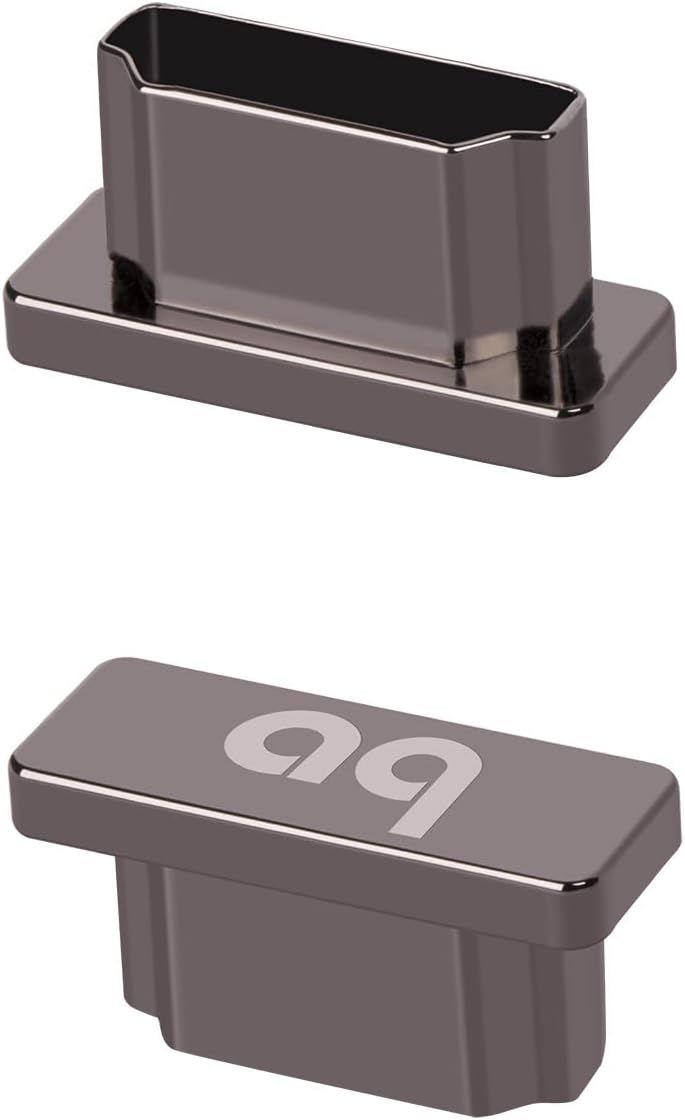
The AudioQuest HDMI Noise-Stopper is a set of four caps designed for unused HDMI inputs and outputs. Its 4.5 rating is among the stronger results in the guide, although it serves a distinctly different purpose from inline filters and ferrite chokes. Rather than conditioning a live signal, it helps prevent unwanted radio-frequency and electromagnetic interference from entering open ports.
We may earn a commission when you buy through this link, at no additional cost to you.
The caps fit directly over unused HDMI connections on televisions, receivers, soundbars, consoles, and other equipped devices. Their snug, tool-free installation makes port organization quick, while their material shields the connector from dust, corrosion, and physical damage. This dual function is especially useful in a new entertainment system that will eventually be expanded, because protected ports remain ready for future devices.
The important limitation is that these caps do not process signals on connected cables. A buyer whose problem is interference on an active HDMI connection should consider the iFi filters or a ferrite core instead. AudioQuest's product makes the most sense when open ports are present, when a system is not yet fully populated, or when physical protection of exposed connectors is the main goal.
It is a focused and economical way to finish an HDMI installation, especially for a user who wants every unused port covered. It works particularly well in home theater and hi-fi systems where finished panels and organized connections matter. For active noise reduction, pair it with the type of filter selected through the other reviews rather than expecting this accessory to perform that function.
Covering an unused port reduces its exposure to dust, corrosion, and accidental contact. The same caps also create a finished appearance on devices with several unused inputs or outputs.
No cable routing or rewiring is needed; each cap presses directly onto a compatible port. This makes the product particularly convenient for systems that are still being planned or expanded.
We may earn a commission when you buy through this link, at no additional cost to you.
The 31500 clip-on ferrite core has a 4.6 rating, matching the iSilencer 2 for the highest rating among the listed products. Each core has a 13mm inner diameter and a 39mm by 30mm overall size. This relatively large opening suits thicker HDMI, power, USB, network, telephone, audio, and video cables when the cable diameter is compatible.
We may earn a commission when you buy through this link, at no additional cost to you.
The ferrite material is intended to suppress external electromagnetic and radio-frequency interference along with high-frequency noise and ripple occurring during power or data transmission. Its effect is passive: rather than decoding or regenerating the HDMI signal, the core changes the electromagnetic environment around the cable section passing through it.
The snap-on housing requires no cutting and can be disassembled and reused. The manufacturer recommends positioning the choke where interference is most likely to enter, which means it should not be treated as a random accessory. Users may need to move it along the lead or test it near either device to find the most useful location.
This three-pack is appropriate for a few thick cables or for testing one core on different positions. It may be less convenient for a household with many varied cable sizes, since every core has the same 13mm inner diameter. Users who need broad diameter coverage should favor a mixed-size kit instead.
The 13mm opening gives the core enough clearance for larger cable jackets and connector housings. It is a practical choice for substantial HDMI or power leads that are too large for smaller ferrite clips.
Because the core opens by hand and can be reused, it can be moved among cable ends and positions. This makes it useful for identifying whether the greatest benefit occurs near the source device or near the receiving device.
We may earn a commission when you buy through this link, at no additional cost to you.
This 22-piece ferrite choke kit includes five inner diameters: 3.5mm, 5mm, 7mm, 9mm, and 13mm. The set is designed for USB, telephone, aerial, satellite, network, HDMI, VGA, DVI, power, and other cables. Its 4.3 rating reflects a broad, practical package rather than a specialized active HDMI signal conditioner.
We may earn a commission when you buy through this link, at no additional cost to you.
The plastic housings help reduce electromagnetic and radio-frequency interference, improving signal integrity on affected cables. Because the cores are clip-on, users can install or relocate them without tools. The range of sizes accommodates cable thicknesses from 1.5mm to 13mm, making the kit useful for both lightweight peripheral wires and more substantial home theater leads.
A transparent reusable box is included for storage, an appreciated detail when a mixed set of cores could otherwise become difficult to sort. There is no electronic signal processing, decibel specification, or inline signal regeneration. Accordingly, the product should be evaluated as interference suppression hardware rather than as a universal cure for image flicker, dropouts, audio distortion, or every signal-quality problem.
Choose this kit when several devices and cable types need attention, particularly if the exact lead diameter is uncertain. It is well suited to IT workers, installers, and home users who want the freedom to test filters in different positions. Buyers who need modern HDMI bandwidth management or a specified level of active noise reduction should look to the dedicated iFi products.
The diameter range covers thin USB and peripheral leads as well as thicker power and HDMI cables. Buyers can select the closest fit rather than forcing an oversized clip around a narrow wire.
Twenty-two cores allow simultaneous treatment of several cables or repeated experimentation with placement. The included box keeps unused sizes organized and protects them from getting lost in a toolbox.
We may earn a commission when you buy through this link, at no additional cost to you.
The VSKEY package contains ten matching 7mm ferrite-core noise filters rated 3.9. Each core has a 0.275-inch inner diameter and is intended for cables with outside diameters from approximately 5mm to 7mm. Listed applications include video and audio cords, AC power lines, HDMI, VGA, AV, DVI, coaxial audio, loudspeaker cables, subwoofer leads, and other home theater connections.
We may earn a commission when you buy through this link, at no additional cost to you.
Its double-snap design lets the core sit around a cable without cutting or altering the conductor. The product is aimed at reducing electromagnetic and radio-frequency interference generated by nearby appliances and electronics, with the goal of improving audio and video signal quality. If a cable is loose inside the core, the manufacturer advises wrapping it around the cable more than once for better contact.
The fixed 7mm size narrows the product's flexibility compared with a mixed-size kit. Users should measure the cable jacket rather than estimate, and note that a connector housing may be larger than the section where the filter will sit. Its 3.9 rating also suggests less consistency of customer satisfaction than the products rated 4.6, 4.5, or 5.0.
This product is best for a targeted installation involving several similar speaker or AV cables in that diameter range. The ten-piece quantity provides enough filters to place one on multiple signal paths or one at each end of an affected lead. It is less suitable for mixed cable gauges or users seeking active HDMI filtering.
The listed speaker, amplifier, subwoofer, and home audio applications make this kit relevant to stereo and home theater wiring. Placing a choke close to a noisy source or sensitive input may help reduce interference entering the equipment.
The 5mm to 7mm range should be checked against the actual cable jacket. If the fit is loose, multiple turns around the core can improve contact, as noted in the supplied installation guidance.
We may earn a commission when you buy through this link, at no additional cost to you.
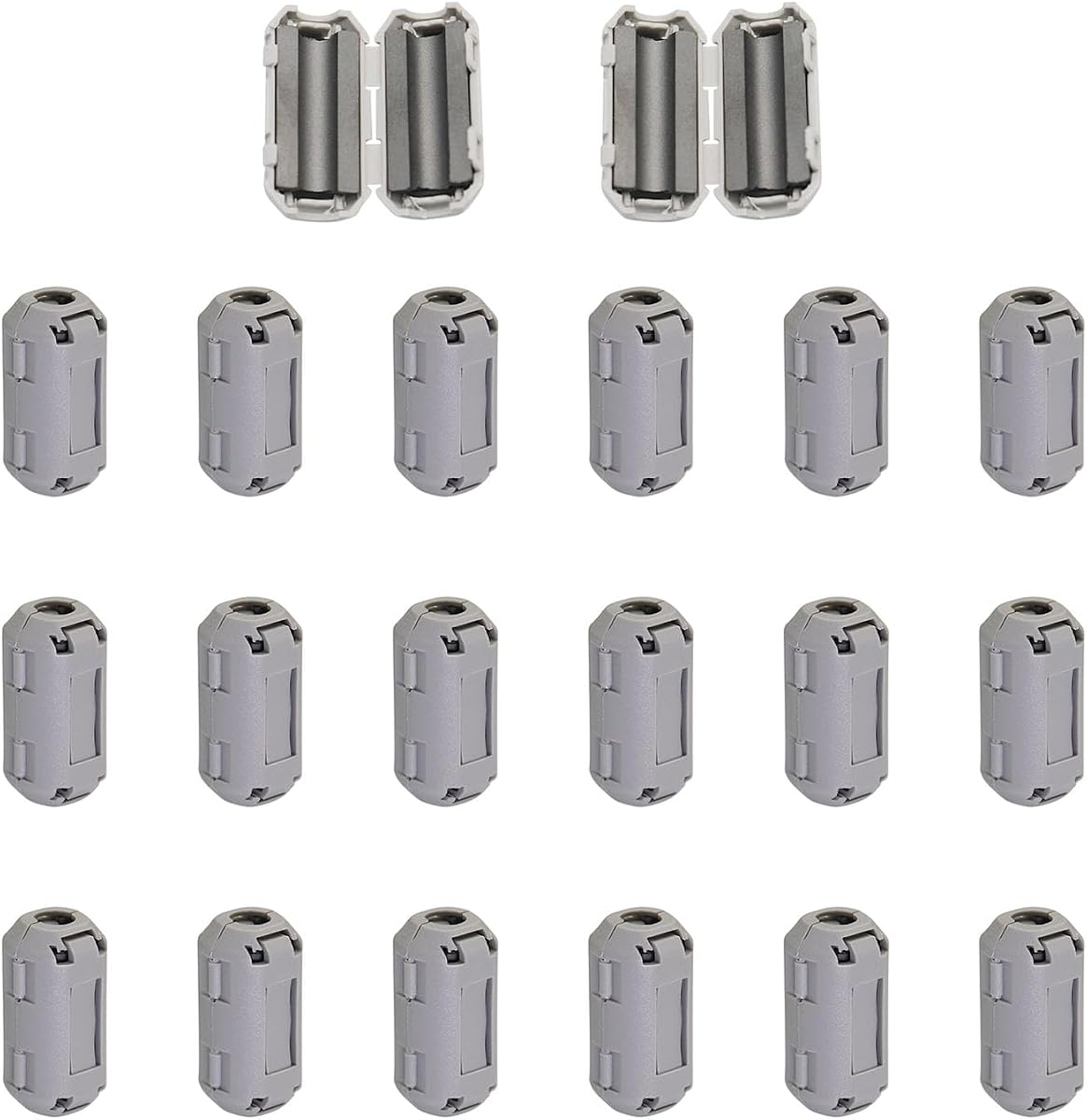
The UI1000 ferrite core filters have a perfect 5.0 supplied customer rating. Their defining material specification is high-grade UI1000 nickel-zinc ferrite, intended to provide electromagnetic and radio-frequency suppression while maintaining signal integrity. The set includes ten matching clips for cables with diameters from 3.5mm to 5mm.
We may earn a commission when you buy through this link, at no additional cost to you.
The listed applications cover USB cables, HDMI leads, power lines, coaxial wires, video and audio cables, and speaker lines. That makes the product relevant to computers, routers, DVRs, telecom equipment, industrial wiring, and home theater systems. The two-piece clamp opens by hand and snaps around the cable without cutting, soldering, or rewiring.
Its 5mm inner diameter produces a close fit for the specified range, which is important for consistent contact with the ferrite material. However, the product does not cover thicker HDMI jackets, and the ten cores all share one size. The rating reflects supplied customer feedback rather than a laboratory measurement, so the absence of a specified decibel figure should be considered when comparing it with an active inline filter.
It is an appealing choice for users with slender peripheral, data, or signal cables who want a simple reusable suppressor. The perfect rating makes it worth considering for a home office, media center, or AV rack full of USB and compact HDMI leads. Users needing larger cables should select a mixed-size kit, while those requiring modern signal regeneration should examine an active HDMI filter.
UI1000 nickel-zinc ferrite is specified to suppress electromagnetic and radio-frequency interference while preserving signal integrity. The material specification gives the set a clear technical identity beyond a generic small clip.
The core is designed for 3.5mm to 5mm cable diameters, allowing firm contact in the clamp. Users should verify cable thickness before installation to avoid buying a size that cannot close properly.
We may earn a commission when you buy through this link, at no additional cost to you.
This twenty-piece pack of 5mm ferrite clips has a 4.9 customer rating, making it one of the strongest-rated options in the guide. Each clip has a 5mm inner diameter and compact 25mm by 13mm outer dimensions. The package is designed for cables measuring approximately 3.5mm to 5mm, including HDMI, USB, power, telephone, audio, and video leads.
We may earn a commission when you buy through this link, at no additional cost to you.
The ferrite core and plastic housing are intended to improve the electromagnetic field around the cable and reduce outside interference. The manufacturer specifically notes that results improve when the clip is closer to the source of electromagnetic interference. The self-adjusting inner clip sits firmly around the cable while the low-profile shape avoids the bulk of larger ferrite assemblies.
Twenty units provide ample material for several installations, replacements, or systematic testing. The trade-off is that every clip has the same 5mm opening. A mixed-size kit may be a better fit when power cables, larger HDMI leads, and slim data wires appear together. As with other passive ferrite products, this accessory cannot address problems caused by faulty cables, incompatible settings, inadequate bandwidth, or other non-interference causes.
The pack is a compelling choice for a home entertainment system or office where several slim cables need suppression. Its near-perfect rating, generous quantity, and compact form make it a straightforward first ferrite option to consider. It is also useful for experimenting with one or two clips before committing to a broader installation.
Twenty clips can cover several cables or permit users to test placement without running short. This makes the pack useful for entertainment rooms, offices, and computer setups where multiple leads share the same environment.
At 25mm by 13mm, the clips are designed to sit compactly on compatible cables. That can make them less conspicuous around tightly arranged components and reduce the chance of the filter becoming an awkward obstruction.
We may earn a commission when you buy through this link, at no additional cost to you.
The ten-piece 3mm ferrite bead set is built for slim cable jackets and carries a 4.0 customer rating. Each unit combines a ferrite core with a black plastic housing and uses a double-snap design for installation. The listed uses include HDMI, USB, FireWire, telephone, power, coaxial, audio, and video cables.
We may earn a commission when you buy through this link, at no additional cost to you.
The product is positioned as an inexpensive way to reduce EMI and RFI while improving the signal passing through the affected cable. Its small inner diameter makes it relevant to lightweight leads that will not fit the larger ferrite options in this guide. Installation requires only opening the housing, inserting the cable, and snapping the core closed.
The specification is comparatively basic, with no decibel claim, detailed material grade, or supported HDMI refresh-rate specification. The 3mm opening also demands accurate measurement. Users should check the cable jacket at the intended installation point rather than judging by the connector, and they should avoid forcing the clip if the cable is thicker than the stated size.
This set is most suitable for owners of several thin USB, phone, control, or similarly compact cables. It can also serve as a simple add-on for an HDMI lead if that lead's jacket actually falls within the fitting range. For modern high-bandwidth HDMI equipment or a broader range of wire sizes, one of the mixed-size or active inline filters will provide a more suitable fit.
The 3mm opening covers cables that are too small for common 5mm or 7mm clips. Measuring first is essential because USB, phone, and video leads can vary considerably in jacket thickness.
The snap-on ferrite core is intended to lower EMI and RFI on compatible cables. It offers a straightforward installation, but users should not treat it as a substitute for a properly rated cable or a modern active HDMI conditioner.
We may earn a commission when you buy through this link, at no additional cost to you.
The right HDMI noise filter depends on whether you need active signal conditioning, passive interference suppression, unused-port protection, or a combination of cable sizes and installation flexibility.
Inline noise reducers process an active HDMI connection and may combine noise cancellation, jitter elimination, and voltage protection. Ferrite cores are passive components that sit around a cable and help suppress electromagnetic and radio-frequency interference. Port caps serve an entirely different purpose by protecting unused HDMI sockets. Buying the wrong category can leave an active signal problem unsolved or provide no benefit to a cable that needs shielding.
Clip-on filters must fit the cable jacket closely enough to cover the intended section without damaging the wire. Available openings in this guide range from 3mm to 13mm, with several kits containing five sizes. Measure the cable away from the connector because molded strain reliefs and connector shells can be substantially wider. A filter that is too small should not be forced onto the cable, while one that is too loose may not provide the intended coverage.
Modern gaming displays and televisions may use 4K/120Hz or 8K/60Hz signals. The dedicated iFi filters explicitly support those modes, including HDMI 2.1 and backward compatibility. Passive ferrite clips do not advertise a bandwidth or refresh-rate ceiling, but they also do not regenerate a signal. In every case, the complete cable and connected equipment must support the intended resolution, and high-speed formats may require an Ultra High-Speed HDMI cable.
Active noise reduction is appropriate when interference is affecting a live high-resolution HDMI link and the user wants a device purpose-built for signal conditioning. The HDMI iSilencer 2 states up to 40dB reduction, while the original iFi iSilencer uses active cancellation and jitter elimination. These figures describe product capability under applicable conditions, not guaranteed improvement for every setup. Cable quality, source behavior, grounding, nearby electronics, and the nature of the interference can all influence results.
An inline filter introduces a small device into the signal chain and may require a straight, unobstructed connection. Ferrite cores add less bulk but still require room around the cable and enough clearance for the housing to close. Port caps occupy no cable space at all. The second-generation iFi product is specifically described as smaller and lighter than the earlier model, which can be an advantage behind wall-mounted displays and inside crowded cabinets.
Some products solve more than one problem. The iFi models include transient voltage suppression, combining signal conditioning with protection against unexpected voltage spikes. AudioQuest caps protect unused ports from interference, dust, corrosion, and physical damage. Users who only need environmental port protection can select caps, while those wanting live-signal filtering and surge protection should focus on the dedicated inline products.
Ferrite products are most useful when placed near the suspected source of interference or close to the entry point of a sensitive device. With passive clips, experimentation matters because moving a core a short distance can change the result. Inline filters have a defined role in the chain, while caps belong only on unused ports. Review the supplied instructions, keep bends in cables reasonable, and avoid creating strain at connectors while testing different arrangements.
A single-size pack is economical when every affected cable has the same diameter. A mixed-size kit costs nothing extra in terms of effort but provides far more flexibility across HDMI, USB, power, audio, and network wiring. Larger quantities are useful for permanent installations or repeated testing, while a small pack can be sufficient for one troublesome connection. Consider whether the goal is one filter, several dedicated filters, or a broad cable-management toolkit.
Begin by identifying the exact connection or cable involved. For an active inline filter, connect the source and display through the unit using compatible HDMI cables, keeping the filter within reach and away from pinched or sharply bent leads. Do not place an inline model across an unused port, and confirm that the selected filter and cable support the resolution and refresh rate required by the source device.
For a ferrite core, measure the cable and select the closest matching core. Open the housing, place the cable inside, and snap it closed without forcing excessive compression. Begin near the source device or suspected interference source, then move the core if necessary and observe the connected equipment. If the fit is loose, some products allow the cable to loop through the core more than once. Port caps simply press over unused compatible HDMI inputs or outputs.
Care for these accessories by handling the housings gently and keeping the connection surfaces clean and dry. Do not cut the cable, add solder, or modify an inline filter. Remove ferrite cores before sharply folding or coiling a cable for long-term storage, and keep port caps on unused sockets whenever practical. Periodic checks can confirm that clips remain closed and that inline connections are firmly seated.
An HDMI noise filter is designed to reduce unwanted interference that can compromise signal integrity. Depending on the type, it may use active noise cancellation and jitter elimination within the signal path or employ a passive ferrite choke around a cable. It also helps protect connected devices from electrical surges.
No. A filter may help when a problem is caused by EMI or RFI, but flicker and dropouts can also result from damaged cables, poor connections, incompatible settings, insufficient bandwidth, or faulty equipment. Check the source, display, cable, and resolution mode before attributing every issue to interference.
Ferrite beads are widely used on HDMI and other data cables as passive interference suppressors. They do not modify the conductor or actively process the signal. Install them without crushing the cable, confirm that the housing closes securely, and use an appropriate cable for the intended HDMI bandwidth.
Start near the suspected source of interference or at the point where the cable enters a sensitive component. If the result is inconsistent, try a different position or test one core near each end of the affected cable. The supplied guidance recommends identifying both the affected and potentially offending devices when troubleshooting.
An inline filter becomes part of the active HDMI connection and may use electronics to cancel noise and address jitter. A ferrite core clamps around the cable and passively helps suppress electromagnetic and radio-frequency interference. Inline filters suit direct signal conditioning, while ferrite cores are flexible tools for individual cables.
Not necessarily. Add one when you have a reproducible interference problem, need specific signal conditioning, or want built-in transient voltage suppression. For a stable installation with no interference symptoms, a targeted ferrite core or even unused-port caps may be sufficient and less intrusive.
Only if the cable jacket fits the core's stated inner diameter without being forced or damaged. Measure the cable away from the connector and compare it with the opening size. If the cable is too thick, choose a larger core or a mixed-size kit rather than using excessive pressure.
Port caps serve a different purpose. They protect unused HDMI inputs and outputs from dust, corrosion, physical damage, and some interference entering open connectors. They do not filter a live signal, so an inline filter or ferrite core is needed when an occupied connection experiences interference.
The HDMI iSilencer 2 stands out as the strongest dedicated choice because it combines a 4.6 rating with active noise cancellation, up to 40dB claimed reduction, jitter elimination, surge protection, modern HDMI support, and a more compact design. The original iFi iSilencer remains a premium alternative with built-in surge protection, while the 24-piece mixed-size ferrite kit offers the best budget path for broad cable coverage.
Prioritize the type of problem and the physical setup. Choose an inline model for live signal conditioning, a ferrite core for EMI or RFI on a particular cable, a mixed-size kit for varied wiring, and AudioQuest caps for unused ports. Measure the cable before choosing a clip size, and remember that passive filters work best when positioned close to the likely source of interference.
Customer ratings are useful signals but do not replace compatibility checks. Confirm the cable diameter, the resolution and refresh rate, the available connection space, and the current product details before buying. As with all electronics and accessories, market conditions and product availability can change, so shoppers should review the latest listing information before making a final decision.