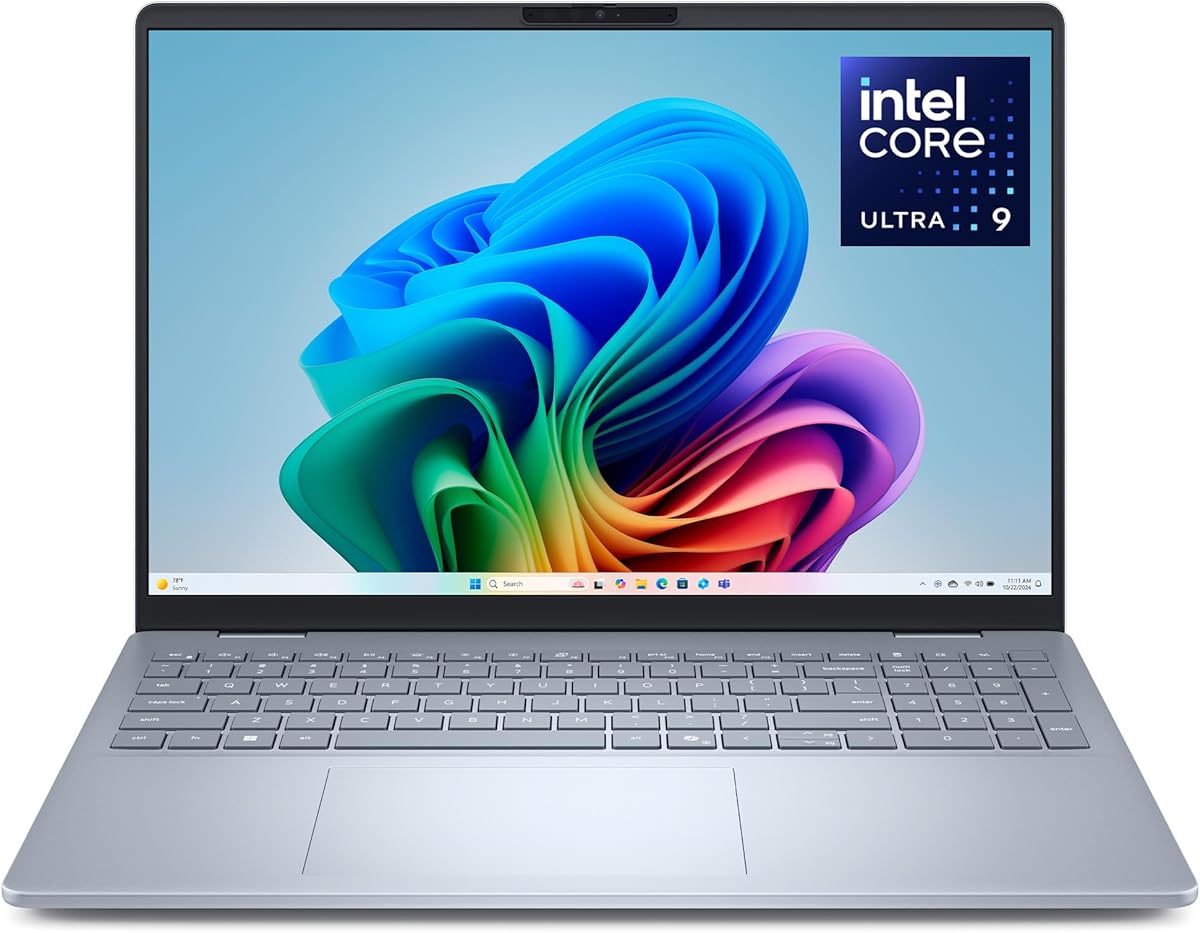
Dell 16 Plus
4.3Editor score
Intel Core Ultra 9
32GB unified memory
Expansive 16:10 display
Onsite service support
A laptop for Lightroom should balance processor speed, graphics performance, memory, storage, and an accurate display. Photographers who regularly import high-resolution RAW files, build large catalogs, and export edited images need more headroom than a basic general-purpose laptop can provide.
The products in this guide were compared using their stated specifications and customer ratings, with special attention to Lightroom-relevant hardware. The list covers premium creator machines, large-screen laptops, portable OLED models, and more affordable systems for lighter editing workflows.
Each review explains who the laptop suits, which specifications matter, and where compromises may appear. Product configurations and prices can change, so confirm the current listing details before ordering, especially when the exact display, memory, graphics, and storage options matter to your work.
4.3Editor score
4.8Editor score

4.4Editor score
As an Amazon Associate we earn from qualifying purchases.
The table below compares all ten laptops by processor, memory, storage, display, and their most relevant positioning for photographers editing in Lightroom.




The Dell 16 Plus Laptop QHD+, Intel Core Ultra 9 288V, 32GB RAM is our Editor's Choice because it combines a high-end processor, substantial memory, and a roomy 16:10 display. Its 4.3 rating reflects a generally favorable user response, while the supplied specifications make it particularly compelling for photographers who regularly work with large image libraries and multiple applications.
We may earn a commission when you buy through this link, at no additional cost to you.
The Core Ultra 9 288V is designed around Intel's latest client compute architecture, with emphasis on AI capabilities, efficiency, and sustained creator workloads. For Lightroom, the important benefit is a capable platform for organizing catalogs, applying edits, generating previews, and exporting images. The 32GB memory configuration provides useful headroom for large RAW catalogs, Photoshop, masks, plug-ins, browser-based tools, and multitasking without encouraging the system to rely heavily on storage swapping.
Its 16:10 QHD+ display makes the laptop particularly practical for Lightroom's Develop module. The relatively tall aspect ratio gives photographers more room for the histogram, Navigator, masking panels, and filmstrip compared with a conventional 16:9 screen. Dell also lists an FHD+ webcam with Windows Hello, military-grade testing, an aluminum enclosure, and one year of onsite service, all of which add convenience beyond raw editing performance.
The main trade-off is portability. A 16-inch laptop is better suited to a permanent desk than to constant travel, and the listing does not provide detailed panel color-gauge results. However, that uncertainty matters more for precise color-critical work than for typical Lightroom editing. Buy this model if you want a powerful editing workstation with generous memory and screen space without moving to a much larger desktop replacement.
With 32GB of memory, the system is well positioned for large catalogs and mixed creative workloads. That capacity leaves room for Lightroom, Adobe Photoshop, cloud clients, multiple browser tabs, and exports operating concurrently.
The 16:10 QHD+ panel provides a useful vertical advantage over 16:9 displays. Photographers can keep the image and editing controls visible with fewer overlapping windows.
We may earn a commission when you buy through this link, at no additional cost to you.
The LG gram 17Z95P combines a large, sharp IPS display with the portability-focused design associated with the gram line. It carries a 4.3 rating and is best understood as a spacious mobile editing display rather than a high-end workstation replacement. Its 2560 by 1600 resolution gives Lightroom previews and fine adjustments noticeably more room than a standard Full HD panel.
We may earn a commission when you buy through this link, at no additional cost to you.
Color coverage is one of its strongest stated qualities. The display is specified at 99% DCI-P3, which makes it appealing for photographers working in the Adobe RGB or Display P3 ecosystem and comparing images against wider-gamut references. The IPS format is also generally practical for photo work because it offers a standard non-emissive panel type without the intensity sometimes associated with glossy OLED displays.
Internally, the 11th-generation Intel Core i7-1195G7 and Intel Xe graphics support high-resolution content creation and editing. The 16GB LPDDR4X memory is adequate for moderate Lightroom catalogs and standard Photoshop use, though 32GB would be preferable for very large libraries, heavy masking, and numerous background tasks. A 1TB PCIe NVMe drive provides fast access to RAW files and comfortable room for a developing catalog.
Connectivity is notably complete for a slim large-screen laptop. It includes two Thunderbolt 4 USB-C ports, two USB-A 3.2 ports, full-size HDMI, a microSD reader, and a 3.5mm audio jack. The 80Wh battery also supports the portability concept. Choose this LG if display size, resolution, color coverage, and a broad port selection are your priorities, while your Lightroom library remains moderate in scale.
The listed 99% DCI-P3 coverage makes this screen more relevant to photographers than a standard office panel. It provides a broad gamut, although professional color work still benefits from calibration and a controlled viewing environment.
Thunderbolt 4, HDMI, USB-A, and a card reader reduce the need for adapters. The microSD reader is particularly convenient when importing files directly from a camera.
We may earn a commission when you buy through this link, at no additional cost to you.
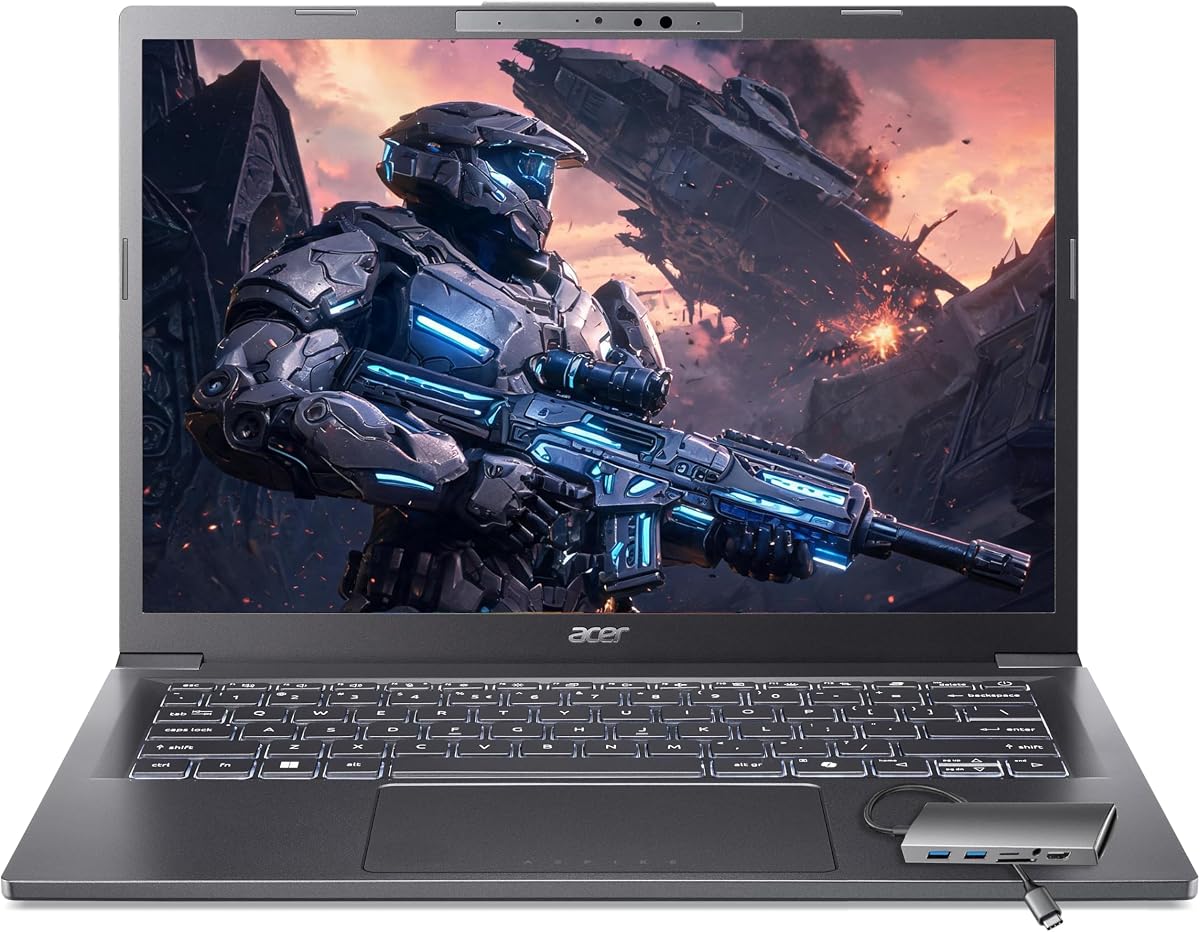
The Acer Aspire Laptop 2026 stands out with a 4.8 rating, 32GB of LPDDR5X memory, 2TB of PCIe storage, and Intel Arc 140V graphics. Its specification sheet explicitly identifies Lightroom acceleration, making it one of the most straightforward recommendations in this guide for a photographer who wants capable performance without moving to a large desktop-replacement chassis.
We may earn a commission when you buy through this link, at no additional cost to you.
The Intel Core Ultra 7 258V processor includes a dedicated NPU rated at 47 TOPS, while Intel Arc graphics provide eight Xe cores. Those features make the platform suitable for modern creative applications, background effects, image processing, and other AI-assisted functions. More importantly for Lightroom, the combination of processor power, integrated graphics, and 32GB of memory provides enough headroom for large photo libraries and demanding multitasking.
Storage is another major strength. A 2TB PCIe SSD leaves space for RAW files, exported JPEGs, catalogs, masks, presets, and multiple editing applications without immediate pressure. The 14-inch touchscreen supports stylus-based retouching, while the included hub adds HDMI, USB-A, USB-C, SD card, and Ethernet connectivity. WiFi 6E, a 3.09-pound weight, and a thickness of 0.7 inches also strengthen the machine's portability proposition.
The main information gap is display resolution and gamut. Since exact panel specifications are not provided, buyers who require calibrated color should verify them before purchasing. Even so, the strong rating, abundant memory, fast storage, and explicit Lightroom focus make this an attractive balance for a traveling photographer. It is also the top pick in this guide for creators who need productive power in a compact system.
The 2TB PCIe SSD accommodates a large working collection without requiring constant cleanup. Fast storage also benefits catalog loading, image preview generation, application launches, and export operations.
Intel Arc 140V graphics with eight Xe cores are specifically cited for accelerating photo editing in Lightroom. That makes this configuration more compelling than a basic office laptop for regular Lightroom use.
We may earn a commission when you buy through this link, at no additional cost to you.
The HP OmniBook 7 AI Laptop is built around a striking 16-inch 2K OLED touch display and a 4.3 customer rating. Its 32GB DDR5 memory, Intel Core 9 270H processor, and 1TB SSD create a capable platform for Lightroom, while the screen offers 120Hz motion, HDR 500 nits brightness, and 100% DCI-P3 coverage.
We may earn a commission when you buy through this link, at no additional cost to you.
For photographers, the OLED panel is the defining feature. Its high resolution creates a detailed workspace for examining focus, texture, and tonal transitions, while the wide color specification is desirable for visual work. Touch input can also help with detailed selections, masks, and local adjustments, although Lightroom's most efficient editing workflow still relies heavily on the mouse, trackpad, or keyboard.
The processor is a 14-core Intel Core 9 270H capable of reaching 5.8 GHz with Turbo Boost and backed by 24MB of L3 cache. That is useful for demanding catalog operations and simultaneous creative applications. The 32GB memory configuration is especially attractive because it gives Lightroom plenty of working room, while the SSD provides fast access to image files and catalog data.
Its integrated Intel Graphics are the main limitation for users who also expect demanding video rendering or sustained GPU-heavy tasks. OLED displays can also require thoughtful color-management settings, and some users prefer the controlled brightness behavior of a conventional matte panel. Nevertheless, this is an excellent choice for a photographer who prioritizes a vivid, touch-enabled display and enough system memory for serious photo work.
The 2048 by 1280 OLED provides substantially more detail than a Full HD display. Its listed 100% DCI-P3 coverage and HDR capability make it especially appealing for image evaluation and presentation.
A 120Hz panel keeps scrolling and navigation fluid. The touchscreen also provides a natural way to inspect details and make localized adjustments on the display.
We may earn a commission when you buy through this link, at no additional cost to you.
The NIMO 17.3 FHD AI-Ready-Laptop combines a 4.7 rating with a Ryzen 7 8745HS, 32GB of DDR5 memory, and a 1TB PCIe 4.0 SSD. Its eight-core, 16-thread processor is built for demanding multitasking, making this a capable choice for photographers who need more headroom than a basic editing laptop provides.
We may earn a commission when you buy through this link, at no additional cost to you.
The Ryzen 7 8745HS reaches up to 4.9GHz and uses a 54W TDP, providing a useful balance of performance and efficiency. Its Radeon 780M integrated graphics based on RDNA 3 offer more capability than typical entry-level integrated graphics, which can help with image previews, accelerated interfaces, and graphics-heavy applications. The listed 32GB of memory is the standout for Lightroom because it supports large catalogs and several background applications.
Expandability is another significant advantage. Dual SO-DIMM slots allow memory expansion up to 64GB, and dual M.2 2280 positions allow additional storage. This makes the laptop a practical long-term platform for creators whose libraries and editing demands are likely to grow.
The large screen offers approximately 30% more workspace than a 15.6-inch laptop, while a 180-degree hinge helps with screen sharing. Its ports include USB4, USB-C, HDMI 2.1, an SD reader, three USB-A ports, and an audio jack. The main uncertainty is display resolution: the title calls it FHD, while the detailed feature text refers to support for up to 4K output. Verify the native panel before buying if pixel-level inspection is essential.
The 32GB memory capacity and upgrade slots make this system adaptable to demanding catalogs. Adding memory or storage later can extend its useful working life without changing the entire laptop.
USB4 offers high-bandwidth data transfer, DisplayPort output, and charging. The built-in SD card reader also streamlines the transfer of camera files.
We may earn a commission when you buy through this link, at no additional cost to you.
The NIMO 15.6 IPS FHD-Business-Laptop is a balanced option for photographers who edit in Lightroom but also need the laptop for office work, communication, and travel. Its 4.4 rating is supported by a capable configuration: an eight-core Ryzen 7 PRO 6850U, 32GB of LPDDR5 memory, a 1TB PCIe 4.0 SSD, and Radeon 680M graphics.
We may earn a commission when you buy through this link, at no additional cost to you.
The processor's eight cores are well suited to running Lightroom alongside browser tools, cloud storage, Adobe applications, and communication software. Radeon 680M integrated graphics provide a useful level of visual performance without requiring a separate GPU, making the system more appropriate for photo editing and 1080p media than for intensive 3D rendering or heavy video work.
Thirty-two gigabytes of memory is the feature that most directly improves the Lightroom experience. It allows substantial catalogs to remain responsive and leaves room for multiple creative programs. The 1TB SSD provides quick storage for RAW files and sufficient room for a healthy active library, while the anti-glare 15.6-inch Full HD display is practical for travel and bright environments.
Its 53.58Wh battery and 100W PD charging support mobile use, and the port selection includes two full-function USB-C ports, HDMI, and three USB-A connections. The drawback is display resolution: Full HD is less detailed than the higher-resolution alternatives in this guide. If your priority is balanced performance and a conventional portable size, this is a strong creative-business choice.
The Ryzen 7 PRO 6850U is designed to balance processing power with efficiency. That balance suits users who spend several hours editing away from an outlet while also running everyday productivity applications.
The 32GB memory figure distinguishes this model from many conventional 15.6-inch business laptops. It provides comfortable room for Lightroom catalogs and layered creative workflows.
We may earn a commission when you buy through this link, at no additional cost to you.
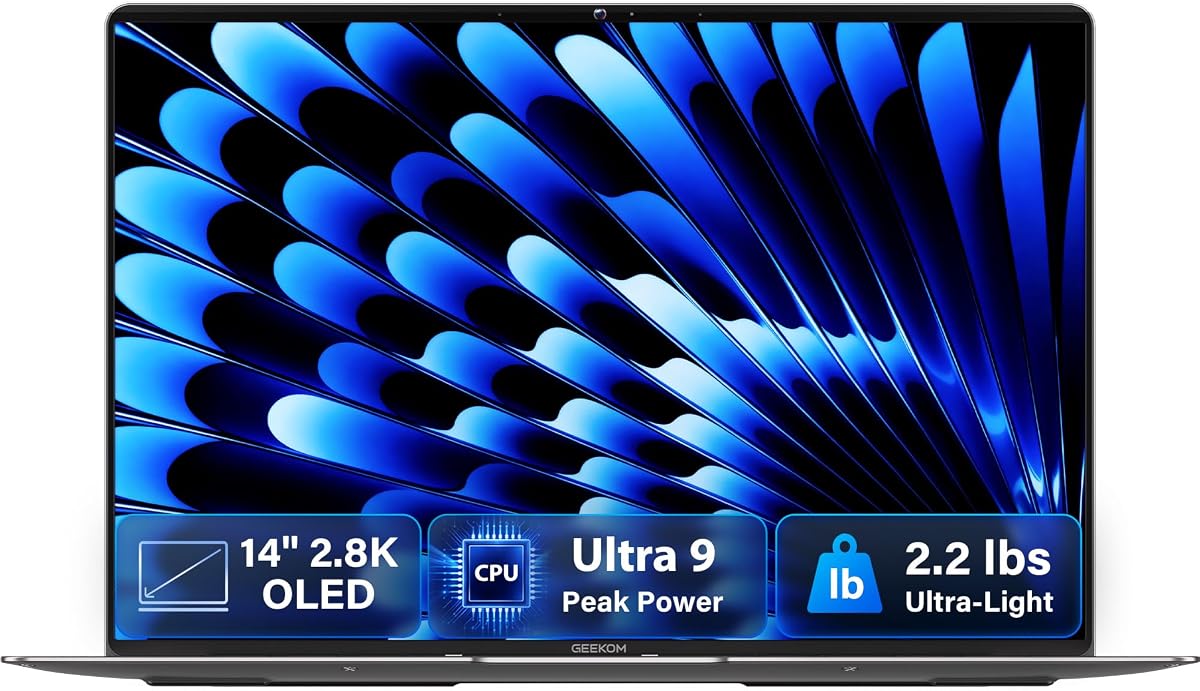
The GEEKOM GeekBook X14 Pro is the ultraportable standout in this guide. At 2.2 pounds and 0.23 inches thick, it combines a 14-inch 2.8K OLED display with 32GB of LPDDR5X memory, a Core Ultra 9 185H processor, and a 1TB PCIe Gen4 SSD. Its 4.3 rating reflects a favorable response to a premium, highly portable design.
We may earn a commission when you buy through this link, at no additional cost to you.
The OLED panel is specified at 100% DCI-P3, up to 450 nits, and a smooth 120Hz refresh rate. That combination gives the laptop a detailed and vibrant workspace for image review, while the 2.8K resolution helps photographers inspect fine detail. A color-critical buyer should still calibrate the panel and control ambient light before judging a final proof.
The 16-core, 22-thread Core Ultra 9 reaches up to 5.1GHz and includes a dedicated NPU. Intel Arc graphics add hardware-accelerated capabilities including XeSS, ray tracing, and AV1 encoding. Together with 32GB of memory, that platform is well equipped for Lightroom, Photoshop, exports, and a demanding collection of open applications.
The main compromise is screen area. A 14-inch display is easier to carry than the 16- and 17-inch alternatives, but Lightroom's side panels need more room. The included docking station, dual USB4 ports, HDMI 2.1, and 72Wh battery soften that limitation. This laptop is ideal for photographers who prioritize mobility, a premium screen, and strong specifications over a full-size editing desk.
The 2.8K OLED brings more detail than typical compact laptops. Its 100% DCI-P3 coverage is particularly attractive for photographers who regularly view images in a wide-gamut color space.
Dual 40Gbps USB4 ports support charging, data transfer, and DisplayPort output. The included dock allows the compact laptop to connect to a larger workstation arrangement at a desk.
We may earn a commission when you buy through this link, at no additional cost to you.
The NIMO 15.6 AI Creator Laptop is an approachable Lightroom option for students, hobbyists, and creators beginning to build a larger workflow. It holds a 5.0 customer rating and uses a six-core Ryzen 5 6600H processor, Radeon 660M integrated graphics, 16GB of DDR5 memory, and a 512GB PCIe SSD.
We may earn a commission when you buy through this link, at no additional cost to you.
The Ryzen 5 6600H offers six cores and 12 threads with boost speeds up to 4.5GHz. That is enough performance for standard Lightroom editing, photo organization, and light Photoshop tasks. Radeon 660M graphics support everyday visual work, smooth media playback, and light photo editing, making the system more suitable than a basic display-oriented office laptop.
The most important detail is upgrade potential. Dual SO-DIMM slots allow the 16GB configuration to expand to 64GB, while the M.2 2280 storage design can support up to 4TB. A photographer who anticipates a growing catalog could therefore add memory and storage after purchase. The supplied 512GB drive is best treated as the starting point for active projects.
This is not the strongest option for pixel-peeping because the 15.6-inch Full HD IPS display lacks the resolution of the OLED and WQXGA alternatives. The integrated GPU also limits heavy video or 3D work. Within a lighter Lightroom workload, however, the strong rating, capable six-core processor, convenient ports, and expandability make this a sensible value-focused recommendation.
The included memory and storage are adequate for introductory workflows, but the open slots prevent the laptop from becoming obsolete quickly. Expanding to 32GB is particularly useful as a catalog grows.
Two full-function USB-C ports, HDMI, three USB-A ports, and a microSD reader cover most photo-workflow needs. A monitor, card reader, external drive, mouse, and headphones can be connected with minimal adapter juggling.
We may earn a commission when you buy through this link, at no additional cost to you.
The NIMO 17.3 AI-Creator-Laptop delivers the largest screen in this guide while using a straightforward Ryzen 5 6600H configuration. Its 4.4 rating and 17.3-inch Full HD display make it appealing for photographers who want more room for Lightroom's interface without moving to a premium workstation.
We may earn a commission when you buy through this link, at no additional cost to you.
The six-core, 12-thread processor boosts up to 4.5GHz and works with Radeon 660M integrated graphics. These components are suitable for everyday photo editing, HD playback, design previews, and routine multitasking. They are not intended to replace a powerful discrete-graphics system for intensive video work, but they can comfortably support a moderate Lightroom catalog.
The 17.3-inch 1920 by 1080 display reduces constant window switching by giving the Develop module, Navigator, histogram, and histogram-related panels more visible space. The wide 175-degree hinge makes sharing images easier, while a backlit keyboard and fingerprint reader improve daily usability. A 53.58Wh battery and included 100W PD charger support flexible use around the home, office, or campus.
As with the smaller NIMO AI Creator, the base 16GB memory and 512GB storage are adequate rather than generous. Fortunately, dual SO-DIMM and M.2 slots allow expansion up to 64GB of RAM and 4TB of storage. The Full HD resolution also limits close inspection compared with QHD and OLED models. Select this version when screen area and low cost matter more than maximum portability.
The large 16:9 display offers practical space for side-by-side image views and editing controls. It can reduce the need to collapse panels while a catalog is open.
Memory and storage can both be expanded. For long-term ownership, moving beyond the base 16GB and 512GB configuration would provide a more comfortable editing experience.
We may earn a commission when you buy through this link, at no additional cost to you.
The HP 17 inch Business Laptop Computer is a practical option for light Lightroom editing and general productivity. Its 4.5 rating, 17.3-inch anti-glare Full HD display, 16GB of memory, and 512GB SSD provide a conventional large-screen configuration that photographers can use for catalog review and routine corrections.
We may earn a commission when you buy through this link, at no additional cost to you.
The anti-glare finish is useful for editing in bright rooms or working near a window. A Full HD resolution is adequate for viewing images and operating Lightroom's panels, although the higher-resolution alternatives in this guide offer a finer level of detail. The full-size keyboard includes a numeric keypad, which can be helpful for photographers who also manage budgets, invoices, or extensive numeric metadata.
The listing identifies an AMD Ryzen 5 processor but does not state its exact model, core count, or graphics configuration. That makes direct processor comparisons difficult. The 16GB memory and 512GB SSD should be sufficient for a moderate library and common editing tasks, but they leave less room for extensive Photoshop work, many simultaneous applications, or very large local archives than the 32GB models.
Windows 11, Office 365 for the Web, a Wide Vision 720p camera, digital microphones, long battery life, and HP Fast Charge make this a well-rounded general-purpose system. It is best suited to a photographer who prioritizes an expansive, anti-glare screen and everyday utility. Those seeking faster catalog handling, stronger graphics, or more memory should consider one of the 32GB alternatives.
The 17.3-inch anti-glare panel offers a large, practical editing area while reducing reflections. It is a sensible choice for a permanent desk or a photographer who often works in a bright environment.
The numeric keypad, 720p camera, digital microphones, Fast Charge, and included web productivity applications broaden the system's value beyond photo editing. These details make it suitable for a mixed work and study routine.
We may earn a commission when you buy through this link, at no additional cost to you.
Lightroom performance depends on a combination of processing speed, graphics capability, memory, storage, display quality, and portability. Prioritize the parts of your workflow that create the most friction instead of treating every specification as equally important.
The processor manages Lightroom's interface, catalog indexing, preview generation, export routines, and any work happening in Photoshop or other applications. Recent six-core Ryzen 5 processors and modern Intel Core Ultra or Core 9 chips can provide a responsive experience for most photographers, while higher-core processors offer additional headroom for very large libraries and heavily layered workflows.
Look for a modern processor with at least six cores, but avoid assuming that clock speed tells the entire story. Memory and storage configuration can have a greater effect on everyday responsiveness than small differences between similarly positioned processors.
RAM lets Lightroom hold catalog information, previews, selected images, and application data without constantly writing to the SSD. Sixteen gigabytes works for many individual photographers, while 32GB is preferable for large collections, frequent Photoshop use, AI tools, multiple browser tabs, and exports while other applications remain open.
Choose 32GB when the budget allows, particularly if the laptop will be used for more than a few years. On systems with accessible memory slots, starting with 16GB and expanding later can be a sensible compromise.
RAW files, exported images, sidecar data, presets, masks, and the Lightroom catalog itself can consume substantial space. A 1TB or 2TB PCIe SSD is more comfortable than a 512GB drive for active photographers, while a fast NVMe drive keeps application launches, preview access, and imports responsive.
Pay attention to both capacity and upgradeability. A smaller SSD with two M.2 slots may be more flexible than a similarly sized drive in a sealed chassis, and separate media can help preserve an active working catalog.
Lightroom primarily benefits from a capable GPU when browsing large collections, rendering previews, handling high-resolution displays, or using GPU-accelerated features. Intel Arc and AMD Radeon integrated graphics can be entirely adequate for photo editing, although they have less headroom than discrete graphics for intensive video, 3D, or sustained rendering tasks.
For a Lightroom-only buyer, prioritize memory, display, and processor before paying for a dedicated GPU. If video editing is an equally important requirement, verify the graphics hardware independently rather than relying on the processor family name.
A higher-resolution panel reveals more fine detail and provides more room for Lightroom's side panels. IPS and OLED options in this guide range from 1920 by 1080 to 2560 by 1600, while some premium models offer 2K or 2.8K resolution and broad DCI-P3 coverage. Color-gamut claims are useful, but calibration matters more than marketing specifications for precise work.
Choose a matte or anti-glare panel for bright environments and an OLED for deep blacks and vivid color in a controlled room. Whichever format you select, use a consistent color profile and calibrate the display before judging final image output.
A 14-inch laptop is easiest to carry and often pairs with a good display at the office. Fifteen- and sixteen-inch models strike a balance between usable workspace and weight, while 17-inch screens are better for desktop-style editing and can show more Lightroom controls at once. Touchscreens add flexibility but are not essential for efficient Lightroom work.
Weigh the machine with its accessories in mind. If you regularly travel with camera equipment, a compact 14-inch model may be more practical than the largest screen. If the laptop remains on a desk, screen area may be the more valuable feature.
Photographers often need to connect external monitors, card readers, backup drives, microphones, and wired peripherals. USB-C with DisplayPort, Thunderbolt 4 or USB4, HDMI, USB-A, and an SD or microSD reader can prevent frequent adapter changes. A full-size card reader is especially convenient for transferring camera media directly.
Check the port placement and whether the USB-C ports support display output and charging simultaneously. For a ultraportable model, a compact dock may be necessary, so include that accessory in the total setup rather than assuming every connection will be available.
Editing sessions benefit from efficient processors and capable cooling, especially when large catalogs or Photoshop are involved. Battery capacity also influences where you can work, while fast charging can be valuable between client meetings or flights. Published battery figures vary by workload, so treat them as guidance rather than a guarantee.
For sustained editing at a desk, use a compatible high-wattage charger and allow the laptop's cooling system to operate without blocking its vents. For travel, prioritize battery capacity and efficient processor behavior over maximum display refresh rate.
After setting up the laptop, install current updates and confirm that Lightroom, its camera raw support, and other creative applications are fully updated. Import a representative RAW file, review the catalog's storage location, and test export timing before beginning a major project. Keeping the operating system, graphics drivers, and applications current helps maintain stable performance.
Organize the catalog and original images on fast internal storage, then maintain separate backup media for irreplaceable files. Lightroom catalogs and sidecar files should be backed up along with the photographs. Avoid editing directly from a card or external drive if a brief disconnection could interrupt previews, masks, or writes.
For accurate results, calibrate the display and use the same color profile consistently across editing and presentation. Let the panel reach a stable brightness, avoid direct sunlight, and treat the laptop display as a reference rather than assuming it replaces a calibrated desktop monitor for demanding print work. Regular cleaning, careful storage, and protection from excessive heat will help preserve the machine's long-term performance.
Sixteen gigabytes is generally sufficient for a moderate catalog and standard photo corrections. Thirty-two gigabytes is more comfortable for very large libraries, frequent Photoshop use, multiple exports, AI tools, and many applications running at once. If the laptop has accessible memory slots, you can start with 16GB and expand as your workflow grows. For a new multi-year editing system, 32GB is the more future-oriented choice.
An OLED display can provide excellent detail, contrast, and wide color coverage, making it attractive for image review. The panel should still be calibrated and used in a controlled environment because brightness and color behavior can differ from conventional IPS screens. Consider whether you regularly work outdoors or need a matte finish before choosing one.
A dedicated GPU is not required for most Lightroom workflows, particularly with modern Intel Arc or AMD Radeon integrated graphics. The processor, memory, storage, and display usually have a more direct effect on everyday catalog browsing and editing. A discrete GPU becomes more important for demanding video work, 3D rendering, or other GPU-intensive applications.
A 17-inch screen provides more room for the image preview, Navigator, histogram, and masking panels, which can reduce window switching. It is especially useful when the laptop stays on a desk. For frequent travel, a 14- or 15.6-inch model is usually easier to carry and may be paired with an external monitor when detailed work begins.
At least 1TB is comfortable for a growing active library, while 2TB is preferable when working locally with high-resolution RAW files and large exports. A 512GB drive can work for lighter users, especially if memory and storage are upgradeable. Catalog files, sidecars, exports, and software all need space beyond the original photographs.
A fast NVMe SSD improves application loading, catalog access, import tasks, preview handling, and export responsiveness, particularly with large libraries. It cannot compensate for insufficient processor or graphics performance, but it complements them well. For active photographers, a PCIe SSD with 1TB or more capacity is a sensible baseline.
A capable laptop display can be useful for editing, proofing, and client presentations when it is calibrated and used consistently. For highly controlled print workflows, a calibrated desktop display remains preferable. Avoid judging final color from an uncalibrated screen under uncontrolled ambient lighting, regardless of the laptop's advertised gamut.
Both platforms can provide responsive photo-editing performance when paired with adequate memory and storage. Compare the complete laptop configuration rather than the processor family alone, paying attention to graphics, display, thermals, and upgradeability. The strongest choice is the machine whose limits align with your catalog size and the other creative software you use.
The Acer Aspire 14 stands out for the strongest balance of Lightroom-relevant specifications, offering 32GB of memory, 2TB of storage, capable Intel Arc 140V graphics, and a portable form. The Dell 16 Plus takes the premium-performance route with a Core Ultra 9 and spacious 16:10 display, while the NIMO 17.3 AI-Creator offers the best budget path to a large editing workspace.
Your priorities should reflect your actual workflow. Choose 32GB for a large catalog or heavy multitasking, prioritize an OLED or higher-resolution display for detailed review, and select a smaller chassis only if mobility matters more than screen area. The 14-inch GEEKOM is especially compelling for travel, whereas the HP OmniBook 7 delivers a particularly strong creator display.
Before ordering, verify the current configuration, display details, port support, and whether the memory or storage can be upgraded. Product listings and pricing can change, so check the latest information. With those checks in place, you can select a laptop that handles Lightroom smoothly while remaining practical for the rest of your photography workflow.