
SteriPen Ultralight UV Water Purifier
4.1Editor score
Weighs only three ounces
Water-activated automatic operation
USB rechargeable with 20 treatments
Portable UV Water Sterilizer guide comparing ten top models for hiking, camping, travel, emergencies, aquariums, and under-sink setups to help you choose.
A portable UV water sterilizer can turn a questionable stream, campsite tap, or stored water into a more dependable drinking source without adding chemical tablets to the pack. The best device depends on where it will be used, how quickly you need treatment, and whether your system is handheld, bottle-based, inline, or designed for an aquarium.
This guide compares ten UV-related products across portability, treatment approach, power source, intended environment, maintenance requirements, and user convenience. It covers travel and backpacking purifiers, self-cleaning bottles, under-sink add-on systems, and an aquarium clarifier, while clearly separating products designed for drinking water from general disinfection equipment.
Each pick below highlights the qualities that matter most for its intended use and also identifies practical limitations. Ratings reflect the supplied customer feedback, while product availability and pricing can change. Always check the current listing, included accessories, local plumbing requirements, and manufacturer instructions before purchasing.
4.1Editor score

4.6Editor score

4.6Editor score
The following comparison shows the best match for different portable water-treatment needs, from lightweight trail purifiers to bottle, inline, and aquarium systems. Some products purify personal drinking water directly, while others are fixed-system add-ons intended for a home, vehicle, plumbing loop, or fish tank.




The SteriPen Ultralight is a three-ounce, pen-style purifier designed for backpackers and travelers who want to minimize pack volume. Its supplied rating is 4.1, and its defining advantage is simplicity: the unit activates when it contacts water and stops automatically, removing the possibility that it will continue draining while unused. The result is a device that can move from a pocket to a bottle with little ceremony.
We may earn a commission when you buy through this link, at no additional cost to you.
Its UV-C lamp is advertised as purifying clear water in 90 seconds without chemicals or an unpleasant taste change. A single USB charge provides approximately 20 treatments, which is enough for a multi-day solo trip when the traveler is careful about consumption. The automatic activation behavior is particularly useful during cold mornings, long hikes, and emergency situations when pressing a small control may be easy to forget.
The main limitation is that the Ultralight is designed for clear water rather than visibly cloudy or sediment-filled sources. Sediment can shield microorganisms from UV exposure, so pre-filtering is important when collecting from streams, lakes, or other natural sources. Its 4.1 rating is also lower than the ratings of several alternatives, reflecting a less universally impressive customer experience even though its core design remains compelling for ultralight travel.
This is the best option for hikers, fast-packers, and solo travelers who value every gram and want a rechargeable purifier without carrying disposable batteries. It may be less appropriate for families, travelers who need many daily treatments, or anyone expecting a built-in container. For those priorities, the Adventurer Opti or GRAYL GeoPress offers a more conventional or comprehensive experience.
Water-activated operation means the purifier does not need a remembered button sequence before every use. That is useful in wet, cold, or hurried conditions and prevents unnecessary battery use between treatments.
At three ounces and in a pen-style format, the Ultralight fits into small pockets and works with a personal bottle. Its low weight makes it especially attractive for hikers who treat water at camp rather than carrying a filled container.
We may earn a commission when you buy through this link, at no additional cost to you.
The Black/Green SteriPen Adventurer Opti is a six-inch personal purifier with a supplied rating of 4.4. It targets campers, backpackers, international travelers, and emergency-kit owners who value replaceable power over USB charging. Two CR123 lithium batteries are included, and one set is advertised to support 60 treatments, giving it more capacity than the three-ounce Ultralight.
We may earn a commission when you buy through this link, at no additional cost to you.
An optical sensor detects when the lamp is submerged and activates the treatment cycle. Users insert the pen into a wide-mouth bottle or container, press the button, and stir for approximately 90 seconds. The built-in LED flashlight adds a practical emergency function without changing the purifier's core format. A neoprene case and belt loop are included for convenient trail access.
The trade-off is weight and handling. At 3.6 ounces, it is slightly heavier than the Ultralight, although it remains compact. Batteries must be obtained when needed, and the larger body may be less comfortable in an ultralight kit. Like other pen-style UV purifiers, it is most effective with clear water and benefits from pre-filtering turbid sources.
Choose the Adventurer Opti if you travel in places where CR123 batteries are easier to find than a USB charging opportunity. It is a well-balanced choice for weekend backpackers and preparedness kits, offering substantial treatment capacity, straightforward operation, and a bonus flashlight in a small package.
CR123 batteries are broadly used in cameras and outdoor equipment, making them easier to find in many travel markets. The stated 60-treatment capacity also reduces the need to carry a charging cable during an extended trip.
The Adventurer Opti suits users who expect to treat water regularly but still prefer a pen-shaped device over a larger bottle or inline filter. Its case and belt loop support fast, repeated access.
We may earn a commission when you buy through this link, at no additional cost to you.
This listing for the SteriPen Adventurer Opti offers the same core six-inch pen design as the preceding model, with a slightly higher supplied rating of 4.5. It is a practical choice for emergency kits because it can operate from two CR123 lithium batteries, avoids dependence on household power, and provides a built-in LED flashlight for nighttime use.
We may earn a commission when you buy through this link, at no additional cost to you.
The purifier's optical sensor activates the UV lamp when it is submerged. A user places it in a wide-mouth container, starts the cycle, and stirs for approximately 90 seconds. The battery set is stated to deliver 60 treatments, which makes it suitable for a household kit, vehicle kit, or multi-day outdoor trip. The supplied black-and-green version includes a neoprene case and belt loop.
Its weaknesses are typical of compact UV purifiers. It does not include a bottle, and visibly cloudy water should be pre-filtered before UV treatment. The treatment cycle is not instantaneous, and users must keep the lamp immersed and stir as directed. Those constraints are understandable for a device meant to be portable, but they should be understood before relying on it during an emergency.
For travelers and preparedness shoppers who want proven-format portability, replaceable batteries, and a light, this Adventurer Opti listing is a strong contender. Compared with the lighter Ultralight, it favors battery longevity and extra utility; compared with the GRAYL, it offers a narrower treatment process but takes up substantially less space.
A battery-powered purifier is valuable in a vehicle, storm shelter, or remote campsite. The flashlight and broad battery compatibility make the device useful beyond water treatment when unexpected conditions reduce access to normal equipment.
The short pen format can be carried in a pocket or attached with the included belt loop. Its stated treatment capacity provides useful redundancy for a small group or several days of travel.
We may earn a commission when you buy through this link, at no additional cost to you.
This under-sink UV water filter is a fixed installation rather than a truly handheld sterilizer. Its supplied rating is 4.2, and its defining feature is a 270–280 nanometer UVC-LED system designed to disinfect water by disrupting the DNA or RNA structure of microorganisms. The listing states elimination of up to 99.999% of bacteria, viruses, and protozoa, subject to correct installation and water conditions.
We may earn a commission when you buy through this link, at no additional cost to you.
A flow sensor automatically switches the UVC-LED on only while water is running. The blue status light indicates that power is available without flow, while a green light indicates active operation. The unit is designed to fit as an add-on to under-sink and reverse-osmosis systems, and it is specifically described as unsuitable for a whole-house installation.
Its installation requirement narrows the audience considerably. It is not a device for a backpack, campsite, or emergency tote, and users without compatible plumbing will get little value from it. UV treatment also works best after particulate filtration; a UV stage cannot remove sediment or address every chemical concern on its own. The claimed LED lifespan of up to 10 years also assumes appropriate use and maintenance.
The product is best for homeowners, apartment dwellers, rural households, and RV or boat users who already have filtration infrastructure and want an additional disinfection stage. It may suit well-water users seeking an under-sink treatment layer, but a complete filtration plan is still important. For portable travel, choose a handheld purifier or bottle instead.
The automatic sensor prevents the UV-C stage from running continuously when no water is present. This reduces unnecessary energy use and lamp wear while making operation more convenient.
Adding UV treatment after existing filtration can provide another barrier against microorganisms. The setup is most valuable when paired with sediment and carbon filtration rather than used as a stand-alone clarification system.
We may earn a commission when you buy through this link, at no additional cost to you.
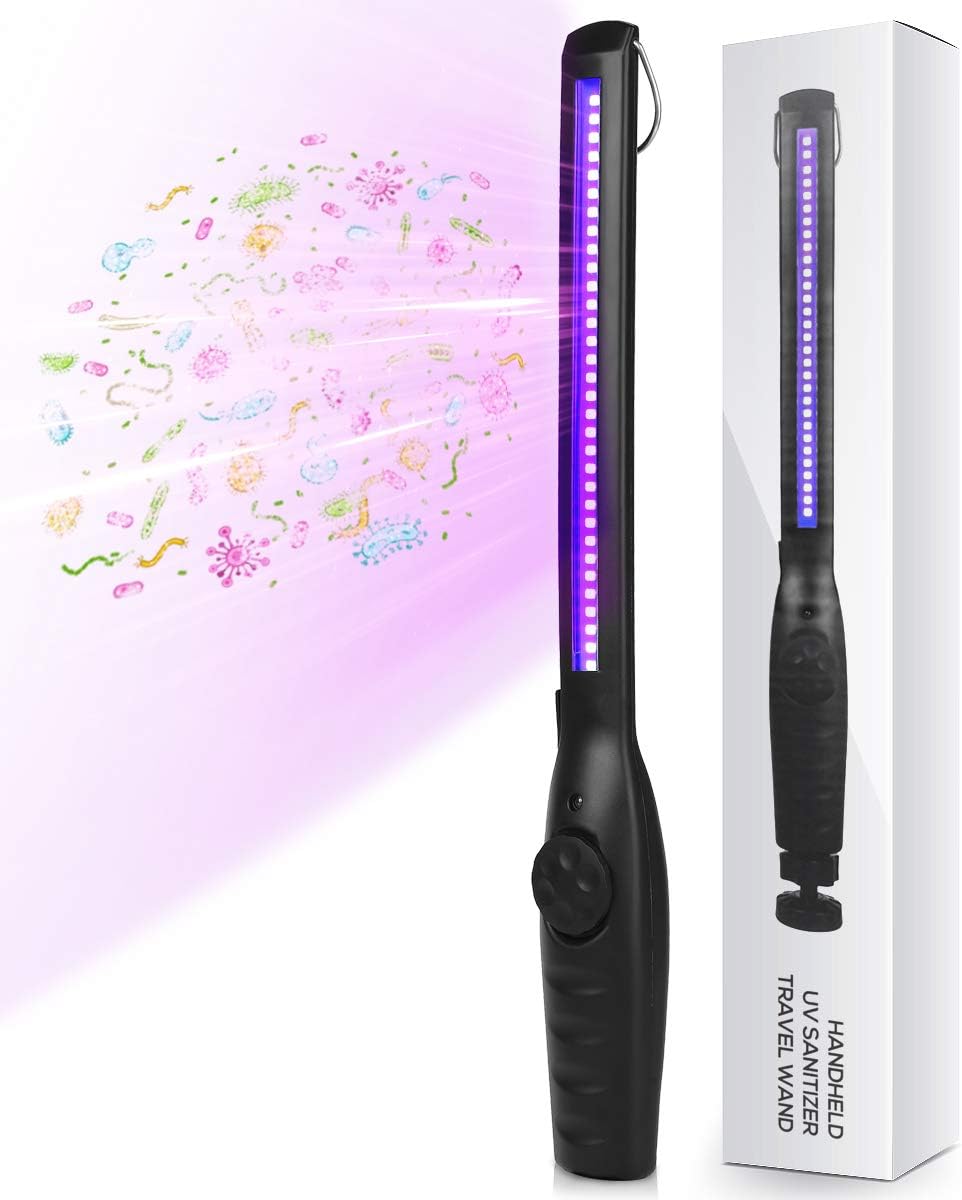
The Portable UV Light Sanitizer Wand has a supplied rating of 4.3 and is included in this guide as an important boundary case. It is a rechargeable UV disinfection lamp for home, office, hotel, travel, and car surfaces, but the supplied product information does not identify it as a drinking-water purifier. Anyone shopping specifically for safe water should skip it and choose a purpose-built water device.
We may earn a commission when you buy through this link, at no additional cost to you.
The wand charges by USB and is advertised as reaching use after about one hour of charging, with up to five hours of operation. Its dimensions are 37.5 by 4 by 3.5 centimeters, and its stated weight is 0.22 kilograms. That makes it portable enough to carry between rooms or trips and useful for treating compatible hard surfaces around the user.
Important safety limitations apply. The manufacturer advises against using the light on human bodies, pets, or plants and warns users not to direct it toward their eyes. UV surface sanitizing also depends on correct exposure distance, time, angle, and lamp output; simply waving a wand over an object does not guarantee uniform treatment. It should never be represented as a substitute for cleaning or for a certified water-purification process.
Choose this product only for general surface disinfection in compatible environments. Its rechargeable design and extended runtime are useful, but it does not meet the core requirements of the best portable UV water sterilizer. For drinking water, consider the SteriPen models, the GRAYL GeoPress, or an installed UV filtration system.
The stated five-hour operating time makes the wand more practical for extended travel than a disposable lamp. Users can charge it from a USB power source and keep it ready in a hotel room or vehicle.
The wand's supplied description focuses on household and travel surfaces, not water containers or potable water. Its inclusion highlights why shoppers should distinguish general UV sanitation from an engineered drinking-water treatment system.
We may earn a commission when you buy through this link, at no additional cost to you.
The UVBRITE Go Self-Cleaning and Water-Purifying Bottle combines a 18.6-ounce insulated stainless-steel tumbler with a rechargeable UV-C cap. Its supplied rating is 3.9, the lowest among the listed products, but it offers a distinct advantage: users carry the container and treatment mechanism as one object rather than managing a separate purifier and bottle.
We may earn a commission when you buy through this link, at no additional cost to you.
Pressing the cap's button starts a treatment cycle, and the listing states that the system reduces microbes by up to 99.99%. A single press activates the normal sterilizing mode, while pressing twice selects blitz mode for water that may require greater treatment. The UV-C cap also supports self-cleaning of the bottle during a cycle.
The safety lock is a meaningful design feature because it prevents the UV-C light from activating when the cap is removed. The body is made from food-grade 304 stainless steel, while the cap uses BPA-free food-grade materials, a quartz lens, an integrated LED, and a leak-proof silicone gasket. The main question is how the bottle fits into the user's existing drinking and hiking routine.
This is a good match for someone who wants one rechargeable object for carrying and treating water. It is less flexible for groups because capacity is fixed, and the relatively low 3.9 rating suggests mixed experiences. A handheld pen can treat a wider range of containers, while this bottle is most appealing to users who consistently drink from the same vessel.
The integrated design removes the need to transfer water into a separate purifier vessel. For a hiker or commuter who always uses the same bottle, that continuity can make treatment feel more natural.
The cap cannot activate its UV-C light once removed. This reduces accidental exposure risk while the bottle is being carried, handled, or cleaned.
We may earn a commission when you buy through this link, at no additional cost to you.
The iSpring UVF11A is a 4.6-rated inline UV add-on intended for under-sink and reverse-osmosis systems. Unlike a trail purifier, it is installed permanently and treats water as it flows through a stainless-steel chamber. Its 11-watt lamp, one-gallon-per-minute rated flow, and automatic flow sensor make it a polished option for a fixed home or vehicle water system.
We may earn a commission when you buy through this link, at no additional cost to you.
The smart flow sensor switches the UV lamp on and off with water movement, conserving power and extending lamp life. Quarter-inch inlet and outlet quick-connect fittings support integration, and the lamp is made in Poland. The listed 8,000-hour lamp life provides a clearer maintenance horizon than disposable purification cartridges, although actual service intervals depend on use and operating conditions.
The system is presented as a solution for well water, lakes, streams, and other problem water sources, but its UV stage should be understood as a disinfection component rather than a complete filter. It does not remove sediment, and the product is not intended to be carried outdoors. Users also need compatible plumbing and should follow installation and flow instructions to obtain the intended treatment performance.
Among fixed UV systems, the UVF11A is a strong all-around recommendation for someone with an under-sink setup. Its 4.6 rating, automatic operation, durable chamber, and RO compatibility justify considering it as a premium installed layer. Travelers and campers should instead favor one of the handheld devices, which provide freedom from household plumbing.
The flow sensor energizes the lamp only while water passes through the chamber. That behavior improves convenience, reduces wasted electricity, and limits unnecessary lamp wear.
A stainless-steel chamber, 11-watt lamp, quick-connect fittings, and an 8,000-hour stated lamp life make the unit suitable for a permanent installation. The trade-off is that it cannot compete with a pen or bottle for mobility.
We may earn a commission when you buy through this link, at no additional cost to you.
The iSpring UVF8 LED is a 4.6-rated inline water filter that uses UV-C LED technology instead of a traditional mercury-vapor lamp. It is aimed at under-sink systems, reverse-osmosis setups, kitchens, RVs, and boats. Its appeal lies in a compact, mercury-free design that does not transfer heat into the water and does not require a warm-up period.
We may earn a commission when you buy through this link, at no additional cost to you.
The system claims a 99.9% success rate for eliminating harmful contaminants in two seconds, based on the rapid response of UV-C LED light. A built-in intelligent flow sensor turns the treatment stage on only when water passes through. The listed lamp service life is up to 7,000 hours, while quick-connect fittings simplify integration with existing plumbing.
Like the UVF11A, the UVF8 is an add-on disinfection stage rather than a complete sediment and chemical filtration system. It should be paired with appropriate upstream filtration and installed according to the manufacturer's directions. Although LED cycling does not reduce lifespan in the way that some traditional lamps can, the product's value still depends on correct placement and sufficient water flow.
Choose the UVF8 when a mercury-free, compact, LED-based add-on is preferred over a conventional UV lamp. It is especially relevant to RV, boat, and under-sink users seeking intelligent flow control. The 4.6 rating and stated two-second treatment response make it compelling, while its fixed format rules it out for portable use.
The LED design avoids mercury and does not produce ozone through the stated operating method. That can simplify certain installation concerns while providing rapid response during short or intermittent flow cycles.
Automatic activation reduces unnecessary operation, while quarter-inch quick fittings support a do-it-yourself installation. Buyers should still confirm their sink, RO, RV, or boat plumbing matches the connection layout.
We may earn a commission when you buy through this link, at no additional cost to you.
The GRAYL GeoPress combines a 24-ounce bottle with an integrated purifier and filter. Its supplied rating of 4.6 and its simple fill-press-drink workflow make it an excellent all-around choice for travelers, campers, and emergency-kit owners. It does not require batteries, pumps, hoses, chemicals, or a prolonged waiting period, which is a major convenience advantage over many treatment devices.
We may earn a commission when you buy through this link, at no additional cost to you.
The product is advertised to remove pathogens including rotavirus, norovirus, hepatitis A, E. coli, salmonella, and dysentery, as well as protozoa such as giardia and cryptosporidium. Its filtration and adsorption claims extend to sediment, microplastics, volatile organic compounds, PFAS, pesticides, herbicides, heavy metals, flavors, and odors. These are the supplied manufacturer's claims, so buyers should review the current documentation and cartridge specifications for the exact contaminant scope.
The 24-ounce capacity is generous for personal use, and the press mechanism avoids the stirring and timing involved with a pen-style UV purifier. The trade-off is bulk: a self-contained bottle is more substantial than a three-ounce pen. The replaceable cartridge is stated to be good for 65 gallons, which means the product can remain in a household, car, or emergency kit for extended use, but it is not maintenance-free for life.
This is the recommendation for someone who wants the simplest portable drinking-water experience without managing batteries. It is also more comprehensive than a UV-only wand or pen when particulate, chemical, and metallic concerns matter. Campers, international travelers, and families preparing a car kit will appreciate the combination of capacity, portability, and one-action operation.
The fill, press, and drink sequence has little learning curve. With no battery or chemical preparation required, the GeoPress is well suited to changing travel conditions and sudden water needs.
The supplied information describes both pathogen inactivation and filtration or adsorption of particulates, chemicals, metals, and odors. That broader scope makes it useful when the source's risks are not limited to microorganisms.
We may earn a commission when you buy through this link, at no additional cost to you.
The Fluval Inline UVC Clarifier is designed for aquarium filters rather than drinking water. With a supplied rating of 4.5, it is a strong addition to a freshwater or saltwater tank setup when the goal is clearer water and reduced algae, bacteria, and cloudiness. It should not be considered a portable sterilizer for camping, travel, or household drinking-water use.
We may earn a commission when you buy through this link, at no additional cost to you.
The unit connects to most 5/8-inch filter hoses and fits into an aquarium circulation path. Its UV action is advertised to break down algae and harmful bacteria without chemical treatments, helping reduce green water and cloudiness. The compact inline design and easy-to-remove bulb make setup and replacement straightforward for aquarium owners familiar with pump and filter plumbing.
It is important not to infer drinking-water performance from this product. Aquarium UV clarifiers are engineered for a controlled flow through a tank system, not for treating stream, lake, or tap water for human consumption. The surrounding filter, water clarity, livestock needs, and manufacturer flow requirements all matter. It also does not replace routine water changes, substrate care, nutrient management, or other standard aquarium maintenance.
Choose the Fluval clarifier when your priority is aquarium water clarity and your return hose is 5/8 inch. It is one of the simplest additions to a compatible filter loop. For actual portable water treatment, turn instead to the SteriPen, GRAYL, UVBRITE, or under-sink systems covered earlier.
The 5/8-inch connection and compact inline body make the clarifier practical for many established aquarium filter layouts. Installation is primarily a matter of checking hose size and placing the unit where water passes through consistently.
The UV clarifier offers a mechanical approach to reducing algae, bacteria, and cloudiness. It can complement, but does not replace, standard aquarium cleaning, filtration, and water-change practices.
We may earn a commission when you buy through this link, at no additional cost to you.
Choosing a UV water sterilizer starts with defining the water source, treatment volume, and mobility required. A lightweight pen, an integrated bottle, a press-action purifier, and a permanently plumbed UV filter solve different problems, and the most important distinction is whether the device is truly designed to produce safe drinking water.
A general UV sanitizer wand or an aquarium clarifier may use ultraviolet light, but neither should be treated as a portable drinking-water device based on that similarity alone. Look for explicit water-purification or water-filter positioning, identify the organisms or contaminants addressed, and review the manufacturer's treatment claims. For backpacking, the relevant distinction is also whether the purifier is intended to treat clear source water after other filtration steps.
Capacity ranges from a pen that treats one bottle at a time to a 24-ounce bottle, a fixed one-gallon-per-minute system, and a press-action purifier with a cartridge rated for 65 gallons. Estimate how much drinking water you use, how many people share the device, and how often it will remain in service. A single-user hiker may prefer minimal weight, while a family or emergency kit benefits from higher-volume treatment and refillable capacity.
UV light works best when organisms and particles are readily exposed to the treatment zone. The SteriPen descriptions specifically emphasize clear water and recommend pre-filtering cloudy water, while the GRAYL lists a broader filtration and adsorption process. Always account for sediment, debris, tannins, and turbidity at the source. If the water is visibly cloudy, include a reliable filter or another clarification method before UV disinfection.
USB charging is convenient when power banks or vehicle outlets are available, replaceable CR123 batteries are valuable for extended travel, and the GRAYL requires neither batteries nor charging. The UVF11A and UVF8 use electrical power in installed systems and activate with water flow. Think about the environment rather than only convenience: a device that needs frequent charging is less dependable during a prolonged emergency, while a mechanical purifier remains usable without an outlet.
A three-ounce pen fits neatly into a pack, while a 24-ounce bottle becomes the user's drinking vessel. Under-sink systems offer continuous access but require plumbing and a suitable location, and aquarium units depend on filter-hose compatibility. The word portable does not mean every product must be handheld; it means you should define whether the device must travel, serve a vehicle, or remain in a prepared home.
Some models use a timed UV cycle inside a bottle, requiring immersion and stirring. The GRAYL uses a press action after filling, while flow-controlled systems begin treatment automatically when water passes through. Account for the actual steps required during a trip or emergency. A system that is difficult to operate with cold hands, in darkness, or while managing a heavy gear bag may be less useful than its technical specifications suggest.
UV lamps and LEDs have finite service lives, while purifier cartridges and filters require replacement according to use. The Adventurer Opti uses replaceable batteries, the GRAYL uses a replaceable cartridge, and the UVF11A and UVF8 rely on long-lived lamps with flow-sensing controls. Check storage needs, replacement availability, cleaning requirements, and whether a sealed device can be kept in a vehicle or emergency bin for extended periods.
UV light should never be directed toward eyes, and integrated systems should prevent accidental activation. The UVBRITE includes a safety lock, while all users should follow exposure and operating instructions. Fixed systems require compatible fittings, sufficient flow, and correct placement, often after other filters. Review installation requirements carefully rather than assuming every faucet, RO system, RV, boat, or aquarium filter can accept a particular inline device.
Begin by reading the instructions for your specific model, then inspect the UV source, controls, battery or power connection, and container before use. For a pen-style purifier, use a clean, clear bottle and ensure the lamp reaches the water according to the manufacturer's directions. A visibly cloudy source should be pre-filtered first. Do not assume that a UV cycle replaces sediment filtration or makes chemically contaminated water safe.
Follow the stated treatment duration and movement instructions exactly. Pen models may require the lamp to remain immersed and the water to be stirred, while a press-action purifier is operated by filling the reservoir, pressing the control, and drinking from the spout. Inline systems should be installed with compatible fittings and operated within the specified flow range. Never look directly at an active UV source, and avoid using the UVBRITE cap in a way that defeats its safety lock.
For care, keep the device dry when it is not in use, clean the wetted surfaces as directed, and protect the lamp from scratches or impact. Store removable batteries separately when appropriate, recharge USB-powered units before a trip, and replace cartridges or lamps according to the stated service interval. For installed units, check fittings and flow during routine filter maintenance. A pen or bottle should be allowed to dry fully before storage, while a permanent system should be checked for leaks and unusual noise.
A properly designed UV water purifier can be effective against many microorganisms that are exposed to the treatment zone. It does not remove all chemicals, sediment, heavy metals, or every type of contaminant, and cloudy water can block UV exposure. Use the device according to its instructions and combine it with appropriate filtration when the source requires it.
Pre-filtering is advisable whenever water is cloudy or contains visible sediment. Particles can shield microorganisms from UV light and may also interfere with the device. The SteriPen Ultralight and Adventurer Opti descriptions specifically call for pre-filtering cloudy water, while a multi-stage product such as the GRAYL is designed to combine purification with filtration and adsorption.
The SteriPen Ultralight is the lightest drinking-water option in this list at three ounces. The Adventurer Opti weighs 3.6 ounces and adds a neoprene case and belt loop, while the GRAYL GeoPress is a 24-ounce bottle with an integrated treatment system. For the lowest pack weight, the Ultralight is the clearest choice.
A general surface-sanitizer wand should not be assumed to purify drinking water. The UV Light Sanitizer Wand reviewed here is described for home, office, hotel, travel, car, and surface use rather than water treatment. Choose a product whose manufacturer explicitly identifies it as a drinking-water purifier or filter and provides appropriate treatment instructions.
UV purifiers can treat water quickly without adding chemicals or changing its taste, while tablets are small, inexpensive, shelf-stable, and useful as backup. UV devices may need power, a compatible container, and clear source water. Tablets can have dissolution times and taste considerations, so the best emergency kit may include a primary device and an independent backup method.
It depends on the device and the frequency of use. A pen purifier can treat multiple containers but requires a treatment cycle for each batch, while the GRAYL offers a larger 24-ounce volume and cartridge capacity. Installed UV systems can serve household demand but are not field-portable. Group users should calculate consumption and treatment time rather than relying on capacity alone.
Replacement timing depends on the model, usage, water quality, and the manufacturer's guidance. The UVF11A lists an 8,000-hour lamp life, the UVF8 lists up to 7,000 hours, and the GRAYL cartridge is stated to be good for 65 gallons. Do not interpret those figures as a reason to ignore condition checks or to use a cartridge beyond its specified service life.
No. The Fluval Inline UVC Clarifier is engineered to reduce algae, bacteria, and cloudiness in aquarium water circulating through a compatible filter hose. It is not a portable drinking-water purifier, and it should not replace a certified travel purifier, household filter, or emergency water-treatment method.
The SteriPen Ultralight is the strongest lightweight pick for hikers who want the smallest dedicated drinking-water purifier, while the GRAYL GeoPress is the most versatile option for general travel because it combines a 24-ounce bottle with press-and-drink treatment and broad contaminant claims. For a permanent under-sink installation, the iSpring UVF11A offers automatic flow operation, a stainless-steel chamber, and a 4.6 supplied rating.
Prioritize the environment and failure mode that matter most. Choose a pen for pack weight and battery simplicity, an integrated bottle for one-container convenience, the GRAYL for comprehensive treatment without power, or an inline system for continuous access at home. If the water is cloudy, add filtration. If you need something for general surfaces or an aquarium, keep it separate from the drinking-water category.
Before ordering, verify the current product details, included accessories, treatment claims, replacement availability, and connection requirements. Availability and pricing can change over time, so check the latest listing and manufacturer guidance. The best portable UV water sterilizer is not simply the highest-rated model; it is the one that safely fits your water source, treatment volume, and real-world routine.

