
AgiiMan 850GPH Pool Pump
4.4Editor score
Up to 850 GPH
Four-sided mesh intake
Dry-running temperature control
Sixteen-foot drainage hose
Twenty-five-foot power cord
A submersible pump is a compact, electric-powered pump designed to operate underwater while moving water from pools, basements, ponds, hot tubs, and other areas where gravity drainage is impractical. A capable model should combine useful flow, practical lift, dependable motor protection, secure hose connections, and a construction suited to its intended environment.
This guide compares 10 submersible pumps across important categories: maximum flow, vertical lift, suction depth, automatic versus manual control, solids handling, cord length, included accessories, motor protection, and suitability for residential drainage, pool maintenance, or pond circulation. The list includes general utility pumps, automatic sump pumps, pool-cover pumps, and a low-flow fountain pump.
Each review explains the product's most useful characteristics, practical trade-offs, and ideal operating scenario. Ratings reflect the supplied customer feedback, while technical details are based on manufacturer or listing information. Product features, availability, and pricing can change, so confirm the current specifications and listing before making a purchase.
4.4Editor score

4.5Editor score
4.5Editor score
As an Amazon Associate we earn from qualifying purchases.
The comparison highlights maximum flow, lift or circulation capability, control method, and the principal use case for each pump. Specifications vary by design, so review discharge, hose, cord, and solids-handling details before selecting a model.


The Superior Pump 91250 combines a 1/4 HP motor with a rated maximum flow of 1,800 gallons per hour, making it a capable general-purpose utility pump. Its 4.6 rating is the highest among the listed products, and the straightforward design is well suited to transferring or draining water where an automatic float system is unnecessary.
We may earn a commission when you buy through this link, at no additional cost to you.
The pump can lift water as high as 25 feet vertically, which gives it useful reach when the discharge hose must rise above the submerged unit. A 1-1/4-inch NPT discharge supports high-capacity pumping, while the included 3/4-inch garden hose adapter simplifies connection to common drainage hoses. The removable screen is designed to pass solids up to 1/8 inch.
Its thermoplastic body and compact 10-foot cord make it practical for temporary jobs around a basement, yard, pool, or pond. The trade-offs are an automatic control system and a shorter reach than several high-output competitors. Buyers who need unattended operation should choose a sensor-equipped model, while those manually supervising a transfer may find the simpler approach easier to manage.
This is a strong all-around choice for homeowners seeking proven flow, solids handling, and simple hose connection without the complexity of automatic controls. It is particularly suitable for emergencies and routine draining where the pump can be placed close to the water and monitored during operation.
A maximum flow of 1,800 gallons per hour and a 25-foot lift rating provide a balanced performance profile for basement water, pool transfers, and general drainage. Maximum flow is generally achieved at lower lift conditions, so realistic hose routing and vertical distance should be considered before operation.
With no automatic sensor to program or adjust, operation is straightforward. Position the pump in the water, connect the appropriate discharge adapter, and power it while supervising the task. The removable suction screen also simplifies routine inspection.
We may earn a commission when you buy through this link, at no additional cost to you.
The SEESII 1HP Submersible Water Pump targets demanding water-removal jobs with a listed maximum flow of 4,755 gallons per hour and a 36-foot maximum lift. Its 4.4 rating indicates favorable customer feedback, while the included hose kit makes it more immediately useful for larger transfers than many compact utility pumps.
We may earn a commission when you buy through this link, at no additional cost to you.
A 1 HP motor gives this model substantial pumping capability for pools, hot tubs, flooded basements, yards, and other outdoor drainage tasks. The 23-foot discharge hose and included adapters are valuable because the pump can begin routing water without requiring a separate basic hose purchase. Its 25-foot power cord also extends the distance between the unit and a suitable electrical outlet.
The built-in filter is intended to block small debris and reduce clogging, but the product is specified for clean and lightly dirty water. It does not offer an automatic float, so it is better suited to attended operation than continuously managing a sump pit. The large hose bundle also takes more space than a compact pump with only a short cord and connection fittings.
Choose the SEESII model when rapid removal and long-distance routing matter more than automatic switching. It is a good fit for homeowners draining substantial amounts of water or transferring pool water, provided the pump receives regular attention and the water contains only the light debris its filter is designed to handle.
The 4,755 GPH rating makes this pump well suited to pool, hot tub, and substantial basement-drainage tasks. High flow can shorten transfer time when hose resistance and lift requirements remain within the pump's operating limits.
A 23-foot hose and connection adapters give buyers a more immediate setup than a bare pump. This convenience is valuable for emergency use, although the long hose should be arranged without sharp bends that could restrict flow.
We may earn a commission when you buy through this link, at no additional cost to you.
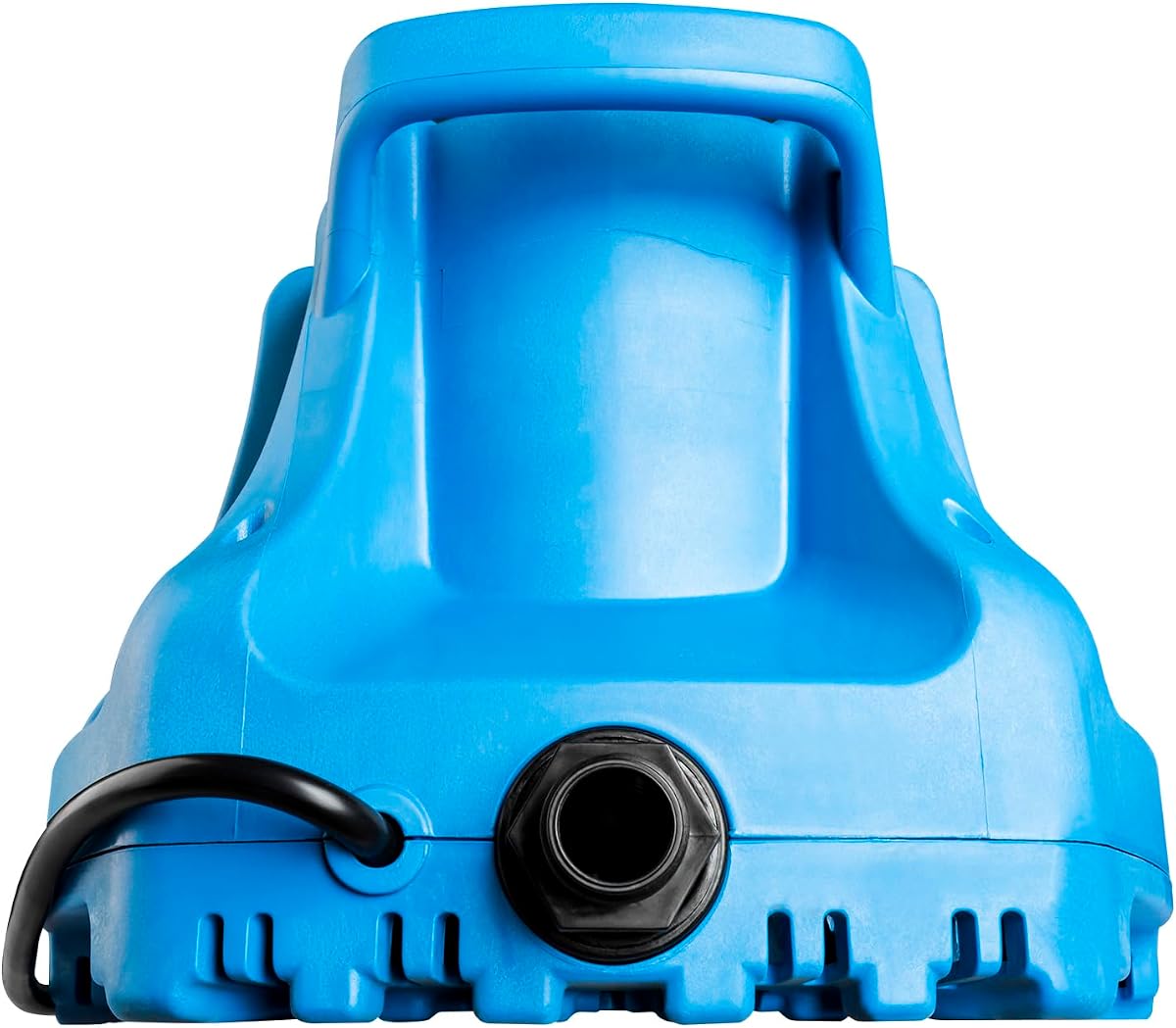
The AgiiMan 850GPH Pool Pump is purpose-built for removing accumulated water from pool covers and similar above-ground applications. Its 4.4 rating reflects solid customer feedback, while the 850 GPH flow rating is more modest than the high-output utility pumps in this guide. That makes it better suited to focused pool maintenance than emergency removal of deep basement flooding.
We may earn a commission when you buy through this link, at no additional cost to you.
The ABS housing and four mesh-covered sides allow water to enter across a broad area of the pump. A built-in temperature-control core is designed to prevent dry burning when the pump operates without sufficient water. The 16-foot anti-twist drainage hose works with a 1/2-inch water nozzle, while additional 3/4-inch nozzle arrangements accommodate drainage and garden hoses.
Its maximum lift of approximately 10.5 feet is the main limitation compared with high-lift alternatives. The 25-foot power cord helps separate the outlet from the water, but users still need to place the pump correctly and use appropriate outdoor electrical practices. It also appears to use a fixed pool-cover approach rather than a general-purpose automatic sump function.
This is an appealing pick for owners who want a straightforward pump dedicated to seasonal pool-cover water. It handles the core requirement well, provides multiple connection choices, and includes meaningful motor protection. Those needing higher output or substantially greater vertical lift should move to one of the general utility models.
The broad screened intake and anti-twist hose are particularly appropriate for pool covers, where water often collects across a wide surface. Its lower-flow format focuses on controlled maintenance rather than high-volume emergency drainage.
The internal temperature-control core is intended to protect the motor if water is insufficient. Correct placement remains important, but this added safeguard makes routine pool-cover monitoring more forgiving.
We may earn a commission when you buy through this link, at no additional cost to you.
The Acquaer 1/3 HP Automatic Submersible Water Pump offers a practical combination of 2,160 GPH flow and sensor-controlled operation. Its 4.3 rating makes it a credible choice for sump pits, pool covers, hot tubs, basements, and gardens where unattended water-level management is more useful than manual switching.
We may earn a commission when you buy through this link, at no additional cost to you.
The built-in electronic sensor turns the pump on when it detects approximately 1-1/2 inches of water and switches it off after the level falls below 1/4 inch. This automatic cycle is a major convenience in a sump application. The bottom suction design can remove water down to that quarter-inch level, while the strainer base filters debris and keeps the pump stable.
A temperature-control core helps prevent motor damage during short dry-running periods, and the strainer can be cleaned without removing screws or tools. The pump includes a 10-foot three-prong cord, a one-inch NPT discharge, and a 3/4-inch garden hose adapter with a check valve. The relatively short cord may require a nearby outlet or careful positioning.
This model is a sensible choice for a fixed sump installation or other location where automatic operation is desirable. Buyers should ensure the sensor's activation and shutdown levels suit the application and confirm that the electrical setup follows local requirements. It is less suitable when the pump needs to be moved frequently or operated manually at arbitrary water depths.
The sensor-controlled cycle removes the need to monitor the water level continuously. It is especially useful in a sump pit or low-lying area where the pump needs to start promptly and stop after the water has receded.
Bottom suction allows the pump to remove water down to 1/4 inch, reducing residual water around the base. The tool-free strainer design makes it easier to inspect and clean the debris-catching component during maintenance.
We may earn a commission when you buy through this link, at no additional cost to you.
The 1.5HP 4000GPH Pump arrives with both a 25-foot power cord and a 25-foot discharge hose, creating a notably complete water-transfer package. Its rated output of 4,000 gallons per hour and 31-foot maximum lift make it suitable for swimming pools, garden ponds, basement flooding, and broader transfer applications.
We may earn a commission when you buy through this link, at no additional cost to you.
The low suction capability allows the pump to draw water from approximately 1/5 inch, useful when draining the last portion of a pool, pond, or shallow area. Its 1-1/2-inch outlet works with two supplied adapter groups: NPT adapters for 1-inch and 1.5-inch threads and barb fittings for 3/4-inch and 1-inch connections. That versatility helps accommodate different hose systems.
The thermoplastic body resists corrosion, while the stated stainless-steel motor shaft and premium bearings support durability. An automatic thermal overload protector is included to reduce the risk of motor damage from excessive heat. The main limitation is the absence of automatic control. It also uses a 1.5 HP motor, which is a higher power category than most residential pumps in the list.
This pump is best for buyers who want substantial capacity and an included long discharge hose, particularly for one-time transfers or recurring manual draining. It is less appropriate for a conventional sump pit where automatic level-based switching is required. Buyers should confirm that their power supply and outlet can accommodate the pump's operating requirements.
The included 25-foot discharge hose allows water to travel beyond the immediate edge of a pool, pond, or flooded area. The additional adapters make it possible to match the pump to common hose sizes without relying on a single connection standard.
Suction down to 1/5 inch is valuable for removing shallow residual water. The pump should initially be lowered at an angle so trapped air can escape, a step that helps it establish prime.
We may earn a commission when you buy through this link, at no additional cost to you.
The 1HP 5000GPH Pump leads this group by its listed maximum flow of 5,000 gallons per hour. Combined with a 30-foot lift rating, it is designed for rapid water transfer in basements, pools, hot tubs, and garden ponds. Its 4.2 rating is the lowest among the ten products, so prospective buyers should consider both its specifications and customer feedback.
We may earn a commission when you buy through this link, at no additional cost to you.
Bottom suction removes water down to 1/5 inch, and an included mesh filter bag helps separate sediment and solids from the incoming flow. The pump uses a standard 3/4-inch NPT garden hose adapter and a multi-size adapter for 1-inch and 1-1/4-inch connections. These options give it useful flexibility for different hoses and discharge arrangements.
Corrosion-resistant thermoplastic construction and a built-in thermal overload protector support safer, longer operation. The 10-foot power cord is shorter than several competing packages and may constrain where the outlet can be located. Like most high-flow utility pumps in the guide, it is designed for manual use rather than automatic float control.
This is the option to consider when the priority is moving a large volume of water quickly. It suits users who can monitor the pump and need dirty-water filtering rather than an automatic sump installation. The strong flow specification and low suction depth make it attractive for emergency cleanup, while its rating suggests reading customer feedback before committing.
The 5,000 GPH maximum flow is the highest listed here, which can be advantageous for pools and other water sources that need to be emptied quickly. Actual delivery depends on lift height, hose diameter, hose length, and the condition of the suction path.
The included mesh bag provides a first line of protection against sediment and solids. It also requires periodic inspection so that accumulated debris does not restrict the intake or increase strain on the pump.
We may earn a commission when you buy through this link, at no additional cost to you.
The Cleartide 1/3 HP Utility Pump stands out by combining 2,790 GPH flow, 30-foot lift, automatic controls, and manual operation in one package. Its 4.5 rating reflects strong customer feedback, and the two operating modes make it more adaptable than pumps designed exclusively as automatic sump units or manually monitored utility pumps.
We may earn a commission when you buy through this link, at no additional cost to you.
In smart auto mode, the sensor starts the pump at approximately 1-1/5 inches and stops it around 1/5 inch. Manual mode permits on-demand pumping for tasks such as pond drainage or garden watering. This dual design lets the owner choose unattended level control or direct operation without relying on separate equipment for each style of task.
The copper-wound motor is described as running cooler and lasting longer, while the thermoplastic housing resists corrosion. Protection features include dry-run shutdown, overload and overheat protection, self-removal of air locks, and an instant stop when tipped. The pump also handles solids up to 1/8 inch, an important distinction when compared with clean-water-only circulation pumps.
This is the most versatile pick for a homeowner seeking both automatic and manual capability in one unit. It is appropriate for flooded basements, window wells, pools, hot tubs, ponds, and gardens. The 10-foot cord requires a reachable outlet, and the included 1-1/4-inch elbow should be oriented carefully to preserve efficient flow. Even with those considerations, the feature balance supports an Editor's Choice recommendation.
Smart auto mode handles recurring or unattended water-level control, while manual mode gives the operator immediate control for transfers. This dual approach broadens the pump's usefulness across both household drainage and routine watering tasks.
Dry-run, overload, and overheating safeguards reduce the likelihood of damage during common mistakes or demanding conditions. Tip detection and air-lock removal further support dependable operation, though the pump should still be installed and monitored correctly.
We may earn a commission when you buy through this link, at no additional cost to you.
The Little Giant APCP-1700 is a specialized automatic pump designed to remove water from pool covers, boat covers, and rooftops. Its 4.5 rating and focused application make it a refined choice for covered surfaces where accumulated water needs to be removed before it creates a larger problem. It is not a general-purpose high-output sump pump.
We may earn a commission when you buy through this link, at no additional cost to you.
The integrated float activates the pump in 2 inches of water and shuts it off when the level falls to 1 inch. This automatic behavior is central to the product's design. At 1,700 GPH with a one-foot lift, it provides steady water removal while the 21.5-foot shutoff specification indicates the maximum head at which the pump can still develop flow.
A removable intake screen supports cleaning and air-lock removal, while the compact weighted design helps the pump remain stable. The built-in handle makes placement and retrieval more convenient. Its one-inch FNPT discharge and included 3/4-inch garden hose adapter provide a straightforward connection, and the 25-foot cord reaches most covered-area outlets.
This pump is best suited to owners who want automatic, continuous protection for a pool cover, boat cover, or flat rooftop collection area. Its specialized design, long cord, and integrated float explain why it stands apart from the general utility models. It is a premium choice for a clearly defined covered-water-removal task rather than for broad transfer duties.
The built-in float starts pumping at 2 inches and stops at 1 inch, allowing the pump to respond to collected water without continuous supervision. This makes it especially appropriate for seasonal covers and similarly enclosed drainage points.
The removable intake screen allows debris to be cleared and helps address air locks. A weighted, compact body improves stability, and the built-in handle simplifies accurate placement when the pump is set into a sump or cover well.
We may earn a commission when you buy through this link, at no additional cost to you.
The AOLTCUZ 100W Pond Pump is designed for continuous circulation in koi ponds, fish ponds, fountains, waterfalls, and garden water features. Its 4.3 rating reflects generally favorable feedback, and the magnetic-drive design distinguishes it from conventional high-capacity drainage pumps by prioritizing quiet, clean-water operation.
We may earn a commission when you buy through this link, at no additional cost to you.
The pump can circulate between approximately 690 and 1,800 GPH, with a front knob used to adjust the output. Its outlet rotates from 0 to 180 degrees, helping direct water toward a waterfall, stream, fountain, or filtration system. A maximum lift of 13 feet gives it enough reach for many modest pond and fountain layouts.
Operating below 40 dB makes it attractive near living spaces, while the oil-free magnetic drive, stainless-steel rotor, ceramic shaft, dual filtration system, and thermal protection switch support dependable service. The 20.3-foot cord and supplied adapters support outdoor installation, and suction cups help stabilize the pump. The mesh cover, chamber, and rotor can be removed without tools for cleaning.
This is the right selection for continuous water movement and feature-focused pond or fountain work. It is not a substitute for a sump pump handling dirty basement water, and actual output will vary with lift, tubing length, and hose diameter. Within its clean-water purpose, it offers a notably quiet and adjustable operating experience.
The oil-free magnetic-drive design reduces mechanical noise and avoids oil entering the water. For fish ponds and fountains located near patios or windows, the stated sub-40 dB operation makes this model more discreet than many conventional utility pumps.
Flow control and a rotating outlet let the user tune both the amount and direction of water. These adjustments are useful for linking a pump to filtration equipment or directing a stream toward a decorative feature.
We may earn a commission when you buy through this link, at no additional cost to you.
The WAYNE WaterBUG is a compact water-removal pump built around Multi-Flo technology and selectable discharge positioning. Its 4.5 rating makes it one of the strongest customer-rated models in the guide, while its ability to remove water down to 1/16 inch distinguishes it for shallow cleanup and confined spaces.
We may earn a commission when you buy through this link, at no additional cost to you.
A top discharge suits small, tight locations such as window wells and buckets, where side routing might be inconvenient. A side discharge works well for flat open surfaces, including flooded basements, flat roofs, and standing yard water. Using the right orientation helps the pump fit the drainage area and makes the same unit applicable to more than one type of cleanup.
The pump moves up to 1,350 GPH and uses a multi-ring suction strainer to filter debris and reduce blockages. Non-corrodible plastic discharge outlets accept a standard garden hose, and tethered caps help keep the connections secure. The compact format is useful for storage, but the 1,350 GPH rating is lower than the maximum output of most large utility pumps here.
This model makes the most sense for homeowners seeking a portable, versatile pump for shallow water and restricted placement. It is not automatic, so it must be unplugged once the water is gone to avoid dry running. Buyers needing major volume or unattended sump management should choose a higher-output or sensor-controlled model instead.
Top and side outlets let the pump adapt to the geometry of the drainage site. Top discharge is especially helpful in narrow spaces, while side discharge supports broader flat-surface cleanup.
The ability to draw water down to 1/16 inch is useful for residual puddles and window wells. The multi-ring strainer helps keep debris away from the intake, although regular cleaning remains necessary when operating in dirty areas.
We may earn a commission when you buy through this link, at no additional cost to you.
The right submersible pump depends on the water source, required flow, vertical distance, level of debris, need for automatic control, and available electrical and hose connections. Compare the listed specifications carefully because maximum figures represent different operating conditions.
Maximum flow indicates the approximate volume of water a pump can move under favorable conditions, but it is not the same as delivered flow in every installation. Hose diameter, length, fittings, bends, suction conditions, and vertical lift can all reduce performance. A model rated for 5,000 GPH may be excessive for a small pool-cover sump, while a lower-flow circulation pump may be better for a fish pond where quiet operation matters. General basement and pool transfers benefit from higher capacity, whereas automatic sump applications require enough flow to clear the basin before the water rises again.
Vertical lift describes the height the pump can move water upward. Pumps in this guide range from roughly 10.5 feet to 36 feet, with one automatic model also listing a 21.5-foot shutoff height. If the discharge outlet is above the pump, sufficient head is essential. If water must travel horizontally across a yard or basement, long and narrow hoses can increase resistance even when the vertical rise is modest. Buyers should calculate the actual elevation difference and include any bends or adapters rather than comparing lift figures alone.
Manual pumps give direct control and are useful for transfers, cleanup, pond draining, and garden watering. Automatic pumps use an integrated sensor or float to start and stop according to water level, making them convenient in sump pits, window wells, pool covers, and other unattended locations. The Cleartide offers both smart automatic and manual modes, while the Acquaer and Little Giant emphasize automatic operation. An automatic model is not necessarily better for every task, but it is usually more convenient when water levels change without direct supervision.
Clean-water pumps are intended for pools, ponds, hot tubs, and covered surfaces where debris is minimal. Utility pumps with screened intakes or filter bags can handle light debris, and some models are specified to pass solids up to 1/8 inch. That does not mean they can handle gravel, leaves, or heavy sediment. A filter may reduce clogs but must be cleaned regularly. For a basement containing grit or debris, select a pump explicitly approved for dirty or lightly dirty water and use the appropriate strainer.
Low suction depth helps remove residual water that shallow pumps cannot reach. The WAYNE WaterBUG goes down to 1/16 inch, while the 1.5HP 4000GPH and 1HP 5000GPH models reach approximately 1/5 inch. The Superior Pump and some automatic designs are not described with comparable low-suction figures. Low-level capability is useful for pools, flat roofs, and window wells, but it should not be confused with the pump's vertical lift, which concerns how high water can be pushed.
Look for a discharge size and included adapters that match the hose or pipe already available. Common connections in this group include 1-inch NPT, 1-1/4-inch NPT, 1-1/2-inch outlets, 3/4-inch garden hose fittings, and barbed connections. Some pumps include a long discharge hose, while others provide only an elbow and adapters. A check valve can be useful in transfer setups because it helps reduce reverse flow. Always confirm whether a garden hose adapter is included and whether additional elbows, adapters, or hose lengths are required.
The cord length determines how far the pump can be placed from the outlet. Options range from 10 feet to 25 feet, with the SEESII and Cleartide also providing substantial hose or cord arrangements. A longer cord improves placement flexibility but creates more cable to manage outdoors. Electrical safety also depends on suitable ground-fault protection, a properly rated outlet, and a dry connection. Never use cord length as a substitute for verifying electrical requirements in wet locations.
Thermal overload protection, dry-run controls, and temperature-control cores reduce motor damage risk. These safeguards are useful, but they do not make unsupervised dry operation appropriate. Removable screens, tool-free strainers, and accessible filter bags make routine cleaning easier. Inspect the intake before and after use, clear trapped leaves and sediment, and keep the pump submerged while it runs. For ponds and aquariums, prioritize oil-free, quiet construction; for dirty drainage, prioritize a serviceable strainer.
Before operating any model, read its instructions, inspect the pump, cord, hose connections, and intake, and confirm that the electrical supply is suitable for the installation. Place the unit within reach of its rated lift and suction limits. For a pump without automatic controls, ensure an adult can monitor it and disconnect power as soon as the water has drained. Automatic models should be positioned where their sensor or float can detect the intended water level without being obstructed.
For initial startup, lower the pump into the water at an angle to release trapped air, then place it on a firm, stable surface near the suction source. Connect the discharge hose securely and keep the hose route as straight and short as practical. Run the pump long enough to verify flow and check the connection points for leaks. Never operate a dirty-water pump with its intake blocked, and do not use a pump rated for clean water to move debris beyond its stated solids capacity.
After each use, disconnect power before lifting the pump. Clean the intake screen, strainer, or filter bag and remove leaves, algae, sediment, and other trapped material. Inspect the cord for damage and check that the discharge fittings remain secure. Store the pump dry when it is not needed, and revisit its performance if flow falls noticeably. For ponds, rinse relevant components as appropriate and keep the oil-free magnetic-drive pump supplied with adequate clean water.
A utility pump is generally used for transferring or draining water and is often operated manually. A sump pump is normally installed in a sump pit and uses a float or electronic sensor to start and stop as water accumulates. Some products in this guide combine both approaches, offering automatic and manual modes for different jobs.
Dry running should be avoided because the motor depends on water for cooling. Pumps with thermal overload, dry-run control, or temperature-control cores have added protection, but those safeguards do not guarantee unlimited dry operation. Unplug the pump when the water is gone, especially if it lacks a reliable automatic shutoff.
Measure the vertical distance from the pump's water level to the highest discharge point. The pump's lift rating must exceed that height with room for hose losses. Horizontal hose runs, narrow fittings, and sharp bends also increase resistance, so a model with some lift margin is generally more useful than one operating exactly at its stated limit.
Only if its specifications explicitly allow the expected level of debris. Several models include screens, strainers, or filter bags for lightly dirty water, while some pond and pool pumps are intended for cleaner water. Passing a small solid diameter is not permission to pump gravel, branches, or heavy sediment, and filters must be cleaned regularly.
Most require a discharge hose or compatible piping, and many include a garden hose adapter or a short section of hose. Check the discharge thread size and included fittings before use. A larger-diameter hose may improve flow, while a kinked or undersized hose can substantially reduce performance.
Choose automatic operation for sump pits, window wells, pool covers, and locations where water may accumulate without constant supervision. Choose manual operation for controlled transfers, pond draining, garden watering, and short cleanup tasks where you want to start and stop the pump yourself. The Cleartide is unusual among these selections because it offers both modes.
Check for a blocked intake, trapped air, a closed or kinked discharge hose, an incorrect adapter, insufficient submersion, or a tripped thermal protector. Disconnect power before inspection and never reach into an operating pump. If the pump has run dry, allow it to cool and follow the manufacturer's restart instructions.
Yes, if it is designed for clean-water circulation and the flow, lift, and electrical requirements suit the feature. The AOLTCUZ 100W model is purpose-built for ponds and fountains, with quiet magnetic-drive operation and adjustable flow. It should not be confused with a dirty-water utility pump that lacks fish-friendly features.
The Cleartide 1/3 HP Utility Pump earns the Editor's Choice recommendation because it balances 2,790 GPH flow, 30-foot lift, automatic and manual modes, debris handling, and extensive motor protection. The AgiiMan 850GPH Pool Pump is the Best Budget choice for focused pool-cover drainage, while the Little Giant APCP-1700 stands as the Best Premium pick for automatic removal from pool covers, boat covers, and rooftops.
For other needs, prioritize the task before the headline flow number. High-output models suit large transfers and urgent cleanup; automatic sensors suit recurring sump management; low-flow magnetic-drive pumps suit ponds and fountains; and low-suction models help remove shallow residual water. Always confirm discharge compatibility, cord reach, electrical requirements, solids capability, and realistic lift before ordering.
Specifications, customer ratings, included accessories, and prices can change over time. Review the current Amazon listing and manufacturer instructions at the point of purchase to confirm that the chosen model still matches the application. This comparison is intended to narrow the field and make the final selection more informed.

