
UGREEN Airplane Bluetooth 6.0 Transmitter Receiver
4.1Editor score
Transmitter and receiver modes
Up to 18-hour battery
3.5mm AUX connectivity
Compare 10 Bluetooth Transmitter for iPod Classic options, including 30-pin adapters, AUX transmitters, dual-stream models, battery life, codec support, and
A Bluetooth Transmitter for iPod Classic can give a classic 30-pin music player a modern wireless connection without replacing the device. The best adapter depends on connector fit, supported Bluetooth profiles, codec behavior, power requirements, and whether you want to share audio with a second set of headphones or speakers.
This guide compares ten transmitters using the supplied compatibility, feature, and rating information. It covers dedicated 30-pin adapters, compact 3.5mm AUX transmitters, multi-stream models, and general-purpose travel adapters while noting model-specific limitations that can affect an iPod Classic.
Each review identifies the product's strongest use case, important trade-offs, and best-fit listener. The top selections highlight dependable everyday wireless listening, advanced codec and dual-device support, and a broad travel-oriented feature set, although prices and availability can change over time.
4.1Editor score
4.0Editor score

4.1Editor score
The comparison below covers each adapter's connection method, wireless capabilities, audio features, and most important compatibility consideration for an iPod Classic user.


The i10_Pro combines direct 30-pin iPod compatibility with one of the most versatile wireless feature sets in this guide. Its 4.0 rating reflects a capable product for listeners who want more than a simple one-to-one audio link. It explicitly supports the iPod Classic 80GB, 120GB, and 160GB, making it one of the clearest choices when model confidence matters.
We may earn a commission when you buy through this link, at no additional cost to you.
Its standout feature is the ability to transmit to two Bluetooth receivers at once. That can support two listeners, a combination of AirPods and Bose headphones, or two compatible speakers. Codec options add another layer of control: users can select standard aptX, low-latency aptX, FastStream, or SBC depending on the capabilities of the receiving device and the priority of sound quality versus latency.
The trade-offs are practical rather than fundamental. A larger codec selection and two-device pairing require more careful setup than a basic plug-and-play transmitter, and the receiver must support the codec selected. Its dimensions of 25 by 14 by 6 millimeters also make it one of the smallest products here, which is valuable but offers less physical room for extensive controls.
This is the strongest overall recommendation for an iPod Classic owner who wants flexible codec options, remote playback functions, or simultaneous listening for two people. Users who only need an inexpensive one-to-one adapter may prefer a simpler model, but the i10_Pro delivers the most distinctive feature combination among the dedicated 30-pin choices.
The transmitter can stream to two compatible Bluetooth headsets, receivers, or speakers, including supported AirPods and Bose combinations. This makes it useful for shared travel listening when both users have compatible equipment.
Switching among aptX, low-latency aptX, FastStream, and SBC lets the user align the transmitter with the receiving device. Low-latency aptX is the relevant choice when synchronized video is the priority.
We may earn a commission when you buy through this link, at no additional cost to you.
This 30-pin Bluetooth adapter is a straightforward option for giving an iPod Classic 160GB or supported iPod Nano a wireless connection. Its 3.4 rating places it among the less highly rated products in the list, but the supplied specifications cover the essentials clearly: direct 30-pin connectivity, no apps, and no separate battery requirement.
We may earn a commission when you buy through this link, at no additional cost to you.
The adapter draws power from the connected music player, which removes the inconvenience of charging yet another accessory. It can pair with Bluetooth headphones, earbuds, speakers, car audio systems, and other compatible receivers. Its upgraded Bluetooth technology is described as supporting fast pairing, stable transmission, low power consumption, and reduced audio delay.
The main concern is ambiguity in the compatibility language. The description broadly lists the iPod Classic and several older 30-pin models, but also says that certain iPods manufactured after 2007 are not compatible. That wording is difficult to reconcile, so buyers should verify their exact model before ordering rather than relying on the general compatibility list.
It is best for someone who values a simple, battery-free connection and has confirmed that the listed 30-pin requirements match the player's model. The i10_Pro is the stronger recommendation for codec control and two-device streaming, while this adapter may suit a buyer who prioritizes uncomplicated operation.
Because the transmitter is powered by the iPod, users do not need to remember another charging cycle. It is especially convenient for occasional travel and for sessions that are shorter than the player's own battery life.
The adapter can send audio to supported Bluetooth earbuds, full-size headphones, speakers, and car systems. This flexibility lets the same iPod serve different wireless listening environments.
We may earn a commission when you buy through this link, at no additional cost to you.
The YOVDA transmitter uses the iPod's 30-pin connector and supports A2DP and AVRCP, two relevant profiles for wireless music and basic remote functions. Its 3.2 rating is the lowest in this group, making careful attention to the compatibility description especially important. The listing contains conflicting statements about which iPod Classic capacities and production years are supported.
We may earn a commission when you buy through this link, at no additional cost to you.
As a direct 30-pin solution, it requires no software and is powered by the iPod itself. It can transmit stereo audio to compatible car stereos, Bluetooth headphones, and speakers, although the description cautions that some car stereos may not work. Pairing is automatic when the transmitter is used with a Bluetooth playback device that is not already connected to a phone.
Volume adjustments must be made through the iPod rather than through connected speakers, headphones, or car systems. The contradictory model language is a more significant issue: one section mentions only original iPods produced after 2007, while another specifically excludes several iPod Classic capacities. A buyer should confirm the exact hardware version and consult the seller's current compatibility guidance.
The product is suitable only for buyers who are comfortable resolving the inconsistent listing details. For an iPod Classic with clearly documented 30-pin compatibility, its automatic pairing and profile support are useful. Those seeking broader clarity and more advanced audio controls will find the i10_Pro or an AUX-based adapter easier to evaluate.
The adapter pairs automatically under the stated conditions, reducing the number of manual steps. Users should first disconnect a speaker or receiver from any phone to avoid an occupied Bluetooth link.
Connected headphones and speakers are not used to change the output level. Listeners must adjust volume from the iPod, which may be inconvenient in a car or when the player is not within easy reach.
We may earn a commission when you buy through this link, at no additional cost to you.
The Twelve South AirFly SE is a 3.5mm Bluetooth transmitter rather than a direct 30-pin iPod adapter, but it offers the highest rating in this guide at 4.3. It is designed for turning wired audio sources into wireless signals for AirPods, earbuds, and headphones, with particular usefulness for flights, gym equipment, gaming devices, and other entertainment systems.
We may earn a commission when you buy through this link, at no additional cost to you.
Its strongest feature is the long battery life of more than 20 hours on one charge. The included USB-C cable also allows the AirFly to operate while charging, which is useful during longer journeys. Built-in volume buttons make output adjustment direct, and the compact, lightweight enclosure is designed to remain easy to carry.
The limitation for an iPod Classic buyer is connection method. The AirFly's listed input is a 3.5mm jack, so the user would need an appropriate 30-pin-to-3.5mm connection or another suitable cable. The supplied product data does not explicitly confirm compatibility with the iPod Classic, so this is an indirect solution rather than a purpose-built one.
This is the leading choice for a traveler who wants a polished, portable transmitter and may use several wired audio sources. It is less suitable for someone seeking a guaranteed direct iPod Classic connection. Users with a suitable iPod cable may appreciate its long runtime, charging support, and simple controls.
More than 20 hours of operation covers long-haul travel and many multi-day itineraries. The ability to charge while in use provides additional flexibility when the battery becomes low.
Because the transmitter operates from a 3.5mm input, it can serve several entertainment systems rather than only an iPod. Flight entertainment, exercise equipment, and compatible gaming devices are all highlighted use cases.
We may earn a commission when you buy through this link, at no additional cost to you.
This 3.5mm AUX transmitter combines a Bluetooth 5.2 chipset, dual-link functionality, and a Texas Instruments digital signal processor. Its 4.1 rating reflects a broad feature set for listeners who want more than a basic one-to-one adapter. It can also be used with an iPod Classic when connected through a suitable 3.5mm-to-30-pin cable.
We may earn a commission when you buy through this link, at no additional cost to you.
The dual-link function allows two sets of Bluetooth headphones or earbuds to receive audio from one source, making it useful for shared listening on flights or elsewhere. The product information describes its chipset as optimized for low latency and synchronized video, while the DSP is intended to improve clarity, soundstage, and bass in real time.
Its input approach also makes it more universally useful than a dedicated 30-pin transmitter. The listing identifies TVs, airplane entertainment, treadmills, gaming consoles, desktop computers, CD players, MP3 players, and other 3.5mm sources as possible applications. The trade-off is that the iPod Classic does not connect natively through 3.5mm, so a suitable cable is required.
This is the most feature-rich premium travel option in the guide. It stands out for users who want dual-link sharing, advanced signal processing, and a modern Bluetooth chipset. Those who require a clean direct 30-pin connection should instead focus on the dedicated 30-pin products.
A single analog source can feed two compatible sets of wireless headphones. That makes the transmitter useful for travelers who want to share audio without using a split wired cable.
The integrated Texas Instruments DSP is designed to optimize the transmitted signal for clarity, width, and bass. It gives this model a more specialized audio role than a basic plug-and-play adapter.
We may earn a commission when you buy through this link, at no additional cost to you.
The UGREEN Airplane Bluetooth 6.0 adapter is a 2-in-1 device that can work as either a transmitter or receiver. Its 4.1 rating makes it one of the stronger all-around options here. It connects through a 3.5mm jack, which means an iPod Classic requires a suitable cable, but the same accessory can then support airplanes, TVs, and car stereos.
We may earn a commission when you buy through this link, at no additional cost to you.
In transmitter mode, it sends audio from a wired source to Bluetooth headphones. In receiver mode, it turns a non-Bluetooth stereo system into a receiver for audio from a phone or computer. The stated battery life is up to 18 hours, with the listing identifying 18 hours in receiver mode and 16 hours in transmitter mode.
The built-in microphone can answer calls while music plays when the adapter is connected to a phone. Its stated transmission distance reaches 10 meters. However, the compatibility notes exclude AirPods Pro 2, AirPods Pro 3, AirPods 4, and AirPods 4 ANC, and they say an iPhone may require manual reconnection instead of automatically reconnecting.
This is a good budget choice for a traveler who wants one accessory to handle both sending and receiving Bluetooth audio. It is less convenient for iPod Classic owners who require a direct 30-pin plug, and buyers using the excluded AirPods models should choose a different adapter.
Switching between transmitter and receiver modes makes the adapter useful beyond a single flight or iPod setup. It can send entertainment audio outward or bring phone and computer audio into wired speakers.
The stated maximum is 18 hours in receiver mode and 16 hours in transmitter mode. Users planning long sessions should check the selected mode because the headline figure does not apply identically to both.
We may earn a commission when you buy through this link, at no additional cost to you.
The C1 is a compact 30-pin transmitter designed to send stereo audio from compatible iPods to Bluetooth headphones, speakers, and receivers. It has a 3.6 rating and focuses on a simple proposition: connect the adapter, pair automatically, and begin listening without installing software.
We may earn a commission when you buy through this link, at no additional cost to you.
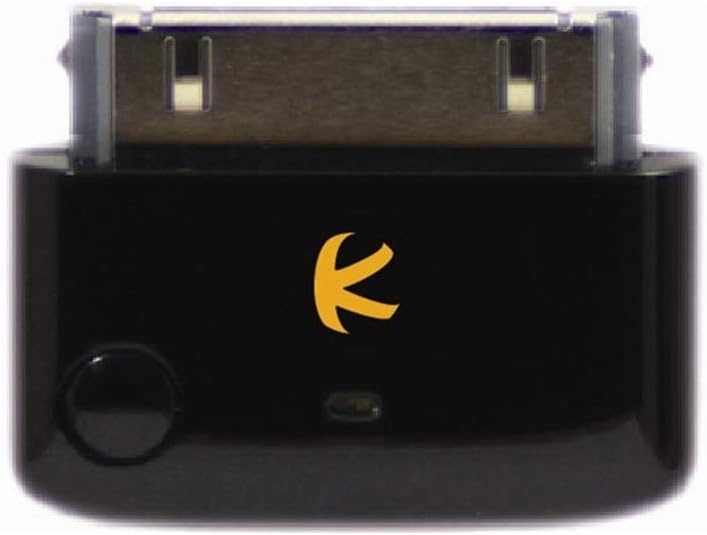
Its automatic pairing and remembered-device function reduce repeated setup. The adapter is powered directly by the iPod and supports A2DP and AVRCP, making it suitable for standard Bluetooth music transmission and relevant remote-control functions. The black finish is designed to blend into the classic appearance of an iPod.
Compatibility wording is again a concern. The title says it is compatible with an iPod Classic manufactured after 2007, while the bullet list says it does not support iPods made after 2007 and excludes first- and second-generation iPod Touch models. These statements pull in opposite directions, and the broad list includes the iPod Classic without defining a reliable capacity cutoff.
The C1 is best for buyers who want a minimal 30-pin adapter and are comfortable confirming model compatibility with the seller. It lacks the codec controls and dual-output abilities of the i10_Pro, but its automatic pairing and device-powered operation are convenient qualities for basic wireless listening.
The transmitter remembers a previously paired device and reconnects easily. This makes repeated use less dependent on manually initiating a new pairing sequence every time.
The iPod supplies power, so there is no separate charging routine. This keeps the accessory compact and leaves the player's available battery as the main operating constraint.
We may earn a commission when you buy through this link, at no additional cost to you.
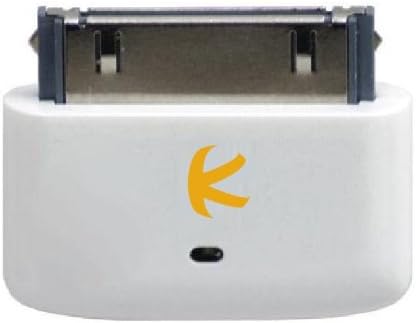
The i10s is a tiny 30-pin Bluetooth transmitter made for iPods, iPhones, and iPads with the older connector. Its 3.9 rating reflects a simple and polished product. The button-free design is unusual in this category, making it easy to carry and reducing the number of physical controls that can collect dirt around their edges.
We may earn a commission when you buy through this link, at no additional cost to you.
It pairs and connects easily, remembers previously paired devices, and reconnects without a complicated sequence. Some stereo receivers may ask for a pairing code, and the listed examples include 0000, 1111, 1234, and 8888. A high-quality codec and low-power operation are also stated features.
The trade-off is limited control. Unlike the i10_Pro, the i10s does not offer a choice of low-latency codecs or simultaneous transmission to two receivers. It also does not have a battery or a 3.5mm input, so its use is essentially focused on direct 30-pin Apple-device connections.
This transmitter makes sense for someone who values minimalism and a tiny form factor more than advanced streaming options. The i10s is a solid choice for solo listening with a compatible Bluetooth receiver, while the i10_Pro or i10 is more appropriate for sharing audio or selecting codecs.
Eliminating buttons simplifies the exterior and removes crevices around controls that can trap dirt. It also means users should expect automatic behavior rather than manual mode selection.
Some stereo receivers request a code during pairing. The listed common codes are 0000, 1111, 1234, and 8888, which can help when the receiver presents one of these options.
We may earn a commission when you buy through this link, at no additional cost to you.
The i10s aptX adds the aptX codec to the compact button-free i10s design. Its 3.7 rating reflects a focused product for listeners whose Bluetooth receiver supports aptX. The stated benefit is cleaner audio with reduced latency, particularly for video played on an iPod, iPhone, or iPad.
We may earn a commission when you buy through this link, at no additional cost to you.
It retains the very small form factor and streamlined white design of the standard i10s. With no buttons, operation focuses on automatic pairing, while Bluetooth EDR support is included for compatible stereo headsets, receivers, and speakers. When both sides support aptX, the transmitter can use it for the advertised cleaner, lower-latency transmission.
The primary limitation is that aptX provides no inherent advantage if the receiving device does not support it. This product also remains limited to a single Bluetooth stream and lacks the multiple codec choices offered by the i10_Pro. Its list price also places it above the simpler dedicated 30-pin alternatives in this guide.
Choose the i10s aptX when the intended receiver is known to support aptX and low-latency video matters. For a standard pair of Bluetooth headphones with no codec requirement, the regular i10s may be a more economical and less specialized choice.
AptX-capable receivers can receive a cleaner signal with less latency than the transmitter's standard mode. This is particularly useful when watching synchronized video through the iPod.
The transmitter will still communicate with ordinary Bluetooth receivers, but the advertised aptX benefits require support at the receiving end. Checking the headphone or speaker specifications prevents disappointment.
We may earn a commission when you buy through this link, at no additional cost to you.
The i10 is a compact Bluetooth transmitter and splitter for 30-pin iPods, iPhones, and iPads. Its 3.8 rating and multi-stream support make it most interesting to iPod Classic owners who want to share music with another listener. The product is specifically noted to work well with two sets of Apple AirPods.
We may earn a commission when you buy through this link, at no additional cost to you.
Its main attraction is the ability to stream stereo music to more than one compatible Bluetooth destination. That could mean two separate headphone sets or another arrangement of supported receivers. The tiny housing is designed for users who want to add wireless capability without carrying a large adapter.
The supplied details are comparatively limited, so expectations should remain focused on the established strengths: 30-pin compatibility, multi-stream audio, and compact dimensions. The i10 does not provide the detailed codec-switching information found in the i10_Pro listing, and its setup requirements are not described in the provided data.
This product suits buyers whose priority is sharing audio with a second set of compatible AirPods. If flexible codec selection, remote control functions, or detailed control over the pairing process matters more, the i10_Pro is the better-specified alternative.
The product information specifically identifies two sets of Apple AirPods as a supported arrangement. It is therefore a practical choice for two compatible listeners sharing an iPod source.
The transmitter is designed to be tiny and lightweight, avoiding the visual bulk of a larger adapter. Its streamlined black finish suits the classic appearance of the supported Apple devices.
We may earn a commission when you buy through this link, at no additional cost to you.
The right choice depends first on how the transmitter connects, then on codec support, output flexibility, power requirements, and whether the product's stated iPod Classic compatibility is unambiguous.
Compatibility should be checked against the precise generation and storage capacity of the iPod Classic, not merely the word iPod. The dedicated 30-pin products provide varying lists, and some descriptions contain internal contradictions about models manufactured before or after 2007. The i10_Pro is unusually explicit because it names the 80GB, 120GB, and 160GB versions. The general 30-pin adapter and C1 also list the Classic, but their broader exclusion language makes prior verification especially important.
Choose only a transmitter whose published specifications clearly include the player's generation and capacity. If the listing is ambiguous, ask the seller before ordering rather than relying on the product title alone.
A direct 30-pin adapter plugs into the iPod without a separate cable, making the connection visually tidy and reducing the number of parts that can fail. It also often draws power from the player, so there is no separate charging routine. A 3.5mm AUX transmitter is less dedicated to the iPod but may be more useful across airplanes, televisions, gym equipment, and other wired sources. The AirFly SE, Bluetooth 5.2 AUX Transmitter, and UGREEN adapter are the leading 3.5mm options in this list.
Prioritize a direct 30-pin connector for the simplest dedicated setup. Choose AUX when one adapter will serve many devices and you are comfortable using the required iPod-to-3.5mm cable.
Codec support can influence both audio quality and synchronization. The i10_Pro offers standard aptX, low-latency aptX, FastStream, and SBC, allowing the user to match the transmitter to a capable receiver. The i10s aptX is aimed specifically at aptX-equipped headphones and receivers, with the stated goal of cleaner audio and lower latency. The general-purpose AUX Transmitter also highlights aptX and a low-latency chipset.
Match the codec to the receiving device. A sophisticated codec option offers little if the headphones or speakers do not support it, while a standard SBC connection may be entirely adequate for music-only listening.
Two-device streaming is valuable for couples, friends traveling together, or anyone comparing two compatible wireless systems. The i10_Pro, i10, and Bluetooth 5.2 AUX Transmitter explicitly support two outputs. The i10_Pro additionally lets the user choose between two headset sets, one AirPods set and one Bose set, or two compatible Bose sets. The UGREEN listing also describes support for two AirPods or headphone sets.
Select a dual-output model if sharing is important. A one-to-one transmitter is usually easier to pair and may offer a more compact, less complicated setup.
Power strategy affects portability and setup. Direct 30-pin transmitters such as the i10_Pro, YOVDA adapter, and C1 are powered directly by the iPod. That means no separate battery, but the player's charge is consumed during wireless transmission. Rechargeable AUX products offer a different balance: the AirFly SE lasts more than 20 hours and can operate while charging, while the UGREEN adapter provides up to 18 hours in receiver mode and 16 hours in transmitter mode.
Choose player-powered operation for fewer accessories. Choose a rechargeable adapter for long trips, mixed-source use, or situations where preserving the iPod's battery is important.
A transmitter may add buttons, or it may automatically pair and reconnect. The AirFly SE provides physical volume controls, while the i10_Pro supports next, previous, play, and pause commands and allows codec selection. The YOVDA unit requires volume changes through the iPod, and the i10s models use a button-free design. These differences matter when the iPod is tucked into a pocket, mounted in a car, or used with speakers that are physically out of reach.
Prioritize accessible controls when you often change tracks or volume. Choose a minimalist automatic adapter when simple pairing and a clean exterior matter more than direct control.
A 2-in-1 adapter can work as a transmitter in one direction and a receiver in another. The UGREEN device can send TV or airplane audio to Bluetooth headphones and receive phone or computer audio through wired car systems or speakers. The Bluetooth 5.2 AUX Transmitter also supports a broad collection of analog sources, including TVs, planes, treadmills, consoles, desktop computers, CD players, and MP3 players.
Choose a two-way or broadly compatible model if the adapter will travel between devices. A dedicated 30-pin transmitter is generally more focused for people who primarily use an iPod Classic.
Pairing behavior can differ more than the product categories suggest. The YOVDA adapter should be used when the receiving device is not already connected to a phone. The UGREEN adapter requires the correct transmitter or receiver mode, and some iPhones require manual reconnection. It also excludes several newer AirPods models. The i10s may need one of several receiver pairing codes, including 0000, 1111, 1234, or 8888.
Read the complete compatibility and pairing notes before purchasing. A well-defined setup process prevents most common problems with an otherwise suitable transmitter.
Begin by confirming that the transmitter supports the exact iPod Classic generation or capacity. For a 30-pin model, check that the connector aligns and insert it without forcing it. For an AUX-based model, connect a suitable 3.5mm-to-30-pin cable first, then confirm that the iPod is producing an audio signal. Read the adapter's pairing instructions because automatic, button-controlled, and mode-based products use different sequences.
Put the Bluetooth receiver into pairing mode before the first connection. For products that require automatic pairing, disconnect the receiver from any phone or other device, power the iPod, and insert the transmitter. For a button-controlled model, press the pairing button as directed and wait for the connection. After the first successful pairing, many of the listed adapters remember the receiver and reconnect on subsequent use.
Care for the adapter by avoiding moisture, impact, and tension on the cable or connector. Clean the 3.5mm plug or 30-pin interface with a dry, soft cloth rather than abrasive material. Rechargeable models should be kept within the manufacturer's recommended charging conditions, while player-powered adapters require no separate charging. If pairing fails, move the receiver closer, disconnect other Bluetooth links, and reset the adapter using the instructions provided with the specific product.
No. Compatibility depends on the adapter's 30-pin connector, production year, and storage capacity. The i10_Pro explicitly lists the 80GB, 120GB, and 160GB models, while several other products use broader or contradictory descriptions. Confirm the exact player model before ordering, and ask the seller if the listing does not clearly address it.
It depends on the design. Dedicated 30-pin adapters such as the i10_Pro, C1, and YOVDA transmitter are powered directly by the connected iPod. Rechargeable AUX models include their own battery, with the AirFly SE offering more than 20 hours of use and the UGREEN adapter offering up to 18 hours in receiver mode.
Yes, if the specific product supports multi-stream or dual-link output. The i10_Pro, i10, Bluetooth 5.2 AUX Transmitter, and UGREEN adapter are described as supporting two sets of headphones or earbuds. Both receivers must be compatible, and pairing typically requires putting the second receiver into pairing mode and using the transmitter's pairing control.
It can be, particularly when the receiving headphones or speakers support it and the user watches video. The i10_Pro and i10s aptX emphasize cleaner transmission and reduced latency, while the Bluetooth 5.2 AUX Transmitter also highlights aptX-related performance. For basic music listening, a standard Bluetooth connection may be sufficient.
An AUX transmitter can work if the iPod's analog output is connected through a suitable 3.5mm-to-30-pin cable. The AirFly SE, Bluetooth 5.2 AUX Transmitter, and UGREEN adapter all use a 3.5mm connection. A direct 30-pin model is generally tidier, but an AUX adapter offers more flexibility for travel and other wired audio sources.
The receiver may still be connected to a phone, or a different transmitter mode may be active. Disconnect other Bluetooth links, select the correct transmitter or receiver mode, and place the receiver back into pairing mode. The YOVDA product specifically advises disconnecting the receiver from a phone before automatic pairing, while the UGREEN model can be reset by holding its multifunction button for ten seconds while powered off.
No. Bluetooth compatibility alone does not override a product's explicit exclusions. The UGREEN adapter is compatible with AirPods and AirPods Pro but specifically excludes AirPods Pro 2, AirPods Pro 3, AirPods 4, and AirPods 4 ANC. For models that support simultaneous streaming, verify that the transmitter's multi-device arrangement covers the specific AirPods generation being used.
Player-powered transmitters draw energy from the iPod while transmitting, so wireless use can shorten the available listening time. Rechargeable AUX adapters separate their power supply from the player but require periodic charging. A long-trip user may prefer the AirFly SE's more than 20-hour runtime, while a short-session user may prefer the simpler device-powered approach.
The i10_Pro is the strongest all-around recommendation because it directly supports 30-pin iPod Classic models, provides selectable codecs, includes remote controls, and can stream to two receivers. The UGREEN Airplane Bluetooth 6.0 stands out as a budget-oriented 2-in-1 travel adapter, while the feature-rich Bluetooth 5.2 AUX Transmitter is a compelling premium option for users who prioritize dual-link sharing and onboard audio processing.
The right choice depends on how the iPod will be used. Choose a dedicated 30-pin model for the cleanest and simplest connection, an aptX-oriented transmitter for compatible receivers and lower-latency video, or a rechargeable AUX adapter when one accessory must also handle airplanes, televisions, gym equipment, and other sources. Always verify the exact iPod Classic model before ordering because compatibility descriptions vary significantly.
Prices, ratings, product availability, and seller information can change over time. Review the current listing, compatibility notes, receiver requirements, and latest customer feedback before making a final purchase decision.
