
Soundcore V20i
4.4Editor score
Open-ear situational awareness
Four adjustable fit positions
Tune-synced customizable lights
Discover the best earbuds for cycling, with expert comparisons of secure fit, awareness, sound, calls, battery life, and weather resistance.
Earbuds for cycling must balance music, environmental awareness, and a secure fit without distracting you from traffic, wind, road surfaces, or changing weather. The most useful models combine stable ear hooks or open-ear designs with dependable microphones, comfortable controls, and enough protection against sweat and rain.
This guide compares ten sport, workout, and open-ear models using the information supplied by each manufacturer and the listed customer ratings. It evaluates fit, sound, call quality, awareness features, battery life, water resistance, connectivity, app support, and practical considerations for road cycling, commuting, and trail riding.
The selections show that the ideal cycling earbuds depend on the ride: open-ear models prioritize awareness, in-ear sport models prioritize isolation and bass, and premium earhook models add advanced sensing and device features. Availability and prices can change, so check the current product page and fit details before ordering.
4.4Editor score

4.4Editor score

4.1Editor score
The table below compares the ten featured earbuds across their most important cycling considerations: physical fit, environmental awareness, weather protection, audio hardware, battery behavior, and connectivity. Open-ear models offer greater awareness, while sealed sport models generally provide stronger bass and more active noise control.




The Soundcore V20i is an open-ear pair with a 4.4 customer rating, and it stands out as a particularly natural choice for cyclists who want music without losing contact with traffic, pedestrians, fellow riders, or the road. Its open construction leaves the ear canal unobstructed, while four adjustable positions help locate a stable and comfortable resting point for each ear.
We may earn a commission when you buy through this link, at no additional cost to you.
The V20i uses 16mm titanium-coated domes and Soundcore's BassUp technology to provide richer sound than a basic open-ear design. Four microphones with AI enhancement are intended to improve call clarity. App support adds HearID personalization, EQ modes, Spatial Audio options, and over-the-air firmware updates, while tune-synced lights give the earbuds a distinctive visual element during a ride.
The main trade-off is that the open design does not seal the ear, so it will not isolate wind, traffic, or engine noise as effectively as an in-ear sports model. The supplied specifications also do not list an ingress-protection rating, making weather planning more important. The rotating fit mechanism may also take a little time to optimize on the first ride.
This is a strong recommendation for commuters, road riders, and anyone whose priority is awareness in a predictable environment. The V20i combines a highly rated 4.4 score, adjustable comfort, modern features, and open-ear practicality in a compelling package. It is our top overall cycling recommendation because awareness often matters more than maximum isolation on a bike.
Because the V20i plays audio through an open-ear path rather than sealing the canal, it allows more environmental sound to remain audible. That makes it easier to hear approaching vehicles, handlebar cues, and other riders without removing the earbuds or dramatically changing volume.
Four rotation positions let the wearer move each earbud around the outer ear until it sits comfortably. The open shape also avoids the pressure associated with a deep silicone seal, making the V20i appealing for long rides and riders sensitive to in-ear fatigue.
We may earn a commission when you buy through this link, at no additional cost to you.
The Soundcore Sport X20 earns a 4.1 customer rating and approaches cycling audio from the workout side of the market. Its extended, rotating ear hooks are designed to create a stable seal, while manual and adaptive noise cancelling can reduce distracting environmental noise. That combination is useful when road or trail noise would otherwise compete with music.
We may earn a commission when you buy through this link, at no additional cost to you.
The hook can rotate up to 30 degrees and extend by 4mm, allowing a closer fit without relying on a single fixed angle. BassUp technology and 11mm dynamic drivers supply a more forceful sound profile for high-intensity rides. A submarine-inspired cavity design and SweatGuard technology are also included to help protect the internals from water, sweat, and dust.
Its trade-offs are typical of a tightly fitted sport model. The seal reduces some outside sound, which can be undesirable in dense traffic or on unfamiliar routes. The substantial earhook may conflict with glasses, and riders who dislike the feeling of an in-ear seal may find the Sport X20 less comfortable over long distances.
The Sport X20 is best for riders who want a firm hold, stronger bass, and adjustable noise control more than natural awareness. It is especially convincing for intervals, faster road rides, and gym-to-ride routines where a dependable seal is the priority. For cautious urban cycling, users should confirm that their local riding conditions and comfort preferences align with the added isolation.
A hook that both extends and rotates allows the earbud to sit closer without relying only on the silicone tip. Riders can adjust the geometry around the ear, which is useful when pedaling generates repeated small movements that could dislodge a conventional earbud.
The Sport X20 supports both manual adjustment and adaptive active noise cancelling. Riders can reduce a distracting noise floor when desired, although the less transparent design makes it less natural for monitoring nearby traffic than the open-ear alternatives in this guide.
We may earn a commission when you buy through this link, at no additional cost to you.
The JBL Endurance Peak 4 has a 3.9 customer rating and emphasizes rugged outdoor durability. Its IP68 dustproof and waterproof rating covers exposure to sweat, rain, salt water, and sand, making it one of the strongest choices here for mixed-weather and off-road riding. The supplied information also notes resistance to high temperatures, humidity, and long-distance drops.
We may earn a commission when you buy through this link, at no additional cost to you.
A liquid-silicone ear hook with memory wire and JBL's TwistLock system provides a secure fit. Four sensing microphones support adaptive noise cancelling and Smart Ambient, while 10mm drivers deliver JBL Pure Bass and spatial sound. Six microphones in total, beamforming, and a windproof design are intended to preserve call quality outdoors.
The earbuds can provide up to 12 hours per charge, with the case taking the total to 48 hours when noise cancelling is off. A ten-minute charge adds four hours, though the charging cable is not included and the case itself is not waterproof. The 3.9 rating is also lower than several alternatives, so prospective buyers should consider recent user feedback before choosing.
The Endurance Peak 4 is a compelling option for gravel riders, commuters, and athletes who encounter sweat, rain, dust, or sand. Its multipoint connection, Google Fast Pair, Google Finder, and broad JBL app support add everyday convenience. It is not our top-ranked model because its customer rating trails the leaders, but its ruggedness and feature set are exceptionally strong.
The IP68 specification is the standout here, particularly for year-round outdoor use. It gives cyclists greater confidence during wet commutes, dusty trails, and hot weather, although the earbuds and case should still be dried before charging and should not be treated as swim-ready products.
Multipoint connection allows the earbuds to remain paired with two Bluetooth devices, making it easier to move from a ride video on a tablet to a phone call. The JBL Headphones app adds activity presets, relaxed sounds, battery tracking, and device-finding features.
We may earn a commission when you buy through this link, at no additional cost to you.
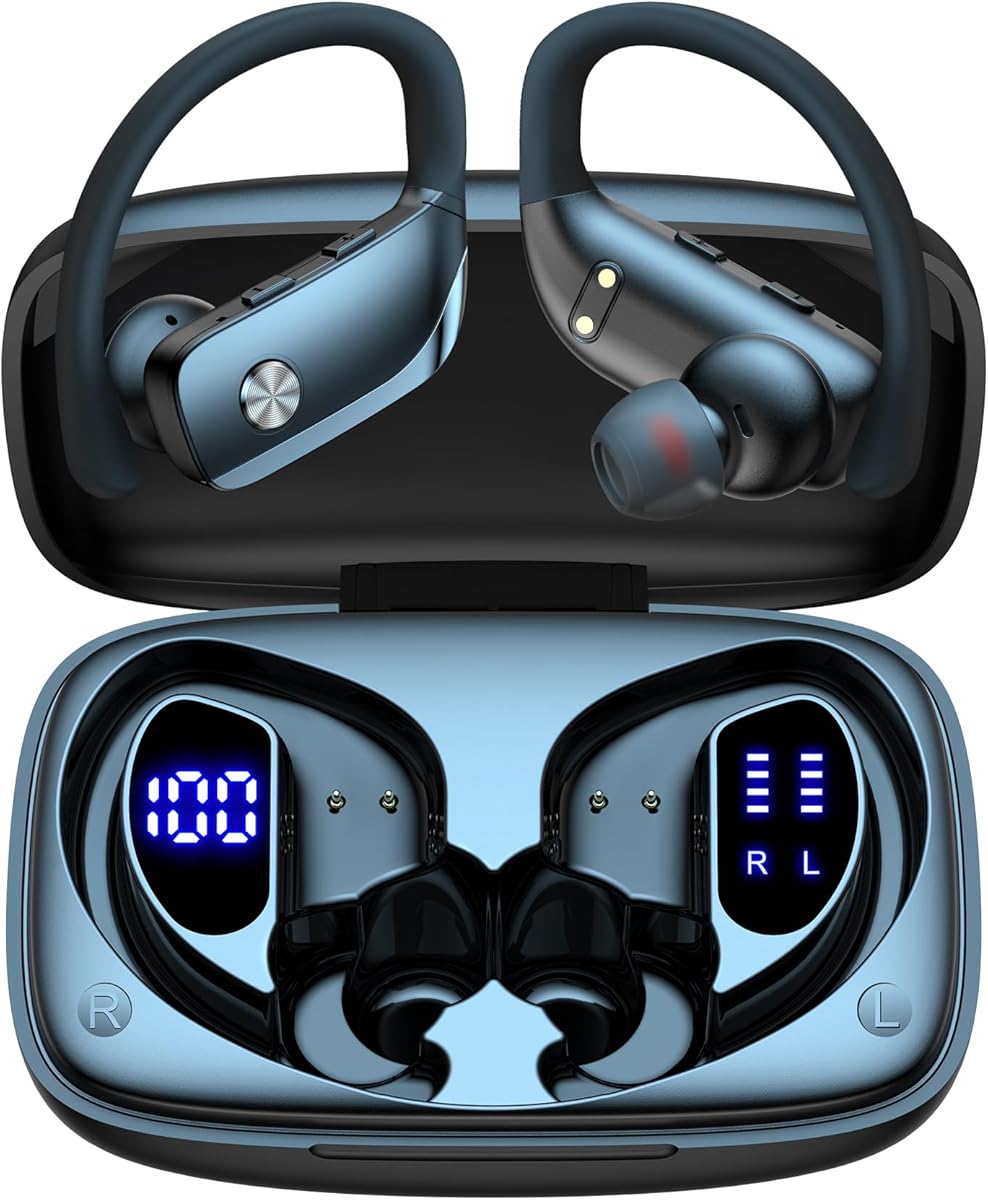
These Wireless Sports Earbuds have a 4.4 customer rating, matching several of the leading products, and distinguish themselves with flexible silicone earhooks, 13mm drivers, and a 48-hour case-based battery system. The pressure-distributing hook design specifically addresses comfort for smaller ear canals and riders who wear glasses.
We may earn a commission when you buy through this link, at no additional cost to you.
The ENC microphone system is designed to isolate the wearer's voice during calls in noisy environments. Bluetooth 5.3, automatic reconnection through a Hall sensor, and compatibility with iOS, Android, tablets, and laptops make the earbuds versatile beyond the bike. A dual LED display shows the case and individual earbud charge levels, which is useful for riders who do not want to carry a separate battery gauge.
A 1.5-hour USB-C charge provides up to eight hours of uninterrupted playback, and the case expands the total runtime to 48 hours. The IPX7 rating covers sweat, rain, and humidity, but the product information explicitly says it is not intended for swimming or prolonged underwater use. The included digital readout is useful, though it adds visual complexity to the case.
This is a strong budget-oriented choice for runners turning to cycling, commuters, and anyone who values a long battery and visible charge status. The 4.4 rating and flexible hooks make it particularly compelling, while the 13mm drivers and ENC microphones cover the core needs of a sport earbud. It earns a place near the top for riders seeking more functionality than a basic pair.
The flexible hook follows the ear contour and distributes pressure instead of relying entirely on a deep in-ear tip. That approach can improve retention for riders wearing glasses, although the fit will still vary with ear geometry and the shape of the rider's eyewear.
A high-contrast dual LED display indicates the remaining case power and the charging state of each earbud. For cyclists who leave earbuds in a bag between rides, this makes it easier to identify a depleted earbud before heading out.
We may earn a commission when you buy through this link, at no additional cost to you.
The bmani Ear Buds carry a 4.3 customer rating and stand out for their extensive battery system. Each earbud provides up to eight hours of playback, while the charging case expands total use to 80 hours. That endurance makes the pair appealing for cyclists who ride frequently, travel with the earbuds, or dislike charging them often.
We may earn a commission when you buy through this link, at no additional cost to you.
Ten-millimeter dynamic drivers provide stereo sound with emphasized bass, and dual microphones are designed to reduce surrounding noise during calls. Adjustable ear hooks follow different ear shapes, while physical main and volume buttons offer direct control. The automatic reconnection behavior helps the earbuds return to the last paired device when removed from the case.
The case is described as sweat-resistant and dust-resistant, but no formal IP rating is provided. The similarly generic protection language is less precise than the clearly stated IPX4, IP55, IP68, and IPX7 ratings elsewhere in this list. Sound and call features also focus on fundamentals rather than advanced noise cancelling, spatial processing, or extensive sensor features.
The bmani earbuds are a practical choice for riders who prioritize endurance, straightforward operation, and physical controls. The 80-hour system is the headline feature, while the secure hook helps them remain in place during movement. They are less compelling for someone who needs a verified waterproof specification or advanced transparency controls, but they deliver a useful package for everyday cycling.
An 80-hour total is especially useful for people who rotate among work, training, and leisure earbuds. Even with frequent use, the case reduces the likelihood of discovering an empty earbud immediately before a ride.
Separate physical buttons for primary actions and volume are easier to locate by feel than many touch controls. That distinction is useful in a cycling environment, where looking at a phone or accurately triggering a small touch area can be inconvenient.
We may earn a commission when you buy through this link, at no additional cost to you.
The Soundcore C50i has a 4.2 customer rating and offers a compact clip-on alternative for cyclists who dislike both deep earbuds and large over-ear hooks. The memory-titanium FlexiClip is designed to adapt to different ear shapes, remain stable during exercise, and avoid blocking the ear canal.
We may earn a commission when you buy through this link, at no additional cost to you.
Custom 12mm drivers deliver bass and an 86dB maximum output, while AI processing filters background noise during calls. Bluetooth 6.0 supports connection stability, and an IP55 rating protects against sweat and rain. The soundcore app provides HearID, EQ modes, Spatial Audio options, and firmware updates, bringing several premium features to this smaller design.
Battery life is eight hours per charge and up to 28 hours with the case, so it trails the extended endurance of the bmani and JBL options. The open design means there is no active noise cancelling and less low-frequency isolation than sealed sport models. Some riders may also find a clip less secure than a wraparound hook during aggressive off-road movement.
The C50i is best for riders seeking a small, light, open-ear form with modern connectivity and a more robust rating than an unspecified sweat-resistant build. It also works well for walking, commuting, and workouts. For long-distance cycling, the lightweight comfort and environmental openness are compelling, while the battery specification makes regular charging important.
The C50i's clip follows the outer ear without encircling it, offering a smaller profile than a traditional workout hook. It preserves open-ear awareness and may feel less intrusive for riders wearing glasses or seeking a low-profile option.
Twelve-millimeter drivers, AI call processing, Bluetooth 6.0, and app-based EQ give the C50i a modern feature set. The trade-off is that its compact case offers 28 hours of total playback, considerably less than several larger sport-oriented alternatives.
We may earn a commission when you buy through this link, at no additional cost to you.
The SHOKZ OpenDots ONE has a 4.4 customer rating and is our premium open-ear selection. Each earbud weighs just 6.5g and uses a flexible nickel-titanium plate with a soft silicone grip that conforms to the ear. The design keeps the canal open and distributes pressure without the bulk of a full earhook.
We may earn a commission when you buy through this link, at no additional cost to you.
Premium Dolby Audio and Bassphere technology provide the sound, while DirectPitch technology is intended to minimize leakage. The earbuds can be worn on either side, and optimized microphones support communication. The Shokz app provides EQ modes, touch-control customization, device location, battery status, and multipoint pairing for smoother movement between two devices.
Listening time is 10 hours from one charge and up to 40 hours with the case. A ten-minute quick charge adds two hours, and the case supports wireless charging, although wireless quick charging is unavailable. The IP54 rating protects against sweat and rain but is less comprehensive than the IP68 protection offered by the JBL models.
The OpenDots ONE is a refined choice for road riders, commuters, and anyone who wants strong music without giving up environmental awareness. Its light clip, strong 4.4 rating, Dolby processing, and device features justify a premium position in this guide. It is our Editor's Choice because it makes the open-ear approach feel especially polished and complete.
Dolby Audio, Bassphere technology, and DirectPitch processing shape an open-ear presentation that aims to deliver full-bodied music with limited leakage. The ear canal remains open, which helps preserve awareness of the road, other riders, and environmental cues.
At 6.5g per earbud, the OpenDots ONE places little visual and physical mass around the ear. The nickel-titanium structure and silicone grip provide adaptable retention, making the design attractive for long rides where comfort is a priority.
We may earn a commission when you buy through this link, at no additional cost to you.
The JBL Endurance Race 2 has a 4.0 customer rating and focuses on a secure, sealed workout fit with extensive environmental protection. The earbuds carry an IP68 rating for dust and water resistance, while their case has an IPX2 rating. The manufacturer specifically advises drying both earbuds and the case before charging.
We may earn a commission when you buy through this link, at no additional cost to you.
An ergonomic wing enhancer using TwistLock technology helps the earbuds remain stable, and the sealed in-ear format creates more isolation than an open design. Active Noise Cancelling and Smart Ambient let the rider tune outside sound, while 6.8mm dynamic drivers provide JBL Pure Bass. Four beamforming microphones support call clarity in windy outdoor conditions.
The earbuds deliver 12 hours per charge, with the case providing three additional charges for 48 hours total when ANC is off. A ten-minute charge adds four hours. The case's lower water-resistance rating means it should be kept dry, even though the earbuds themselves are robust. The 4.0 customer rating is respectable but not among the highest in this comparison.
The Endurance Race 2 fits riders who want a conventional in-ear seal, strong retention, and verifiable ruggedness. It is particularly suitable for trail rides, rainy commutes, and workouts where the earbud may encounter substantial perspiration. Riders who prioritize natural awareness or a very light open design may prefer the V20i, C50i, or OpenDots ONE instead.
The IP68 rating distinguishes the earbuds from models with only a general sweat-resistant description. That protection is valuable on dusty trails, during rain, and across long summer rides, provided the earbuds are dried before returning to the case.
Active Noise Cancelling reduces distractions, while Smart Ambient brings outside sound back in at a controllable level. This lets a cyclist change modes without removing the earbuds, though the baseline awareness remains less natural than with a fully open design.
We may earn a commission when you buy through this link, at no additional cost to you.
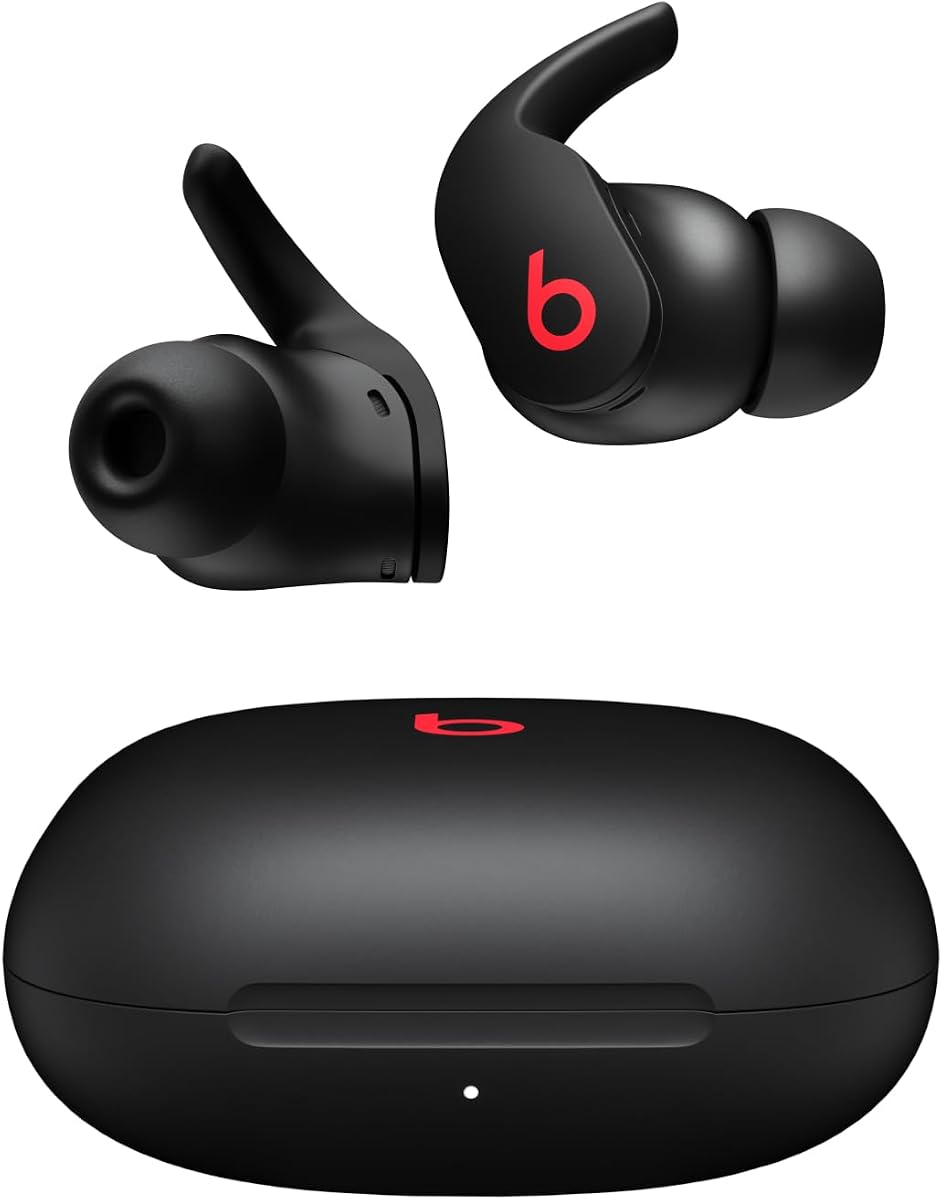
The Beats Powerbeats Pro 2 earn a 4.1 customer rating and are the feature-rich premium training option in this guide. Their defining cycling advantage is built-in heart rate monitoring: sensors pulse more than 100 times per second to provide real-time tracking without a chest strap, potentially useful for structured training and interval sessions.
We may earn a commission when you buy through this link, at no additional cost to you.
A flexible nickel-titanium earhook holds the earbuds securely, while five ear-tip sizes allow riders to create a personal acoustic seal. Active Noise Cancelling is designed for training environments, and Transparency mode admits outside sound when needed. Adaptive EQ uses microphones to adjust the sound to the wearer's ears, while Personalized Spatial Audio with head tracking is available on compatible Apple devices.
The earbuds are 20% lighter than the previous generation and include on-ear buttons, tactile volume rockers, and voice control. Battery life reaches 45 hours with the case, and a five-minute Fast Fuel charge supplies 1.5 hours. The IPX4 rating covers sweat and water but is less demanding than the IP68 ratings of both JBL endurance models.
Powerbeats Pro 2 are best for performance-oriented riders who want reliable retention, real-time heart data, strong noise control, and effortless physical controls. They also integrate smoothly with Apple and Android devices, including automatic switching and full app access. The premium feature set makes them a strong all-around training choice, particularly when heart rate data justifies the added complexity.
The built-in sensors provide real-time heart rate information directly from the earbuds. This can reduce the need for a separate chest strap during some workouts, although cyclists should still consider a dedicated cycling computer or watch for detailed ride metrics.
On-ear buttons and tactile volume rockers can be located by touch and operated without looking at a phone. This makes the earbuds practical during sprints, climbs, and other moments when a rider needs immediate control without breaking concentration.
We may earn a commission when you buy through this link, at no additional cost to you.
The Beats Fit Pro have a 4.2 customer rating and offer a compact sealed design with flexible wingtips for stability. Their relatively small proportions make them less visually obtrusive than a full earhook, while the wings help the earbuds resist movement during rides and workouts.
We may earn a commission when you buy through this link, at no additional cost to you.
The custom acoustic platform produces balanced sound, while Spatial Audio with dynamic head tracking supports immersive music, video, and games. Active Noise Cancelling, Transparency mode, and Adaptive EQ give riders three distinct listening environments. The Apple H1 chip enables automatic device switching, Audio Sharing, and hands-free Siri interaction.
Battery life is up to six hours per charge and 24 hours with the compact case, the shortest single-charge runtime among the premium-oriented models here. The IPX4 rating is suitable for sweat and water exposure but is not designed to match the strongest dustproof and waterproof certifications. Calling quality is supported by built-in microphones and voice-assistant interaction.
The Fit Pro is a good everyday choice for riders who want a small in-ear profile, strong integration with Apple devices, and useful noise control without a large wraparound hook. It can serve commuting and training duties well, but long-ride users should account for the need to recharge the earbuds more often than with 8-, 10-, or 12-hour models.
The flexible wingtips help hold the earbuds in place while keeping the overall profile smaller than many sport models. They also provide a gentler visual profile than a large earhook, which may appeal to cyclists who wear their earbuds beyond training.
Active Noise Cancelling, Transparency, and Adaptive EQ let users move between focus and awareness without changing earbuds. Automatic switching and Audio Sharing add convenience for Apple users, although the shorter battery life is the more important consideration for long-distance riders.
We may earn a commission when you buy through this link, at no additional cost to you.
The best cycling earbuds depend on your route, riding intensity, eyewear, weather exposure, and tolerance for earbuds that seal the ear canal. Comparing fit, awareness, weather resistance, controls, battery behavior, and sound features will help narrow the field before you buy.
A cycling earbud must remain stable through repeated handlebar movement, body motion, wind, and helmet strap pressure. Open-ear styles wrap around or clip onto the outer ear, while sealed sport models rely on a combination of silicone tips and wings or hooks. The most important consideration is not the number of adjustment mechanisms but whether the structure can be positioned securely around the shape of your ear without pressing on a helmet strap, glasses arm, or sensitive pressure point.
Try to reproduce the riding position when evaluating a new pair. Bend and shake your head, keep your mouth slightly open, and check whether the earbud shifts. A fit that feels secure while standing still may still move during pedaling, so use the adjustment range to find a stable contact point rather than relying on maximum tightness.
Awareness is often more important than isolation for cycling. Open-ear models leave the ear canal unobstructed, making it easier to hear vehicles, other riders, crossing signals, and spoken warnings. Sealed sport earbuds can provide stronger bass and active noise control, but their fit may reduce awareness. Active noise cancelling and ambient or transparency modes give sealed models more control, although a rider should confirm that outside sound is sufficiently clear before relying on those settings in traffic.
Choose an open design for maximum natural awareness. Choose a sealed model only when isolation and stronger bass are priorities and the rider has a safe, familiar route or uses transparency mode consistently.
An IP rating provides a more useful basis for comparison than a general claim of being sweat resistant. IPX4 indicates protection from sweat and splashing water, IP55 adds dust protection and stronger water-jet resistance, IPX7 addresses temporary immersion, and IP68 represents the highest dust and water protection in this group. A higher rating is reassuring for rainy commutes, dusty trails, and long summer rides, but it does not mean an earbud should be deliberately submerged or left in a wet charging case.
For year-round outdoor use, IP55 or stronger is preferable. Always dry the earbuds and case before charging, especially for models with a fully waterproof or submersible rating.
Cycling conditions can mask bass, vocals, and higher-frequency details, particularly when wind reaches the ear. Open-ear designs generally offer clearer perception of environmental sound but often produce less perceived bass than sealed models. Sealed sport earbuds tend to emphasize low frequencies, which can help maintain rhythm on fast rides. The driver size alone does not determine sound quality, so consider tuning features, volume limits, spatial processing, and whether the product supports a personalized hearing profile.
For music-focused riding, listen for balanced vocals and controlled bass rather than judging a pair only on driver diameter. For awareness-focused riding, prioritize clean open-ear audio at moderate volume.
Useful call microphones matter whenever a rider takes a phone call at an intersection, speaks a voice message after a ride, or uses a headset for remote meetings. Beamforming microphones can focus on the wearer's voice, while AI processing may reduce steady background noise. Wind reduction is especially valuable for cycling, since airflow can dominate recordings on a road or bridge. A microphone count does not guarantee excellent real-world performance, so look for wind-specific design language and balanced placement around each earbud.
Check calls outdoors whenever possible, particularly on a bike. Raise the microphone toward the front of your mouth if wind dominates, and keep a single earbud available for conversation when safer.
Battery life should be considered both per charge and with the case. Six hours can be enough for a shorter ride, while 10 to 12 hours covers most full-day training schedules. Case runtime matters for riders who forget to recharge the earbuds regularly. Fast charging is valuable, but the stated quick-charge time should be understood accurately: a brief top-up may add several hours, while a full battery cycle takes much longer. Wireless charging adds convenience but does not necessarily provide quick charging.
Estimate your longest typical ride and choose a pair that can finish it with a comfortable reserve. For frequent riders, a long case runtime and visible charge indicators are particularly useful.
Physical buttons are easy to locate by feel and are less likely to trigger accidentally when a rider brushes the earbud. Touch controls are quieter and more compact, but they can be sensitive to sweat, water, or accidental touches. Bluetooth multipoint allows two devices to remain connected, making it easier to move between a phone and tablet. App support can add EQ modes, transparency levels, workout presets, battery displays, firmware updates, and device-finding tools, though it is not essential to basic listening.
Choose the controls and software that you will actually use. Reliable multipoint, fast pairing, and a stable connection usually provide more everyday value than a long list of app features.
Earbud shape must coexist with a helmet, eyewear, and the sides of the head. Large earhooks can conflict with glasses stems, while low-profile clips may sit closer to a helmet strap. In-ear models can be easier to wear under a helmet because nothing extends around the ear, but their seals may become uncomfortable over time. Open-ear models are often the easiest to combine with glasses, although the exact contact points vary by helmet and ear shape.
If you wear glasses, test the fit with the glasses in place and avoid positioning a hook directly against a temple arm. A small adjustment can prevent pressure that becomes distracting after an hour in the saddle.
Before the first ride, charge both earbuds and the case, pair the earbuds with your phone, and adjust the fit while wearing your usual helmet and glasses. Explore the available EQ, transparency, and noise-cancelling settings, but keep the volume moderate so traffic and other environmental cues remain audible. Test the controls at the start of a short ride so you know how to skip a track, lower the volume, or answer a call without looking at your phone.
Remove the earbuds before changing channels, taking a phone call in a busy place, or entering an environment where you need maximum hearing. For open-ear models, use one earbud when a conversation requires it. For sealed models, switch to transparency or ambient mode before moving around traffic. Clean the ear tips or silicone grips with a soft dry cloth, and keep the charging contacts free of dirt and moisture.
After wet or sweaty rides, dry the earbuds and case completely before closing or charging them. Store the pair in a cool, dry place, avoid leaving it in direct sun or a hot vehicle, and replace damaged ear tips or hooks promptly. Periodically check the manufacturer's app for firmware updates, confirm that the earbuds still meet the current IP rating after any physical damage, and remove the battery from prolonged storage if the manufacturer provides specific guidance.
Open-ear earbuds generally preserve more natural environmental sound because they do not seal the ear canal. That can make traffic, pedestrians, and other riders easier to hear, but no earbud can guarantee complete situational awareness. Riders should still follow traffic laws, keep volume moderate, look for hazards, and remove an earbud when a conversation or crossing requires full attention.
It depends on the model's stated ingress-protection rating. The JBL Endurance Peak 4 and JBL Endurance Race 2 have IP68 earbud ratings, while the Soundcore C50i has IP55 and the SHOKZ OpenDots ONE has IP54. Even water-resistant earbuds should be dried before charging, and a waterproof earbud does not make its charging case waterproof.
Low-profile open-ear clips or models with flexible hooks generally work best because they can be positioned around the frame without pressing directly on the temple arm. The Soundcore V20i, Soundcore C50i, and SHOKZ OpenDots ONE are open designs worth evaluating. The best choice still depends on the shape of the glasses, ears, and helmet.
Active noise cancelling is useful on focused training rides or routes with a predictable, relatively safe sound profile. For urban commuting, it can reduce engine and traffic noise, but it may also reduce natural awareness. Open-ear designs or sealed models with a strong transparency mode are often better when hearing the road is the priority.
Bone-conduction designs can leave the ear canal open and avoid blocking environmental sound, but their audio and bass characteristics differ from conventional open-ear drivers. The SHOKZ OpenDots ONE and Soundcore V20i provide open-ear audio without requiring a bone-conduction-style fit. The better choice depends on personal comfort, sound preference, and awareness needs.
The earbuds should comfortably outlast the ride, including any time spent listening before or after cycling. Models offering 10 to 12 hours per charge cover most long rides, while shorter six-hour designs may require a top-up. Case runtime also matters for multi-day trips and riders who do not charge the earbuds immediately after every use.
Do not immerse the electronic earbuds or charge them while wet. Instead, remove washable silicone tips where permitted, clean them with mild soapy water if the manufacturer allows it, and let them dry completely before reinstallation. Use a dry or lightly damp cloth for the earbuds and never spray cleaning liquid directly into the charging case.
All ten featured models include microphones for calls, and several add beamforming, ENC, or AI processing to improve voice clarity. Wind can still dominate outdoor recordings, particularly on an exposed road. If a call requires full attention, pull over and use one earbud or a safer alternative before speaking.
The Soundcore V20i is the best overall choice for cyclists who value natural awareness, a highly rated fit, and useful customization. The SHOKZ OpenDots ONE is the premium open-ear selection, offering an exceptionally light clip, Dolby Audio, and refined device features. The Beats Powerbeats Pro 2 take the premium training position with secure earhooks, physical controls, and real-time heart rate monitoring.
The most important priority depends on the riding environment. Choose open earbuds for traffic awareness and lightness, sealed sport models for bass and isolation, and high-IP models for wet or dusty routes. Fit, weather protection, controls, battery life, and the ability to hear the road should be evaluated together rather than treating sound quality as the only deciding feature.
Ratings, product details, availability, and prices can change, so review the current listing and manufacturer instructions before purchasing. Riders should also verify compatibility with their helmet, glasses, phone, preferred apps, and existing devices, since those details can materially affect comfort and daily usability.